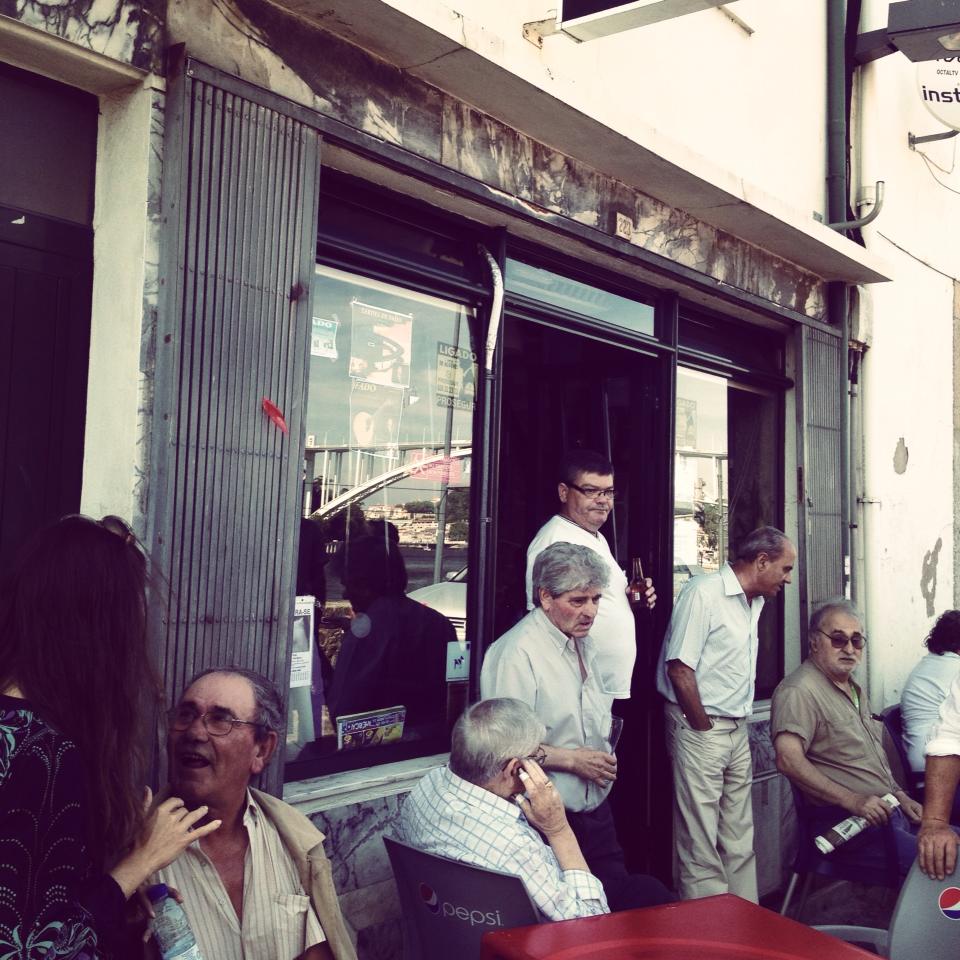
Girl from Shanghai

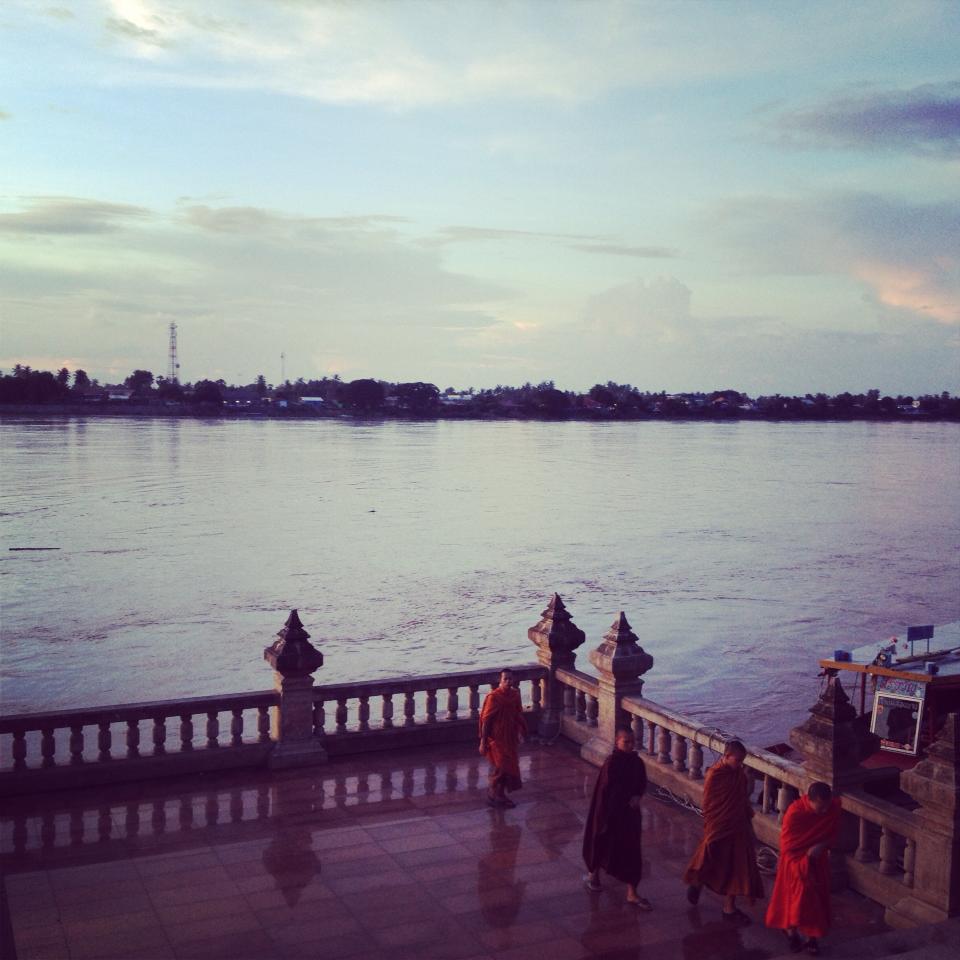
sunset

I wish I could refrain from speaking of the beauty of the sun setting in the Mekong. It is however impossible, because my daily recognition of how much it changes and how much it is the same sets the pace of my own moods.

Now I no longer travel places, I rather travel people, and that is why I am here. And many people travel to visit me here. Last time I was in Thailand I met dozens of unforgettable people; about some of them I have extensively talked, like Carley, who is also planning a visit soon, but today I want to talk about Ella, or Arunee, as she’s called in Thai.

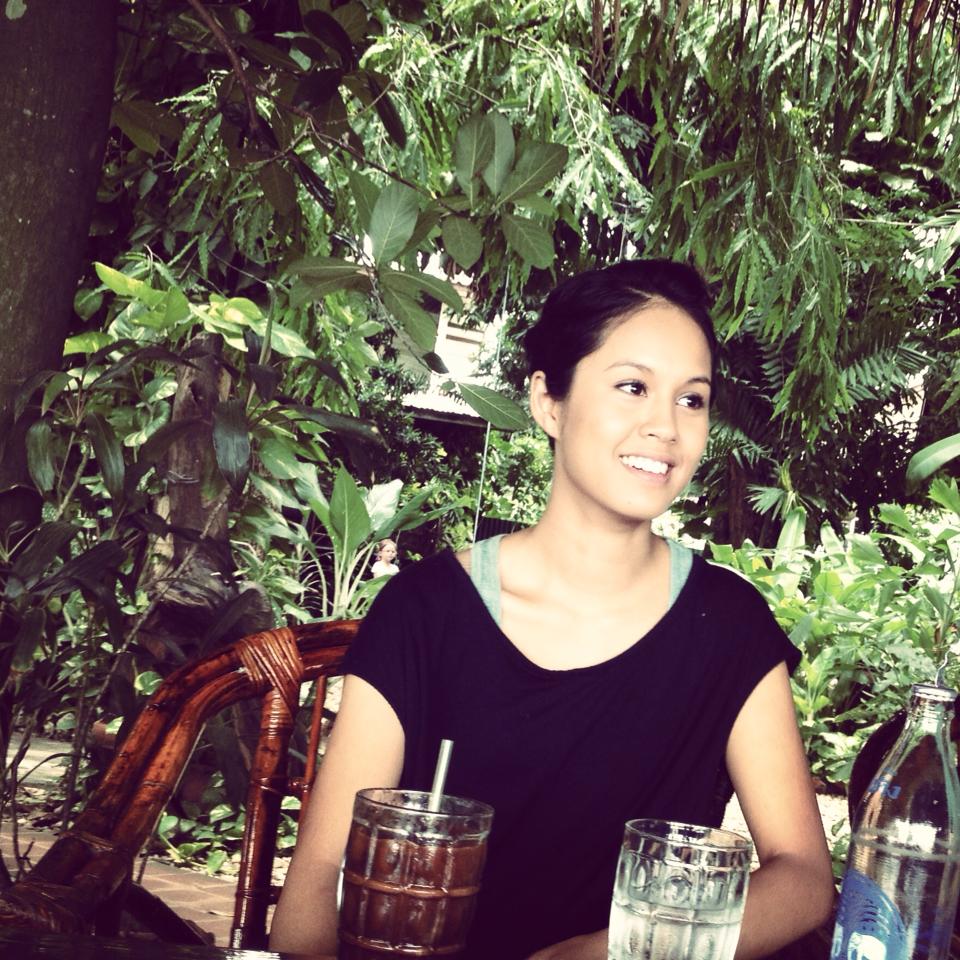
Ella

I met Ella years ago, and we struck an immediate friendship beyond differences of culture, religion and age. She took a train from Bangkok and I waited for her arrival at 5:30am, even though she had expressed her wish that I should sleep. “I am 69 and I ll arrive early and I must rest”, she said.

I agreed, but knowing she could not check in so early I waited for her nonetheless. We’ve met several times here, and every time she would come with a different child or grandchild. Once she told me the story of her father, who asked her to build him a Mausoleum, and how she had travelled all the way to Greece to visit the Oracle of Delphos. She thought that it was absurd to spend so much money on a mausoleum, but came to understand in Greece that all that her father wanted was to be remembered. She also wrote a book about his life.

So, this time, I was here anxiously waiting for this wise lady who once noticed my fragility and told me to go home when my journey was evidently over. She arrived, we hugged, I let her rest and later on the same day I told her all that I had to tell…. and then we went out to see the sun set.

Monks

She told me she was writing another book, now it is the story of her mother. I asked her whether I could write about it, she said ok, and so it goes… the story of her mother, The Girl from Shanghai.

Her mother is now 95, and she spent her youth in a Shanghai that was modern, cosmopolitan, vibrating and full of intrigue. Her mother was known for her beauty; she used to to be invited to every wedding as a bridesmaid, and she was usually more beautiful than the bride herself. She had no formal education but soon got a job as a secretary, and she hoped to get married to a rich man and have a good life.

She did not want to marry a Chinese man, though, not even an European, she wanted to marry an American. In the view of the Chinese, Europeans – and not just the Brits – had destroyed China with their opium wars. She thought that the Americans were very different.

Japan had already started its wars of expansion, and Jayne (her English name) wanted to marry a Flying Tiger pilot. These adventurers were, however, not exactly the free agents people wanted to believe they were, they were actually American mercenaries that flew for China.

Shaghai was at that time a very vibrant city, parties took place everywhere. And one day Jayne heard about Tom. He was a pilot. He was charming. Everybody was his friend, and every woman adored him. Tom, just like Jayne, had a western name but was actually from Siam (Thailand). He was one of the locals who worked for the Flying Tigers. Jayne was naturally interested in Tom, though actually more intrigued than in love. Tom was dazzling but had no money, so he used to say “girl, i ll take you out, ok… if I have my salary we ll go dutch (meaning we share the bill), but if i have no money you’ll have to pay.” Couldn’t be any more rare in China of the 30s , could it?

Meanwhile, the situation in Asia was quicky deteriorating. War broke in Europe, Japan expanded more and more. And Jayne, thanks to her incredible beauty, had more and more proposals of marriage. Rich Chinese men could get her silk stockings even during worst of the war, but she had set her mind that she would marry Tom; she knew that, if he had the chance, he would provide her a good life.

With Chiang Kai Shek running to Formosa (the later Taiwan), Jayne made her mind and decided she would go to Siam. But by now she was a beautiful Chinese woman already used to the finest things and treats, in spite of her humble family origins (Jayne in fact had very little), but simply because of the bright world of the Middle Kingdom (which is what China means) she was able to enter because of her beauty. So going to backwards Siam was nothing short of a devastating blow for Jayne. But the world was changing and so she did.

When she arrived in Siam she found out that Tom’s family lived not just outside of Bangkok, but in a small province, in a country town. Jayne was miserable. Accustomed to be in the middle of the world, she was now living with a family of country joes who chewed betel nut. Real barbarians, she thought. Tom at least was quite sensitive to it, and soon moved to Bangkok.

Bangkok was just as horrible to her. Ella recites this to me like a poem, it comes out from her book. And now she stops, takes a long look at the river and says that she has to assure to me that her father was very competent. In his early 30s he was a manager in a bank. And though Jayne hated life in Siam she eventually had babies. At a certain point, however, it was just too much for her, and she left everyone and everything for Hong Kong. But she had no formal education, and Hong Kong was not Shanghai. Soon she was back.

“As I grew up I barely saw my father. At the time of his death he owned 50 companies. He had built a vast empire. As a child, I already knew that three out of every 10 articles produced in the whole country came from my father’s enterprises.” But this is the story of Jayne, not of Tom.

“Jayne travelled the world with my father, and she fell so much in love with the idea of supermarkets that when she came back she opened the first supermarket in Thailand. She made a life, she had friends, yet she was not happy. So she moved to the US. It didn’t make things better.”

When Ella decided to write her  life, and asked her mother if it was ok to do it, she didn’t like it and gave no permission. Ella didn’t give up, she believed that she owed it to herself and her offspring. One day she came back to her mother and tried once more.

“Mom, father has been dead for more than 20 years, you are the matriarch of an Empire, wouldn’t you like to visit Shanghai?”

She looked at me for a very long time in silence, and then she said:

“There is no safer place than Siam.”

Then she stayed silent again, and I waited. And then she said

“There is no better place to live than Bangkok”

I expected her to expand. She never did, and I understood that at 95 there is very few things you actually care to think.”

On my part, I was just thinking that whatever mysteries the world have reserved for Siam, and Brazil, Ella and I were both blessed for living in countries that have no recent memories of war. Looking at Laos, on the other side of the river, and thinking of old Indochine, China, Vietnam, Burma, I suddenly felt an everlasting peace here, sharing the same silence that Jayne kept when offered to go back to the past. I was present, and I felt home. Because home, dear Ella, is an encounter. A place you feel safe.

Love,

From the Mekong

It is the People…

sunset

Coming back from my 3-euro massage, I see the sky in varied colours. Psychedelic massage. I woke up early and wrote loads for my new Portuguese blog before the usual crew started to show up and I once again sigh, thinking how I love to be back at Mut Mee. There is nothing really that special in Nong Khai, nothing comparable to Angkor or Pagan (though there’s the lovely Salakaeku sculpture park). There are also beautiful Buddhist temples, or wats.

I did not come here for any of these reasons the first time, five years ago. I was supposed then to cross the Mekong to get to Laos on the other side. It took me 15 days to do it. And once I did it, I crossed the whole Asia, saw beautiful temples and beaches just to return now and then back again. Don’t ask me why, I still have no answer. It’s just home, so I won’t bother any more with it.

The last time I was here I was so lost, so it is really good to be back and feel so in place. In this state of mind I can’t help remembering one of the most remarkable encounters I had here. An Australian lady who dropped out of her life in her 40s and kicked the road. That was in the 80s. When I met her she told me her whole epic story and I asked her if I could write about it. She said “ok, but it’s just a life”, and that I should also care about my own and go home.

I felt like she had undressed me stark naked, disarmed all my ready smiles, opened a hole in my stomach and seen inside of my soul deeper than I ever dared myself. She could grasp my vulnerability, and said that it would kill me. It was time to go home, she said, so that one day I would be able to be in place to go out in the right way.

And now I see these wondering soulless people every morning. I feel like shouting “go home” to so many, for their own sake. The art of traveling is also to recognize when the journey is over, and that one must deal with oneself again.

Her name was Carley, and she is now in her 70s. And today I heard another epic story of another Australian woman, called Carly, but who’s in her twenties.

We got along fine since I arrived here exactly two weeks ago. She is doing the same job I used to do. She is just completely lovely like I used to be. She had also been to the funeral I recently wrote about. But I never knew the reason why she ended up here in Thailand.

We were here all of us, Mut Mee victims, when for no reason she told me she was about to go home, but before she had to meet her Thai family. I wondered if she also had volunteered and had a host family like I had. But no, none of that.

Karly

Carly and her twin sister had been adopted in Australia. Her Thai family was her real Thai family. And I could never imagine that Carly was Thai, even after two weeks together IN Thailand.

She once asked her Australian parents who told her they had adopted both girls from an orphanage in Nong Khai when they were 2,5 years old. She then got in contact with the orphanage, and from what I understood the lady was very moved as she was the very same person who had taken care of the twins.

The lady went all over to find the family. I kept asking questions not knowing whether it was Ok. But Carly told me she is getting used to it. I eventually asked her how did they react? And she told me she was just looking for her mom, and suddenly found a whole family. Actually a few families. Separated families with new children. Her father said he had been looking for her as well for the past 20 years.

Then I was even more intrigued. So was she given against his will? What about the mother?

Her parents had married “for labour”. I asked what that meant: they married in their teens to have an extra pair of hands. Carly’s father was a monk who could not fish, so the family sent him away and convinced the mother to give the twins away. Right afterwards they died.

Soon I understood why the mother was more resistant than the father. The mother’s family was responsible for the abandonment. Carly told me they were starving. Her father never knew that, but once he found out he spent his life searching for the twins.

So when she showed up here, her father was beyond joy. He became very well off and all of his new family wanted to meet her. They even offered her a terrain to build a house, and gave her money.

I asked her how her sister reacted. She told she did not want to meet them. Her Thai grandmother said she should at least come before she dies. I remember that in my own family I have a cousin that was also born a bastard. I was very excited to meet him, but my cousins, his half-sisters, where very resistant. One did meet him, while the other one never felt at ease. Thinking of my cousins, I said to Carly that maybe she should respect her sister’s time. People are different. It is just so painful when we see so clearly someone making such a mistake.

And then Carly told me that her father wanted to go to Australia to meet her Australian parents. He wanted to thank them for taking care of her.

There is nothing perfect in this story. Carly, the beautiful woman, had to cross the world to find where she came from. She is getting to grips with it. I was so moved that I went straight to a massage once the conversation had finished.

These ladies have known my body and me for years now. And I enjoy their touch and, due to my inability to speak Thai, the total silence I need to process this entire story.

And as I walked back the sun was setting and another Mut Mee victim who lives here, Mark the American, comes to tell me he had a gift. It was wrapped like flowers, it was a bouquet of rockets (the salad!). A real delicatessen here. I thanked him and sat looking the setting sun saying goodbye to the morning staff and hello to the ladies of the night kitchen.

joy tia yong

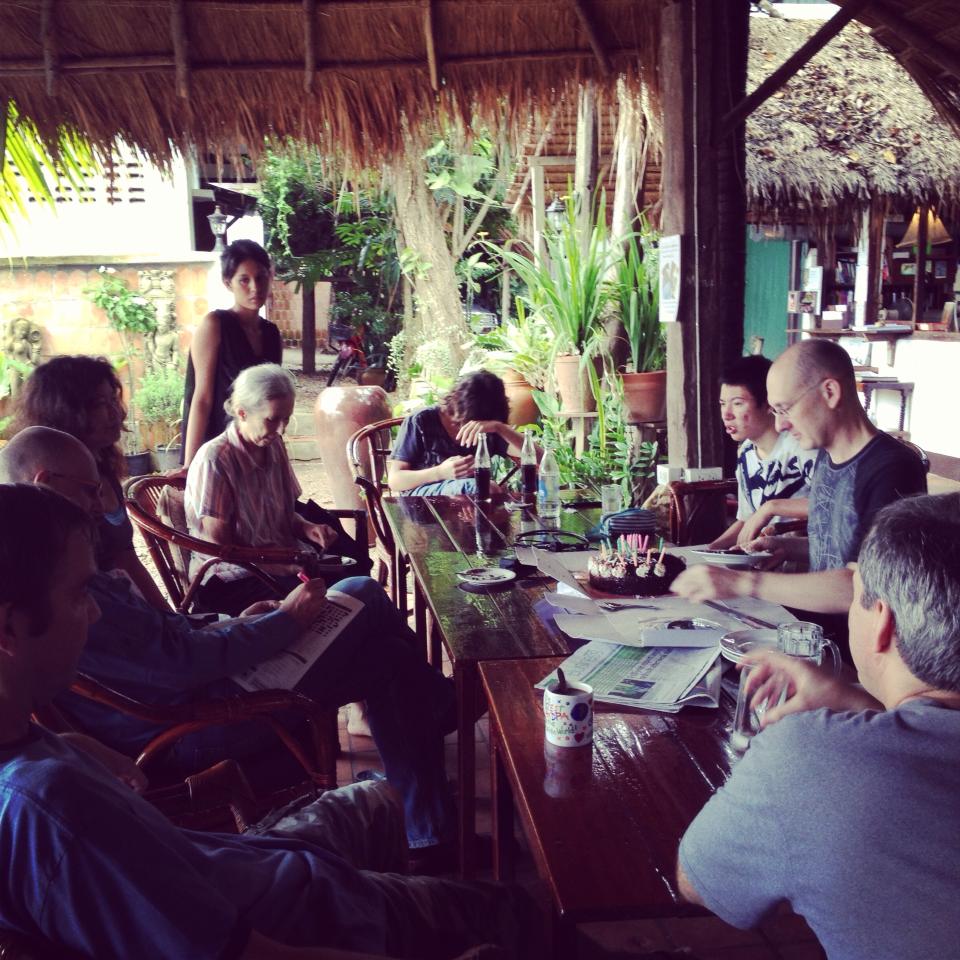
This is what it is about Mut Mee. It is the people. It always is.

victims

One’s Inner Light. Nong Khai, Thailand

lightening-photo

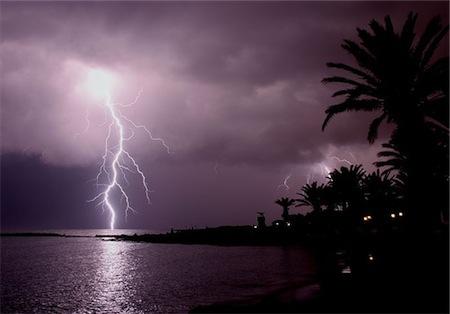
The explosion is so close and so loud that I remember Diwali. Then I breathe in and out and remember it is not Diwali and I am not in India. And as I watch the lights lighten up the mighty Mekong in front of me, as I see it all shiver in and out of existence, as my mind flies away, I realise a whole lifetime has passed since Diwali in India when firecrackers exploded next to me. It feels it was just a character of my only fiction who needed those explosions to be real. I felt a certain fondness to that stranger but it also felt like I knew her from another life.

In India Diwali is the Festival of Light. Firecrackers explode all over the country both to fight evil and to celebrate the return of Krishna. At the time I was in India in 2011 I did not fully understand that behind Diwali there is an awareness of one’s inner light. Now as I hear explosions of a Monsoon storm, as the thunders explode so close and make every bone in my body tremble, as it pushes me away from so close and yet so far, I look at Laos on the other side of the river feeling a mixture of amazement for the nature and joy that nothing in me wants to be anywhere else.

Almost all that I have lived flashes through my mind. A few hours earlier I had visited Mun (pronounced Maaan with an open a), who is one of the ladies that work in the kitchen. Her father had died. I had been to another funeral before (as those of you who have read my book, or have been in this email list long enough know). This time I went in the wake. And as I somehow knew what was about to happen, and as I know Mun, it was easier and more meaningful to me.

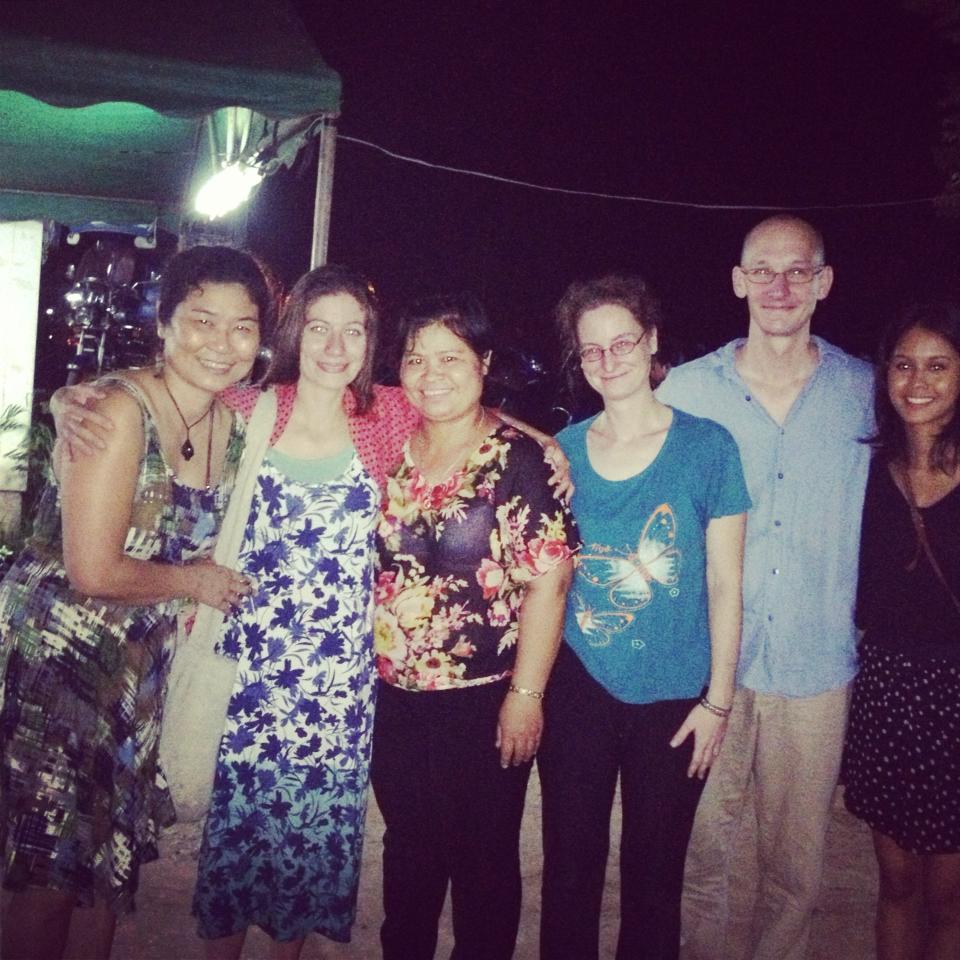
Pao, Julian’s wife, drove us there, all of us who worked or work at Mut Mee. Pao is Thai, Simeon is American, Petra German, Carli Australian, and I am Brazilian. Yes, almost all continents represented, for love of Mun.

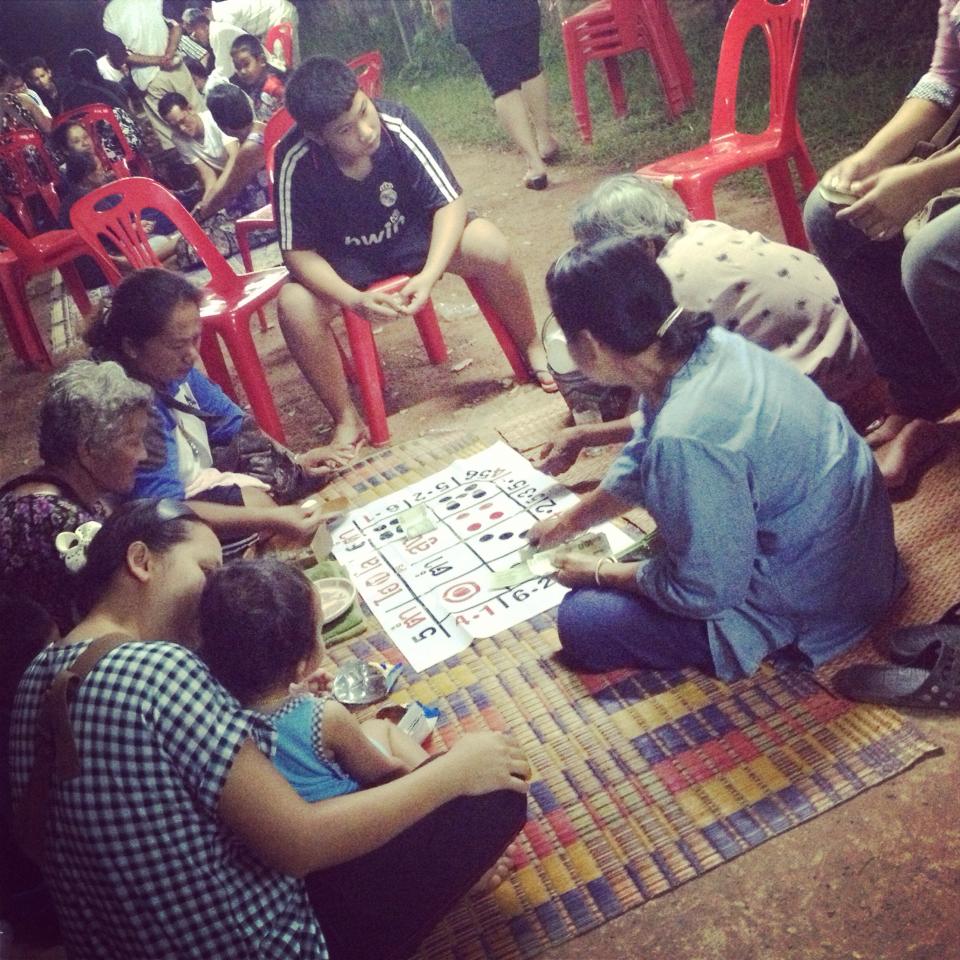
We arrived in the middle of a party. Older people were gambling. I knew exactly what to do, I had learned it with Horm, my host in the rural village where I once taught 4 years ago. And this time Pao explained to me once again. We go in, we see the coffin, we pay our respects to Mun and her mother. We take an incense, we light it and we put it there with other lit incenses.

coffin

No one cries, people laugh, children run, people take pictures. Pao explained to us that it is the best thing to do, to keep joyful company to those who have lost someone they loved. I remember how much I had heard from different lamas that in the time of passing one should be aware and conscious. I remember that I heard the same from Indigenous peoples of the Americas. You must forget the person who died, so that they can keep their journey; trapping the loved ones close was a necessity of the living. I even remember the cognitive explanations that burials were created because humans realised they needed to bury a dead person soon so as not to spread disease and smell, though emotionally they still wanted to keep them close.

My mind wandered as I sat and did a short meditation. I asked Mun how could they keep a body in a coffin for so many days in such a warm weather ( here in Thailand according to what I understood from Tia, the lovely lady who cooks in the Kitchen and whom I adore, a wake takes 3 days) and for it not to rotten.

Mun looked at me and smiled. I could see some tears that had been hidden in her eyes. She took me by hand and took me to see the coffin. I don’t think I remember ever seeing a dead person so close. The coffin was shimmering and golden, and it had a little glass window on top of it, through which I could see a beautiful man, perfectly dressed, surrounded by flowers. He looked asleep. I could also see it was a fridge. Just as I am processing this information, Donut, Mun’s 5 year old daughter who is my friend from the garden of Mut Mee, shows up. Mun lifts her up and shows her her dead grandpa. She looks while her cousin is going around taking pictures of the party. Mun looks at me and says “ My Papa is going to sleep now.”

I hold my tears for I have once learned one is not supposed to cry in a Buddhist wake. As Mun is a dear friend to me, I tell her I am sorry, I know I am not supposed to cry. She smiles and says it is ok, we cry a little bit, too, and she holds me. Remember that this was all done in broken Thai.

gambling

We all sit in the ground… while people pay their respects and older people gamble outside. I somehow feel it so healthy the way they do it. Supporting friends and family with positive feelings. And my mind flies to Jewish Shive, Christian wakes, and what I have read about wakes all over the world…. they all have the same thing together… the awareness that we must let go, but that we just don’t want to, so we need to do a rItual.

I, who was never fond of rituals, love them more and more now. I love those actions that mark passages. When they are happy, full of communal support, they are invariably more pleasant. I close my eyes and make a silent prayer, a meditation. I am moved but I hold my tears.

funeral us

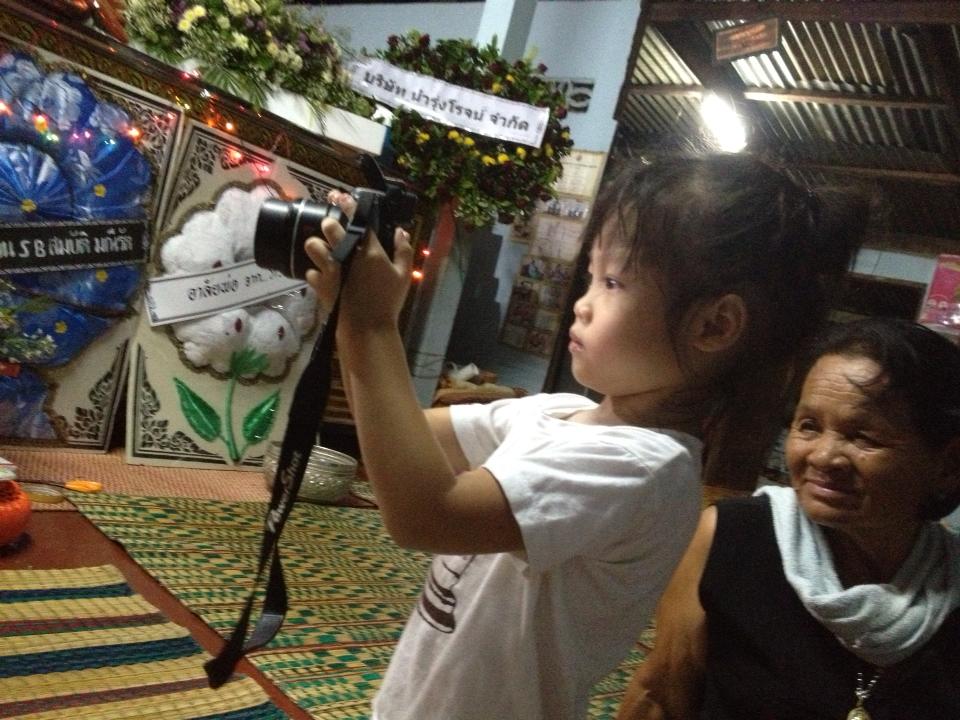
And then I pose for the pictures they are taking of us, and then I take my phone and ask whether I could take pictures as well. I knew I could. I was once asked to take them 4 years ago. Still, part of me feels I must ask, and so I take a gorgeous picture of Mun’s niece taking a picture; in the background is the widow, and behind and we can also see the coffin.

funeral gril

In Northeastern Brazil people scream and suffer in mournings. It feels it is engraved in my skin to cry. But I remember Rinpoche, the Tibetan lama who is a Tulku, telling me “ you should cry less” and smile.

I smiled, and he said “I know, it is impossible for you. :)”

And so I did not cry. I prayed, I meditated, mixing all that I knew that could be respectful and then, when I hugged Mun, I just could not hold my tears anymore. And when she told me she had cried a little, too, I felt an enormous relief.

Not because, I felt excused. It was because I understood once more that humans are so alike, and that these opposing tendencies of letting go and keeping close have tormented all of us in the world throughout millennia.

Then her sister came to see the picture I had taken. I promised to send her. But her email was in Thai, we tried to send via bluetooth. It did not work. And so eventually I decided to send it to Yong, one of the kitchen ladies who has a facebook that has a name in english.

And as I stood up to go, I felt happy. Happy that these people knew so well that when someone loses someone dear they need support, and they are ready to give it.

We entered the car talking about it. I was happy that all of us, from so different continents, thought we did not fully understand what we saw but we still came because we care for Mun. And in a sense, for that short while, we had all been a bit Thai.

And so, as the Monsoon thunder cracks and I feel a bit shivery, and wet, I see the lights and I finally understand what Diwali is all about. It is about encountering one’s inner light.

Love, from the Mekong

Back in one of my dearest homes… Mut Mee :)

Sunset

A Japanese man asks me to look at his tablet. I am not sure what he needs. I look at the tablet, it is in a language I can’t really decipher. Russian, maybe. In our broken English spiced with loads of Japanese I understand he needs help with the Russian but I cannot help because I don’t know any Russian; with google-translate I tell him I will find someone who can!

Oh Yes. I am in Asia. And just as I am having breakfast in front of my beloved Mekong I feel so in place that this stranger comes to me as if I still worked here. Being in Mut Mee again… some part of me feels I never left, the rest is pure joy.

I arrived last night. It was a hurried journey. In Portugal we drove fast to the airport and this always-so-punctual-lady almost missed my flight in Lisbon. I had then many hours to wait at Istanbul airport, but I got so entertained by the white robes of the men and women in colourful veils that I almost missed my flight again. Ramadan had just started and my mind flew to my previous Ramadans, the last one in Palestine, and before that in Kashmir; then my mind flew to Ericeira, in Portugal as I had just left the house of Joana and Faisca, a couple I met in Mut Mee a year ago and who now hosted me lavishly in my last week in Portugal.

I had planned it so much, so many times, that only when I was inside the flight to Bagkok did I believe I was really going back to Asia. Now I was in a real plane that was flying in the right direction, there was no more chance not to arrive.

As I landed in Bangkok I found out I had only 2 hours between landing and my next flight to Udon Thani. And had I not rushed enough I wouldn’t be told in time that my next flight would leave from somewhere else. There was no way I could do it. But just as I was taken care when I left Thailand with a broken leg last year, now I was welcomed by people walking the extra mile to make me not miss my last flight. I had less than two hours to find a cab, negotiate the 1-hour drive and arrive safe and in due time at the gate. Miracles sometimes happen, and after jolly 28 hours from door to garden I landed at Mut Mee just in time to see the sun bathe the Mekong with more colours than my poor jetlagged mind could imagine.

All along this rush I could only mentalize that I’d drop my bags, say hi to the ladies in the kitchen and then treat myself with a massage. I just forgot the black-hole power of Mut Mee, or its whirlwind. As soon as I dropped my bag down I saw Pancho, the Yoga teacher. There would also be some more people; in the kitchen Yong hugged me and said I was too skinny. More hugs all over and then of course I cried and they told me to eat. They made me my favourite tropical Muesli.

Tia

Then I made the fatal mistake that would keep me apart from my so-yearned massage for some time. I sat under the straw huts and within seconds there were loads of old friends showing up, or falling from the trees. And then I had flowers in my hand, and inside the flowers there was a letter. Edu, from Switzerland, got here before me to say welcome. Other hands brought me the flowers, but the letter was his calligraphy. He was here, too. It took me a while to grasp it. And the sun was just as beautiful as always. I was home. With flowers and friends. Massage can wait.

And then people keep asking about my book, and it is circulating, but Julian took his copy with him in a trip before Petra and Simeon could finish; they had been reading it aloud to each other every night. So I went to get my last copy to lend it to Simeon. And time flew and I met Kevin who was here to work with Justin. Kevin wanted to speak Portuguese, he is also fluent in other 17 languages, including Sanskrit, Hindi and you name it. Then came Pao, Aye, Mark… the night went on.

Pao

It wouldn’t be in the morning that I would get my massage, even though that was my first decision when I got out of bed. I had to say hello to the ladies in the kitchen of the morning shift. The ones who took care of me sooo much when I broke my foot here… and I cried some more.

Justin

Then came Justin, working in some Genome decoding. We sat and he fixed the Russian computer for the Japanese. The man was very thankful.

Don

Then came big Don, the Air Marshal from Australia who lives in Thailand. I wanted to show him something I’d brought, my precious gift, but on the way to my room I was stopped by a lady who told me I would not remember her. I did. She is Do Re Mi, the Israeli I met here before I went to Israel. She is a political activist who set the pacifist Uri Avnery’s webite. Moved to Thailand and wrote the only Thai Culinary book in Hebrew that exists. She used to have a column in some media called sex drugs and rock’n roll, too. She stopped me, but I was speedy. I started telling her about my book, but I had no copy to show. She told me to calm down.

She will be back and I will be here too. That is the thing. She then left, she had cooking classes to give, she has a life here. I realised that all my friends here are locals; they are Thai or farang (foreigners) living in Thailand, they are not travellers somewhere. That’s why coming back here feels like home because it is not going back to an old holiday, but to a home someplace in time. Or sometime in place. Whatever… now I have so many homes… I am just happy.

And then I got my precious gift.

See, while in Italy I met my dear friend Francesco, who had once come to Mut Mee because of me. I even introduced him to my parents, and Francesco brought me a bottle of homemade olive oil from the South of Italy. I carried it all the way down because I know how precious it is here. It’s for Julian, but he’s still away and it’s burning in my backpack. I show it to Don and we decide we’ll prepare some special bread with olive oil for a dinner to celebrate this relic. We just have to save some for Julian… for Julian also knows Francesco well.

Julian wrote me to take care of Francesco once he left Mut Mee. I wrote Francesco the same to show him people care about people all over the world. Care from Julian in Thailand to me in Brazil to Francesco in Italy, where he is a brilliant doctor who took care of me from the day I went to the Hospital and then wrote me every single day. It was great to meet him with his girlfriend and my parents, a very familiar vibe.

So, Francesco, this is for you: your olive oil is worth more than gold here! And we are going to celebrate your friendship everywhere in the world.

So it is 3 pm; I woke up at 7, came to this table and have yet to stand up to leave it. It’s heavy exercise. I can’t move from where I am, from this joy, from inside my love for the Mekong, for Mut Mee, my little house in Asia.

But now I must go, definitely, before someone else shows up. After all, there’s still some serious business to do: my massage.

Love,

Jules

Donut

Portugal Rio Douro

Image

We woke up at 6 am so as not to run the risk of being too typically Brazilian (meaning: always late). We were to meet Jorge, the owner of the restaurant that has delighted us in the last few days. He invited us for a day-off up the River Douro to visit the vineyard country, the real home of Porto wine (among other very fine wines, of course).

We arrived before 9 at the station, amazed with our own punctuality. I wonder how Swiss Edu has become, and how British I have. I guess that in my case it comes from my Grandma who is always ahead of time; nothing annoys her more than letting people wait for her.

Jorge came punctually, too, and laid down his plans for the day. He was not able to arrange something with a specific Quinta (a little farm) whose wine he usually buys for his restaurant. But we should take the train all the way to Pinhão anyway, and see what we could manage from there.

Image

So we set off, with no plans at all. We didn’t mind, we had already spent an evening with Jorge, he had told us that he was just back from 8 months traveling in India and Thailand; that he is married to a Brazilian and had visited Brazil several times. As Edu put it, after a certain time traveling the world we no longer travel places but rather people. Friends set the routes, people to reencounter define the way. That’s why we didn’t mind whatever we would do in the day, the real gift was knowing more about Jorge, telling him about us, striking a friendship, a bond, for new travels in the future.

It was anyway a beautiful train journey following the Rio Douro. We talked about life, economics (the Portuguese government is at the verge of total collapse), the situation of Brazil and Portugal, in some ways so similar. We share a very dumb political culture and a whole set of wrong models.  Jorge: “Brazil is trying to change things, to educate the people with laws, top-down, but this is no evolution, no education, it’s simply imposition.”

In Brazil there are also many jokes with the Portuguese in the uncomfortable role of the dumb ass. Much like the Belgians for the French, Austrians for Germans etc. We talked about that, too, wondering if there was some kind of mutual perception that led us to it, apart from simple prejudice or an atavic anticolonial feeling. I thought at first that maybe  people here were way more literal when in a conversation, i.e., not developing much beyond what was asked. In a brief research in my mind I realised this seemed to be the case everywhere. In every single place I have been, there are always some people who anticipate problems and offer different answers, while some other people are just plain literal. Anyway I just felt ashamed by the thousands of jokes I have heard in Brazil.

Image

And then we reached Pinhão, and we walked under a blasting sun until Jorge made some magic and arranged a private journey for the 3 of us. We ended up taking a boat down river Douro. Valdemar, the sailor, a man in his 50s who had never been to school, tells me that he feels very sad for his 13-year-old son when he sees him spending his whole time in front of a computer. He’s missing the world, he says. He puts himself in a compartment where all he chooses is similarity. Valdemar then told me about the fossils and cave paintings that were found in the region and that had put many historical theories in check. And then he told me how he loved the river, and most of all meeting people. I asked him who where the people that most intrigues him, he said it is the Israelis.

Holy Jesus, I thought… no, not here…! Could it possibly be that even in a boat in north Portugal I would have another round of Palestine/Israel discussions with a boat man who had not been too much in school? But I couldn’t help myself, I had to ask why.

“They are very friendly, you know, but there is a sadness that they all seem to carry. I don’t know where it comes from. I noticed this sadness once in a family I first met, it was present in every member. I first thought the family had some kind of terrible story in their life, but then I met other Israelis and the same sadness was there. It is not explicit, in the open… it’s just some kind of saddness mixed with fear in their heart.”

Image

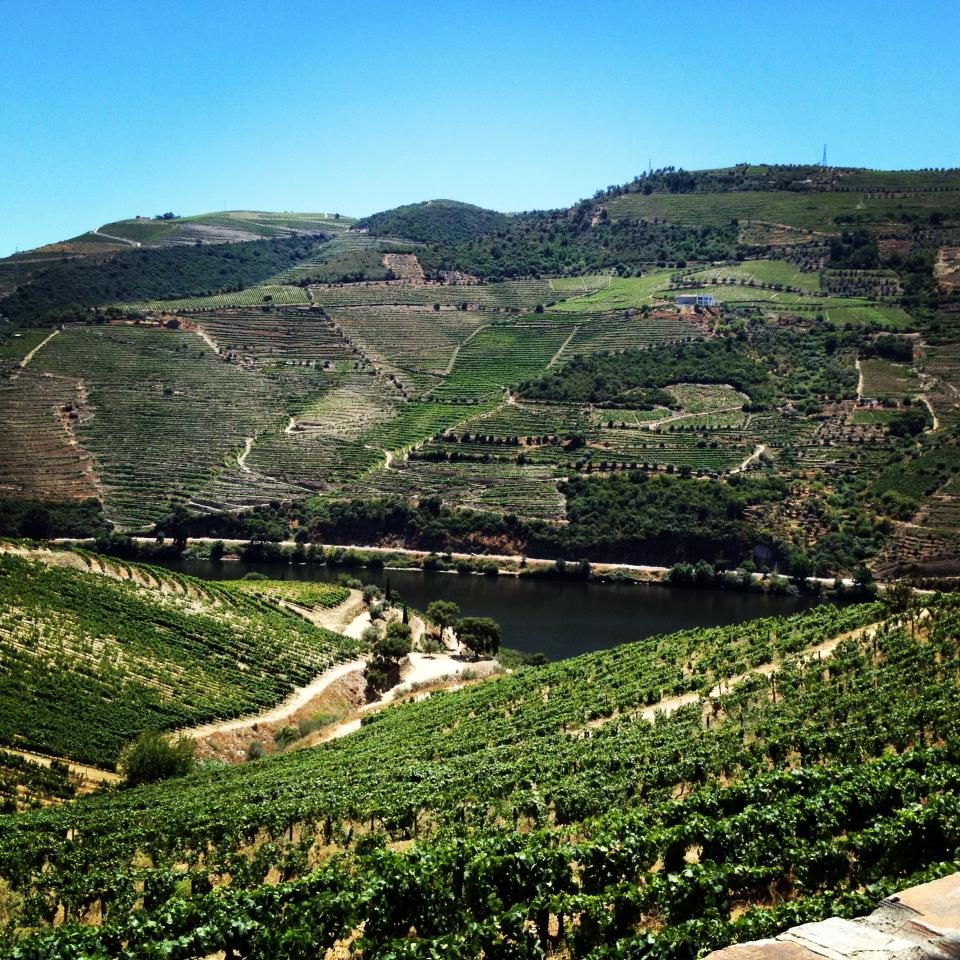
The talk didn’t go further, though. Before I could ask more, Jorge called me to see the wine terraces and the topography of the area. Green terraces, old manor houses, it seems people here are self suficient and they plant and grow all they eat.

Image

We eventually reached our destination about an hour later. A friendly Portuguese lady took us to Quinta Nova, a vineyard owned by one of the richest families in Portugal (Amorim) that also has a restaurant and hotel. We had the most amazing food; a special fig dish started the feast, which was flooded by wonderful wine and ended with an orange pudding and, of course, Porto wine.

If that had not been enough, we were still offered to enjoy the swimming pool. It lays on the same level as the vine terraces in a fake horizon, and the sun was inclement. We swam, laughed and talked while contemplating the vineyards and the Rio Douro all the way down.

Image

I was so thankful to Jorge that I could not even explain. He told that it was not common to invite strangers like this to go out and spend the day together on their free day. “The Portuguese are reserved people, and I was afraid I scared you off, but then, we had connected so much.”

what we saw from the pool…

Image

It is true. O Caçula, Jorge’s restaurant, is a jewel we found by total chance. I had never imagined we would make a friend in Porto in such a short visit.

And now, as Edu is packing his bags to go to Switzerland and I make my way to Lisbon I feel my heart tighten. But it is ok. I have felt that before, it is that painful feeling that anticipates Saudade.

And it is also the feeling you often get when you are in the right track. When you know in every cell of your bone that your departure affects you and the others you are leaving, and that you will always think back at that time with joy and happiness; the pain comes from  our inablity to accept that we must keep walking just a few more steps till you re-encounter those you once left.

Love,

Jules

The Fado, Saudade and Joy, in Porto, Portugal

Cidao 1

Porto is slowly becoming my favorite place in Europe. I just feel so happy now, so in place, the days have been so sunny with breezes, the skies soo blue and next to me is Edu, someone who fully understands me and my whole journey. Someday I will tell you more about Edu… some of you have met him now, but he entered my life after all that had to collapse had collapsed, after I got rid of all the loose ends I had to close. He saved me from my most violent epilectic fit in Brazil. And he entered my life in my own house, meeting right on the first day my dearest friends, and then my closest family. He met my grandmother. And then he edited my book as much as he could. So if you are astonished why some of my emails reach you without mispeelings and other mistakes, it is always an indication that he is with me. And let’s hope this will be forever 🙂


Ok, I was not supposed to to write that much but my life has been like that… of being so exposed and explicit. and while my previous emails were called Around the World, this now is called Being in the World. I am tired of being slightly off worlds. Because my old desire to see people and cultures has not died in the hospital, what has died is my fear to be in the world and face it. I am here. And I am happy to be.

AAAAA

I received so many lovely messages that moved me enormously, also from people I had not heard of in ages. One in particular was from a friend I met in India in 2008 and we never talked again. She wrote to say she had always read me. It is a very deep and personal email that flooded me with joy and a desire to share my joy.


Here in Porto the people are wonderful. And now that I feel more in place I am able to hear people properly. And since Edu is like me and loves to listen to people, and is just as interested in others as I am, we do very little and yet it feels like we know this place since forever. From within.


We made a friend, Jorge, who owns a very special restaurant that saved us from starvation when the internet suggestions failed. We were searching for a specific restaurant that we couldn’t find and Zé Pedro, the waiter at Jorge’s restaurant, got out of his way to show us the other place, which was closed. We decided to walk all the way back because his friendliness deserved to be rewarded. We hadn’t even seen the menu, but ok.


It was the best decision we could have taken. Not only the food was superbe, but Jorge, who we did not yet knew was the owner, told us about his love for Porto, that he had been recently to Brazil, and he gave us an address of a place where we could listen to some fado. “It is not a concert hall, it is apparently a place where the locals sing”, he said.


So the day after we decided to see the place. We took another friendly cab driver who at first just murmured hello but as he got closer he began to shout to people on the street and I made a comment of how popular he seemed to be there. “Of course”, he said, “I AM from this neighbouhood!”


And then we arrived at the place. As I saw it in front of me I thought this is the BAR DO CIDAO in Porto!!!

Cidao porto


It was completely packed with old people, but not just. Listening to an old man singing fado, I was taken aback: the whole little cafe stood in silence while the man sang, some heads swang to the rhythm, some mouths followed the lyrics. There was no place to sit, and nothing really proper to eat. I imediatelly started to cry (of joy, even though I was hungry as a dog).

Fado here:


And then suddenly the owner, a lady with the strongest and most authoritarian voice in the precinct, would scream in between songs like a school teacher demanding total silence.


But the noise came from outside. Inside everybody stood sill listening and drinking wine, and beer and eating all kinds of fried food.

Velhinho e eu

During the breaks I could talk to the old men, all fado experts. One of them told me that if I wanted to listen to professional fado I should go somewehere else. When I asked about where I could find genuine hearty fado, he told me I could not find a better place than there, the Adega do Douro. He gave us a chair (a real treat in a place packed like that) and told me that the fado is played in only a few keys. A singer would come to the “stage” and give only the key to the guitar players and tell them what kind of Fado they wanted to sing (fado, fado canção, fado humoristico etc).

Edu Porto


But the main idea is that people write their verses (“quadras” or “sextrilhos”) at home and then come and sing. As I sat there, I kept imagining how much of this tradition was actually mixed to Brazilian choro. Choro is a kind of Brazilian jazz mixed with African rhythms like lundu. I thought, as i heard one song after the other, of how Portuguese Brazil is in its emotion, in its fundamental connection to the feeling of “saudade”.


The best explanation I ever read of the word “saudade” is a nostalgic feeling of the past in the hope to relive it in the future. I believe people all over the world feel saudade in one way or another (Brazilians say there is no translation, but Edu tells me the Germans have a word for it, Sehnsucht… and in English it is something very close to “longing”… ), but hearing the Fado yesterday I knew that so much of our Choro (which means “weeping”) comes from this longing. This romatinc longing for experience, for something actually lived, and not for ideas or ideals.


I sat in this lillte cafe feeling i was the luckiest person on earth not only because once again I had found the way to the heart of a particular culture, but also because I was not alone. For the first time in my life, I had next to me someone who could see that as well.


And so I made these videos to share with you what the real fado feels like.


Eventually we left the Fado to go back to Jorge’s restaurant (O Caçula) and then we spent the whole night talking to him, and in the end he offered to take us tomorrow to see where the real Porto wine, and his family, come from.


So, Fado is sad, is funny, is longing. Above all it is social interaction, it happens when people come together to tell each other what is happening in their lives and their deepest hearts.


If I wrote a fado today, it would long for all the people I met on the road, I feel saudade for all of you who are in this list. But my fado would also carry the joy and hope to see you again somewhere IN the world.


And as Fado can also be funny here it is the Fado Humoristico

My First Interview- Mosaic the Path In Between

Dear friends as I keep getting questions about people who cant get my book. And I def want that all of you who want to are able to read it.. Here it goes:

1. It is only available online now…
2. You can buy it in any amazon in any country you are!!!!.
The link i put was the one local to the UK but you can find it in any amazon inthe world 🙂
3. You do not need to have a kindle to read it.
You can download the application of kindle for ipads, smart phones, computers for free
Here for downloading kindke app
The book is called
Mosaic the Path in Between
You can get it in any amazon!
This is the link to the UK one,
 if uou are not in the UK go to the site of amazon in your country and search for the book with the title
Mosaic, the path in betweev
If you have any problem let me kbow!  🙂 and if you are reading .. Please let ne know about it!!
Love Jules in Rome in ny way back to Asia 🙂

INTERVIEW – JULIETA FALAVINA, AUTHOR “MOSAIC, THE PATH IN BETWEEN”

by Eduardo Simantob, (Journalist, Zurich – Switzerland)

1. You have been to a few hotspots in the world (Kashmir, Palestine). How is it to travel in places like this, being a woman?

JF – People ask me this quite often, but I had to pass by a certain psychological “preparation”. I used to fear going to a place as charged as Palestine, but there was a situation I lived once in Paris, in a very dodgy neighborhood, where I was faced with a very hostile encounter with a young Algerian in the street at night. But eventually we had a very interesting exchange, and the estrangement and hostility turned into empathy and understanding. Suddenly I felt I was ready. That night I felt I could go anywhere. Palestine, Kashmir, slums in Brazil, any conflict zone.

In all of these places I was welcomed. Not because I was parading as a savior, simply because I was just plain human. People know it, they can feel it. When you try to be respectful people act accordingly. More often than not my Palestinian and Kashmiri friends were intrigued by what they called “my goodness”. They usually took me in, and often told me I had to be very careful in the next village. Once I left them I should pay more attention, not all people are as nice as they were, they would say. I guess this deep fear of the unknown is a common thing everywhere. And though I know most of my friends shiver just to think of me talking openly to strangers…. I can’t avoid it. I find the risk of dying or being hurt really less scary than the reality of not knowing the other.

2. How does the fact of being a Brazilian woman affect the access to the people, and to the stories you tell?

JF – Being a woman makes it harder and easier at the same time, though I don’t know how it is to be a man. But being a woman makes it possible to be anywhere in a more gentle way. All people I met had mothers; some had sisters, and daughters. Whenever people were aggressive I usually asked about their family. I never felt scared for being a woman anywhere. Fortunately it has been so long that I do not feel harassed that I barely know how I react to this. I usually talk back to people. And they get puzzled, and eventually start telling me their stories. Or else, when they could not talk to me, they would offer sweets in a bus, or a smile… I really cannot think of a time when I felt really scared.

Being Brazilian also makes a huge difference. I did not notice it immediately… but soon enough I realized that by the fact that Brazil is mainly known for football and carnival, it made people relate to me very differently. Not having a history of being a colonial power, or an imperial power (although in Latin America this perception is a bit different) often allowed me to ask whatever I wanted. Having been born in Brazil also prepared me to the idea of syncretism and to accept difference, in spite of all economic problems arising from the enormous inequality that exists there. We usually boast how we are used to difference, but it took me a long time to feel at home in Brazil again. And if there is one thing I do admire from where I come from is the usual acceptance people have towards difference. And of course, the proverbial optimism and joy. Being Brazilian allowed me to always laugh and to be emotional at things. Seeing difference was the norm in my life rather than the exception. So people often ask me about football players or Carnival, which are happy events. It makes my journeys significantly easier.

3. You avoided taking sides when describing the conflict zones you travel through, and keep the politics in the back. But how could you describe yourself, politically?

JF – My book came out of a series of emails I sent to people to explain the place I was in. I was, and still am, more interested in people than in the political reality of a place. I studied international politics and social sciences, so I was not unaware of the political facts on the ground. But I felt misinformed by it. I find it very important to know the history of a place, yet what always moves me are personal stories. And the more I wrote about them the more I realized how similar we are in the world.

As an anthropologist I always defended the plurality of the world. I wanted to cherish the languages, the cultural manifestations, and as a student of psychology I also always felt we were exactly the same everywhere. It did not matter even whether I spoke the language of the place, soon enough I could grasp what was going on.

The reason I never write that much about politics in my e- mails is because politics permeate the world where we live, but if we focus too much on it we are taken by ideas and lose touch with the human aspect.

I don’t even classify myself politically anymore. I am interested in people, but without ever losing the notion that we are the same in diversity. It is tricky when you think of borders, that on one hand they should  preserve differences, and yet, on the other we should  not allow them to fully separate us  from the other.

4. And spiritually?

JF – Brazil is a very syncretic country. I was born in a Catholic family who is not practicing and that doesn’t attend church. As a child I believed in nothing, and had no affiliation to any specific religion. As soon as I could define myself as something, I would say I was an agnostic. Later, following the trends of the time I became a fundamentalist atheist. Until I met a friend who is deeply involved into religious studies, and asked him whether he was a “believer”.

He said, “I guess I am a believer trapped in the body of an atheist”. To what I replied, “I guess I am an atheist in the body of a believer.” We became very good friends ever since. I believe both of us relieved our atheist parts somewhere along the path. I have always felt both.  Sometimes a believer trapped in an atheist body, sometimes an atheist trapped in a believer body. Never were the two in the same place at the same time. Till the day I stopped trying to be that coherent. Nowadays I am very interested in religious beliefs, but my biggest religious practice has to do with compassion. A value I learned to understand better with Dostoyevsky’s “Brothers Karamazov”, and that I see in almost all religious manifestations in the world.

5. What is the meaning of the “path in between”?

JF – I wanted to call my book ‘In-betweeners’ because I always felt we were trapped in between worlds, ideas etc. But something that happened in Brazil made me realize that we do not have to choose all the time. We do not have to be perfect. We have to make a Mosaic. Mosaic is a celebration of art. It is a celebration of what is made by hand, the art of the possible. Taking things that were broken and making something better with them. Something beautiful. And celebrating what is most human: living the symbolic.

Art is for me the best manifestation of humanity. And a mosaic is a form of art that leaves the idea of perfection (in disruption) aside. A mosaic is beautiful because it is made of pieces. We are all made of pieces.

What matters is the journey, not where we come from or where we end. This movement to go back is a search for belonging and we belong both to the All and to a specific thing. We must go back to realize that we are inheritors of all the joy and pain that exists.

The middle path is a Taoist idea, a Chinese concept. But it is something beyond that I wanted to bring, because it has nothing to do with being in the middle as being “right”, “correct”, but of being really in between things, conflicts, ideas. It contains the idea of the middle from Buddhism. But not a perfect middle.Just in between, in what humans are; in this human experience we can make a mosaic.

But this is just one narrative. There are others and they should all be heard. Because it is only in hearing the other that we find our own voice. And I have finally found mine.

6. What was your plan when you started to write your blog, and how did it change in the course of your travels?

JF – My book is in fact a series of emails I started to write to my friends when I first went to volunteer in Asia.

As soon as I started asking people whether what I wrote about them was ok, they told me they wanted to be part of my list to know about the other people I met. Soon many of the people I had met were reading my stories somewhere else. This has fundamentally changed the way I wrote because all that I saw I wanted to share with people I had left on the journey. So my emails were always an attempt to share with others what I saw.

Once I started going back to places, my writing changed again. I remember a class I attended at the LSE where Professor Fuller explained how his experience with the people he researched made him much more accurate.

“When you write about people in Tuvalu and they do not read you, you can say anything. Now when you talk about Indian Brahmins and they will read you and be in your audience, you have to be more careful”.

I often thought of those words when I wrote about Palestinians and Israelis. I always knew they would read it. I needed to be as accurate as I could. That is why, when I published my book and I asked people whether I could write about them, they said yes. Not only they knew me, but they had read me. They knew what I wrote was what they had told me.

7. Did you change much of your writings when transcribing your blog to the book? Is the voice you found in the book the same as the one in the blog?

JF – Most of my writing is exactly as it was. The only corrections were made by my editors for most of these emails were typed from my I-Phone or I-Pad, and I simply never edit anything. I don’t know how to, and was always on the go.

8. Do you think that your experience as an anthropologist is more an advantage or a hindrance to your sensibility?

JF – I actually am not sure. I believe I was born an anthropologist because of my interest in the other. In the beginning I used social theories, political theory, cognitive theory to attempt to understand life. Then this was all thrashed. I guess I took from anthropology the admiration for a plural world, and from cognition an interest in the things that connect people. From my Professors Rita Astuti and Maurice Bloch I learned that what people say and what people think can be fundamentally different. Maybe from my whole time in academic life this is the most important lesson I have learned. What people say usually has to do with society, now what people feel and think…. that is way harder to tap into scientifically.

9. You studied music and have composed quite a few songs. Is your music some kind of link to Brazil, or do you feel it more in tune with your international experience?

JF – Well, I started to compose when I was a child. I used to feel that Brazilian music touched my soul while other music travelled to other places in my body. Nowadays I do not feel that anymore. I remember hearing Klezmer in Brazil and feeling I was a nomad. Music connects me to my body, and that is where home is to me.

10. Do you still feel like writing songs?

JF – I am not sure. Since it is quite hard for me to sing now, because of a health issue, it is difficult to say. I love playing with a French musician called GaspardDeloison, a very talented boy I met in Asia. Gaspard has the ability to transform what he hears in something more beautiful. He is so humble that he can’t see it. If I ever were to record a cd it would have to be with him. Yet I prefer nowadays to just play the piano (which I can’t actually play).

“Mosaic, The Path in Between” can be purchased for kindle. You do not need to have a Kindle to read it.  If you do not have kindle you may download a kindle app for free on your phone, Ipads, or computers.

For Kindle here:

http://www.amazon.com/dp/B00CSAJHP4/ref=r_soa_w_d
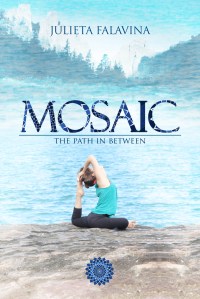
MOSAIC, THE PATH IN BETWEEN

SYNOPSIS

“Mosaic” is the journey of a woman who always

felt lost, but who never feared the Other, and went after It. It is the journey of a woman coming of age while trying to understand boundaries as well as her roots

in search of a sense of home. It is a human journey through her body and with a soul open to

record the so many voices that helped her finally find her own. The voices of Thais, Palestinians, Israelis, Tibetans, Europeans

and so many others, calling for a gentler world, a world in which all of us feel less alone.

The book does not follow a strict chronological order. Instead, it delves on an inner path. Mosaic starts with an old self of the author, still naïve but at the same time quite skeptical of faiths, dogmas and deep-rooted beliefs, leaving a precocious and short- lived marriage to do voluntary work in a school in Thailand. It is a seemingly harmless world, and her travels then also follow no plan or any specific curiosity, until she decides to focus her PhD in a research about how Israelis and Palestinians perceive and act upon the very idea of peace. Suddenly the individual stories and the humanity of the people she meets become much more interesting than any academic work. The PhD will eventually be dropped, but the trip will rage on up to the limits of physical endurance, as she is faced with odd health issues, the proximity of death and a reassessment of spirituality. She starts to realize that “home” transcends geography; it is made by people, by love, by managing to conciliate her roots with the antennae that connect her to the wider world.

The book also includes original illustrations done by artists Thomaz Bondioli (São Paulo/Amsterdam),Valérie Ciriadès (São Paulo/Belgium), Sandra Naxara(São Paulo) and Mounia Dadi (Marrakesh). Original graphic design made by Gustavo Soares (Rio de Janeiro).

“Mosaic, The Path in Between” can be purchased for kindle. You do not need to have a Kindle to read it.  If you do not have kindle you may download a kindle app for free on your phone, Ipads, or computers.

For Kindle here:

http://www.amazon.com/dp/B00CSAJHP4/ref=r_soa_w_d

Mosaic, The Path in Between

ABOUT THE AUTHOR

Julieta Falavina (1981) was born in São Paulo, Brazil, but attended French schools in order to follow a constant curriculum while following her parents’ errands. At the age of 19 she won a Fulbright scholarship and graduated in Music and Anthropology at Hofstra University (New York), later continuing her studies at University of Amsterdam (Social Sciences & Conflict Resolution) and finally settling at the London School of Economics, where she completed her Masters in Cognitive Anthropology

and started the PhD program. She was also teaching assistant at Birkbeck College and University of East London in Political Approaches to Social Conflict (2011).

Julieta’s nomadic life started at a tender age, having lived in Buenos Aires and in South Australia still in her teens. While pursuing her academic career in Europe, she traveled extensively in South America, Southeast Asia, India, North Africa and the Middle East. In 2009, while volunteering in Thailand, she began to narrate her stories via e-mail to about 20 friends. The characters in her stories started to become readers, too, firstly to know what was being told about them, but then to also follow the world through the eyes of someone they knew so well. Soon the mailing list had more than 500 names, many of them replicating the stories to their own friends. In parallel, Julieta kept two blogs, one in English and another in Portuguese (with different contents), where newcomers could read what she had written before. As a prolific songwriter, Julieta has also dozens of songs composed in several languages, and many of them can be seen in her own YouTube channel. She is fluent in Portuguese, Spanish, English, Italian and French.

Links:

http://www.translatingthoughts.wordpress.com (blog English)http://descolonizandoamente.wordpress.com/ (blog Portuguese)http://www.youtube.com/user/julietafalavina/videos?view=0 (YouTube Channel)

“Mosaic, The Path in Between” can be purchased for kindle. You do not need to have a Kindle to read it.  If you do not have kindle you may download a kindle app for free on your phone, Ipads, or computers.

For Kindle here:

http://www.amazon.com/dp/B00CSAJHP4/ref=r_soa_w_d

Mosaic, The Path in Between

Posted on May 4, 2013

Image

Dear friends as I keep getting questions about people who cant get my book. And I def want that all of you who want to are able to read it.. Here it goes:

1. It is only available online now…
2. You can buy it in any amazon in any country you are!!!!.
The link i put was the one local to the UK but you can find it in any amazon inthe world 🙂
3. You do not need to have a kindle to read it.
You can download the application of kindle for ipads, smart phones, computers for free
Here for downloading kindke app
The book is called
Mosaic the Path in Between
You can get it in any amazon!
This is the link to the UK one,
 if uou are not in the UK go to the site of amazon in your country and search for the book with the title
Mosaic, the path in betweev
If you have any problem let me kbow!  🙂 and if you are reading .. Please let ne know about it!!
Love Jules in Rome in ny way back to Asia 🙂

“ It is not because I do not know my way. It is because I love you. And when we part we should know that. we should make it as a ritual. So that I know that  a piece of me is going. And i kneed to know that.”


Dear friends,


I know I owe an email to you. I started this email on the plane. And I will finish today as I am about to fly tomorrow to London.

Bear with me, I still make the same mistakes as usual.


So it starts…

Here I am again, on a plane. The first 4 hours I slept non stop. I was exhausted. For those of you who do not know I am flying to Switzerland to show my book in a sort of literary Salon.


Yes, that’s the news… I finally published a book!

Last year I started to write for a Magazine called Varal do Brasil, and while I was in Colombia they sent me an email inviting to join them in this literature salon in Geneva (May 1st-5th 2013)


I thought it was cool although I did not have any book to show. Once I came home I told my father and he said it was preposterous… especially because it was already the end of January, there was simply no time to write, edit and publish anything. “Think about next year”, he said.


My friend Claudia Alcantara, however, took the initiative and enrolled me in the Salon.


Claudia used to have a very normal job, and she disliked the curls in her hair, which is something very common in Brazil, some old traces of racism hard to die. She also disliked the way hairdressers worked the issue. So she decided to find out how the process was done. She ended up writing a manual to straighten hair and it started selling all over Brazil.


Hairdressers were impressed and started to ask her whether she also had some related products to sell? She didn’t. After a few emails with the same request, she decided to say yes.


She went around, studied some chemistry and invented a product based in the stuff that already existed, and she mixed chocolate into it.


Nowadays Claudia is the owner of a cosmetics brand called Cadiveu, and she sells her products for over 50 countries. Cadiveu has a brilliant website and you can read more about it here http://cadiveu.com/.


Claudia is someone who always believed in good ideas. She sold a product before it existed because she believed it could exist. She enrolled me in a literary salon to show a book in Geneva before I had a book.


And now I am in a plane with two suitcases filled with books.


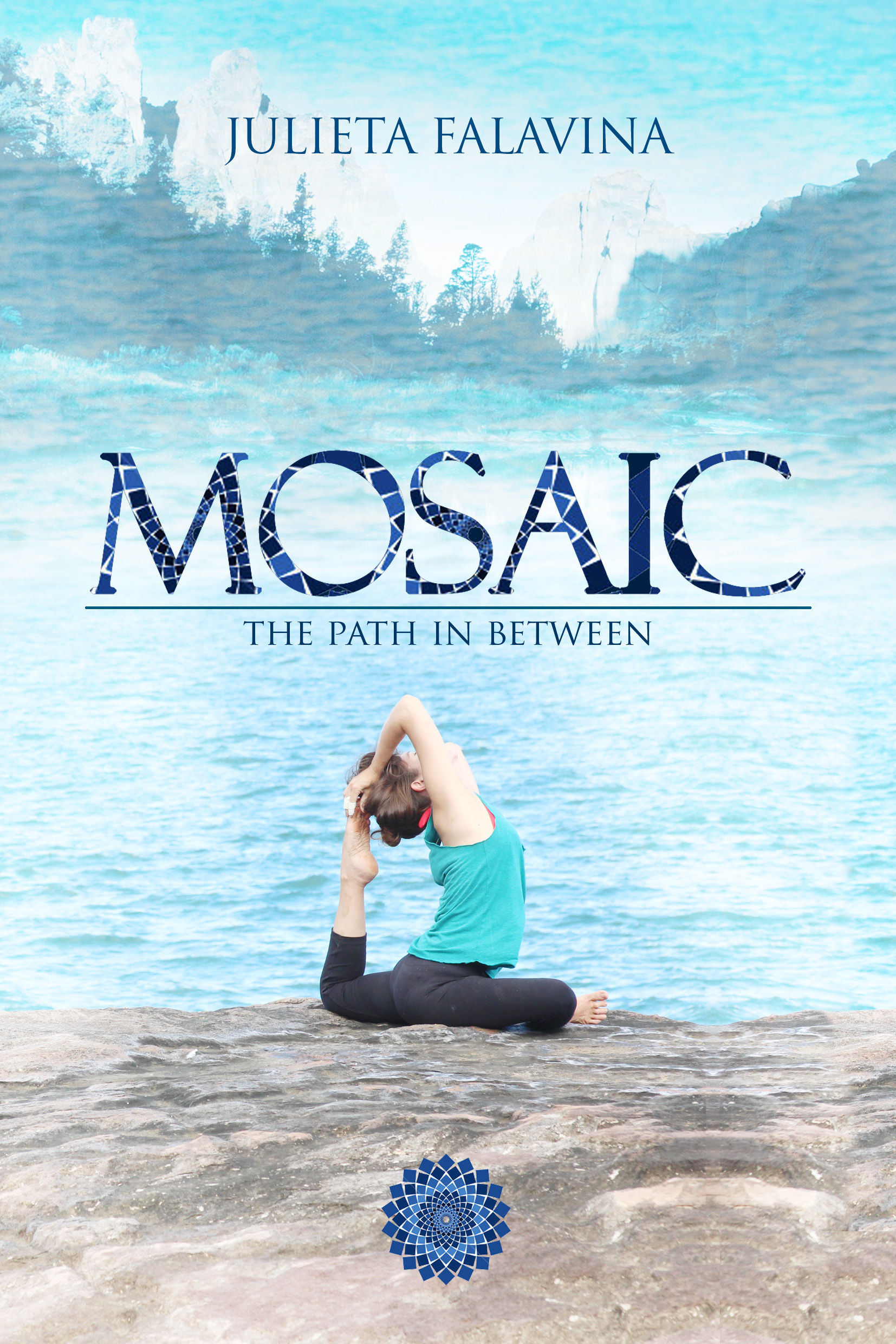
It is called “Mosaic, the Path in Between”.


Mosaic, is the art of what is possible. Nowadays I even think of it as the art of the impossible.


This book is a call for a more human world. It contains many of the emails I wrote throughout these last years…. It contains 4 mains ideas… Al Naqbah ( the great disaster when Palestinians lost their homes, but here I expand it to the huge disaster that most of us do not know where wer come from), borders ( what are they for?), Inbetweeners ( the feeling of always being trapped between worlds), and a search for home.


It contains the voices that many that I encountered Thais, Moroccans,  Israelis, Palestinians, Tibetans, Colombians, Braizlians and soo many others… to eventually reach the voices of my own family.


It is a treaty of love,…. that could not have been made in 2 months if people all over the world had not helped it take shape/


I owe special thanks to Andrey my Russian friend in Sweden for reading it, commenting it, and even helping edit it when we were all running out of time. Haiko Ballieux, my ex husband, my great friend from Holland who edited from the UK and the US,  Eduardo Simantob who is Arabic and Jewish and Brazilian and who edited from Switzerland in all of his spare time, Andrew Tope, who is British who edited on a plane between the US and UK. Then I have to thank the people of the Design Gustavo Soares, who I know since my Uni time, who designed this book in Rio while we still edited. He did the design in his spare time, while worki full time  and taking care of his 1 year old daughter,  Thomaz Bondioli  who is Brazlian/Portuguese and lives in Holland for making all maps and Illustrations. And Victor Mendes  in Sao Paulo for making the files online so that we could be doing this all over the world.


The Maps are hand made. They represent my experience.  Middle East map was particularly difficult for us to make. But once I was approved by a Palestinian and an Israeli I cried.


Then I must say that, the time was running so short that we had to ask  other people from other fields to help us.  Sabrina Rabelllo, brilliant  composer, and  who did  Phd in physics  at Kings College and Post Doc in Harward!, Henrique Sa Earp who did PhD mathematics in Imperial College and now is teacher at the univrersity of Campinas in Brasil. Marcello Sorrentino who did his Phd  in anthropology at the LSE where I left mine :)   Marcelo Fortaleza Flores who is an anthropologist and filmaker who lived in the AMazon for 6 years and had studied with Krishna Murti, taught me in the US, then at the Sorboonne. And Elizabeth Ings who is British  and is a writer and whom I met meditating in Vipassana. Finally Marisa Silveira who is in the US, and is from RIo and did her Phd in Linguistics at UCL also edited parts of this book.


Then came the art…. Thomaz decided to make some amazing illustration to represent the tougher chapter. He asked me to tell him. I sent him a song I had composed  and he made the illustrations of the chapter called Amit.Image

Then came Sandra….


Ok, Sandra came before. Sandra makes amazing Mosaic. And I asked her why she made Mosaic. And she told me she did them because she like doing art but was clumsy. She broke things. So she made a Mosaic. I told her that day, in the beach… that is beautiful. Mosaic is the art of what is possible. A celebration of that has been shattered but we make something beautiful with. That is how may book went from being in Betweeners to Mosaic…… Because it was a celebration of these in between things… the art of what is possible.


And so  I asked Sandra whether she could send me a picture of a Mosaic. She did. We had one day. The resolution was wrong. And she told me she collected the pieces to that mosaic by the thames… pieces she imagined that had floated…. had a journey. We managed to get the resolution by Sunday ok. We had to delivered by Monday morning.

Image


Actually I managed to convince Jacqueline the lady responsible for Varal to Brazil and for me being there now to allow me to bring the books with me so that we could get 2 extra days. Now we needed till monday morning.


Then my childhood friend whom I had not seen in decades came to visit and now as the very famous fashion designer Valerie Ciriades came for a visit. I asked her. Can you do me one drawing. She told me she no longer drew. She only did clothes. For when Jules? Tomorrow… And so I told her. Seat when you have time and read the part of the book mosaic of voices…about my family… which she knows well…. and if it comes you send it to me. It came… and to me it is how she sees me. It makes me happy because it is how I like to see myself today.. feminine, delicate and like music.

Image

And  then Monday we were all ready to send… and Gustavo had a doctors appointment….. and  then Mounia wrote me to Congratulate me….Mounia Dadi in Morocco. The brilliant painter, and my dear friend


It was in her house that I first had my  first ever epileptic attack. It was after seeing her art. Her whole following collection she  later told me was inspired on what had happened to me. So as I was about to print the book on monday… It felt now.. it is ready it has  to have Mounia’s painting


I asked her and she immediately said yes. and sent what she felt it represented me searching others. I sent an sms to Gustavo… Gu Don’t kill me… we need to put one more image. Can we please….??

Image

Resolutions wrong, electricity down… all working magically for her painting finishing my book.


I knew it was then right!


It was over.


We sent at 4 monday to Fabio my Grpahic Producer, and also a great friend of my father…. and he told me He was uncertain we could have them before monday.. when I flew.

I suddenly wanted Sunday because I wanted to release my book, our book in Brasil… and it was all ready at 9 am saturday.

We released at the casa do Nucleo with Benjamim Taubking palying piano ( though he had to travel soon), and me telling the story ot the book.  I won’t tell the story now. I am tired, I think I have said it all now.

I am on plane. I fly to finally deliver the book to Geneva. Just like Claudia believed one day it would happen.


The release was beautiful we made a mosaic…. a mosaic that features pieces put by my 88 year old grandmother and my 5 year old cousins of second degree. My dear dear dear friends were there. And now I fly. They all hugged me very strongly telling me staying 6 months away was too much.


It is true…. as I fly here..  I agree… I ll miss them too much. That is thought when you have finally made home inside. Then you can realise all the homes you had all over. All the love you have to all and you feel this uncontrollable desire to go there… and give one more hug, an now, our book…. which all of them feature,


So that I wrote on the plane. Here I met Edu my main editor. Who told me, we need to edit proper now, and then we would release online on amazon. I cried. I felt my book was not good. I still went to the fair. edu explain to me over and over the book was good. But it had to be edited by one person thoroughly. He read my my whole book. And we are doing that.

He drove to fair. And I met amazing people. There was so much. So many people I felt so tired. ALl the tlack of sleep suddenly appeared. And I made a new friend. Nairubia and indigenous gril from a tribe called Iny in the island of Bananal. She put her hands in my lip. Closed them. She touched my face. She was there as the artist of the illustrations of the book. She was so special that I walk out.


She look into my eyes. Adns she said. He knew of your pain, dont ever let the light go away. Darkeness is just absence of light. She touched my face. Caressed my temples. She sang. And she said


“ I have nothing to teach you. You know. but one thing. dont get out of the litght anymore”


And then she gave me a profound gift. She told me people like me make her want to live. It imediatelly came to me the conversation I had with an anthropologist who told me the indigenous were different. I looked into her eyes. And I knew what I preached in my whole book was truly real. That day I felt… I don’t know indigenous people. As Nairubia touched my faced. Released the tension from my eyes. I knew compassion exactly the same anywhere is always [present. I cried.


I asked her whether she wanted me to take her back to the place where authors were and she said yes.


“ It is not because I do not know my way. It because I love you. And when we part we should know that. we should make it as a ritual. as if a piece of me is going. And i kneed to know that.”

Image

I knew fully what she meant. I walked with her. we toasted with juice. We hugged. and I felt in place.


Image

Then I cam home. The house of the travelling family you will read about. I met them on the road. Seing them again was like a part of me was being made put back. They cooked for me, they hugged me. We remembered all that once was. I am happy.Image

Image

Edu took care of me for all the time he could. They take care of me now, and tomorrow I fly to London.

Image


It is all good in this side of the world. And it will always be good wherever I am because I am in place.

Image

Love,

from Switzerland

This World

Image

My dear friends,

I have not written in a while… that is because I am almost done with my book. Mosaic, the Path in Between…..
But there is a last episode I owe you… and I want to share before my book should be print by the end of the month… when I plan to be in Switzerland to show it….
but this is my last news… of my last hospital trip…. it is important so please read…

Dr. Getulio


“This is truly unbelievable! Just completely unbelievable. Just like you can refuse a doctor I can refuse a patient. I want to say something very serious to you. If you do not take your medicine I will not be your doctor anymore. I can’t take this anymore Julieta!  You are beautiful, intelligent, brilliant! Why did you not take your pills Ju! Why?”


Dr. Getulio entered my life as the neurologist who was to explain me why was it that my brain was destructing itself. It has been now almost 6 years that he entered my life. I was terrified at first because what I could possibly have was multiple sclerosis. For the past  I never really knew much about Multiple Sclerosis, but it terrified me.  For  the last  6 years I know Dr. Getulio I have been on epilepsy medicine. Since I was first admitted to Hospital six years ago I have embarked on a journey to attempt to try to understand what had happened to me.


Multiple Sclerosis became eventually a long faded possibility. You all have now read my last episode. I woke up paralyzed one morning and  that  is not why Dr. Getulio is furious with me. He is furious because of “now”. This week, just as I am about to print this book which has been put together in a very short time, with the help of all of my friends I just decided to stop my epilepsy pills because I visited a doctor that said that that was a possibility.


I did not follow the advice of that doctor fully either. He was a homeopath and he told me I could stop. I should have waited and should have been more cautious, I should have done it properly, I should have reduced it cautiously. But being me, always so willing to ditch allopathy I just stopped the medicine all together on my own way.


I was playing piano to a friend, Eduardo Simanthob, a brilliant poet and writer (and who is now one of the editors of this book) when suddenly I had too much energy in me. I do not remember anything anymore. I seized. I hurt my whole body in that fit. I was once more admitted to hospital and it is because of that that Dr, Getulio, my family and my friends are now  furious.  For once in my lifetime, I  was actually not scared of the seizure. I felt protected.


“ I have no idea what caused all the rest that happened to you Julieta. I don’t know why you lost myelin in your brain. I do not know why your tongue one day was paralyzed. All exams show  absolutely nothing.  But  there is one thing I am certain of, and that is that you are epileptic. I am not sure what caused the loss of myelin in your brain 6 years ago but that has left a focus of epilepsy. You do not not need to do anything but take one pill a day to control this! Why can’t you do it?”


Dr. Getulio is a brilliant doctor. He is trusted by all. I trust him. And I have just decided to add him here as my last super character. He is not here because he is a brilliant doctor,  I chose to put him here  because he changed something structural on the way I think this week.


I decided to write this book so that we all could live better, so that we would not have to quit the world. I always knew I should write a book, but I have never fully known what it should be about. In a conversation with my friend Paula Gabriel, we concluded we both, who are nice people had been quite suicidal. We wondered what was happening, that so many people were so unhappy? Paula pondered that we had been born seeing cartoons of the future, and that now we were all terrified with the collapse of the world. Suddenly, we all wanted to be present. Paula and I always talked about how this form of being present, just to satisfy egoic chemical releases left us in the end completely lost, alone, and disconnected.


When my book eventually came about, I knew I wanted to write a book so that we,  people, who cared for others, we most of us genrous people, , could find a way to sstop wanting to quit the worldt. My answer, or the beginning of it seemed to be in gentleness, in more care of those around.


This week when I seized, and could deal so well with the pain of the attack that must have been something wrong. I realised my feeling ok with the attack was almost as a total lack of care for life just like my previous wanting to die phase.  As I was about to print this book, a book where I call for a more caring world,  my body reminded me one more time that we live in a physical world. I realised that when I attempt to negate allopathy altogether to have cures that come solely from ideas, or beliefs I once again quit the world and the human experience. I forget the absolute importance of those around me.  When I do not take my medicine, I realise, I do not value the work of so many people I deeply respect, I do not value my own life, when I do not take the medicine I quit the world.


I have a body that is having unnecessary pain now because of an ideological choice I made. I can deal with the pain well now. Those around me do not deserve to go through this pain. So I add Dr Getulio here as a way to apologize to all. In an act to understand that my life is precious and worth to be lived in its best way.  As an act of realization that in not taking simple measures to prevent harm to myself I hurt myself and others.


DR. Getulio embodies to me an abandonment of my total idealism.


“ I speak as a friend nor as a doctor Julieta. I will one day write a book. Though I am a neurologist.  I confess I believe most diseases are psychosomatic. One day I will write a book about that.”


I am sure he will. I am sure it will be a brilliant book. And I hope I can be part of this book. Dr. Getulio is a friend.  Someone I did not meet before these six years but someone who has been always a friend. Someone who  has called me daily on my cel phone to know how I was, when I begged to leave Hospital.


Thank you Dr. Getulio, Thank you.  I promised I will take the medicine everyday for as long as you believe it is fundamental. And I do understand that might be forever.


I add this part here because Dr. Getulio reminded me that I want to live well, that I want to stay in this world treating life as sacred.  I add this part here in order to thank all  of my dear friends who kept me grounded and whose work I believe is fundamental to the well being of so many in the world. I thank you Getulio Dare Rabello, Francesco Lombardi,  Laura Moriyama Silveira, Aquiles Paiva, Ivana Mendes, Camilla Amaral, Sara Al Saraf, Bruno Bueno, Cris Formiga,  Cristiano Sanna, Ilda Bondioli

Re-Encounters – Around the World in Sao Paulo

photo (7)

I don’t know how it happened but one day re-encounters have become way more important to  me  than encounters. Don’t get me wrong I still love encountering people, But now, I love reencountering them more.

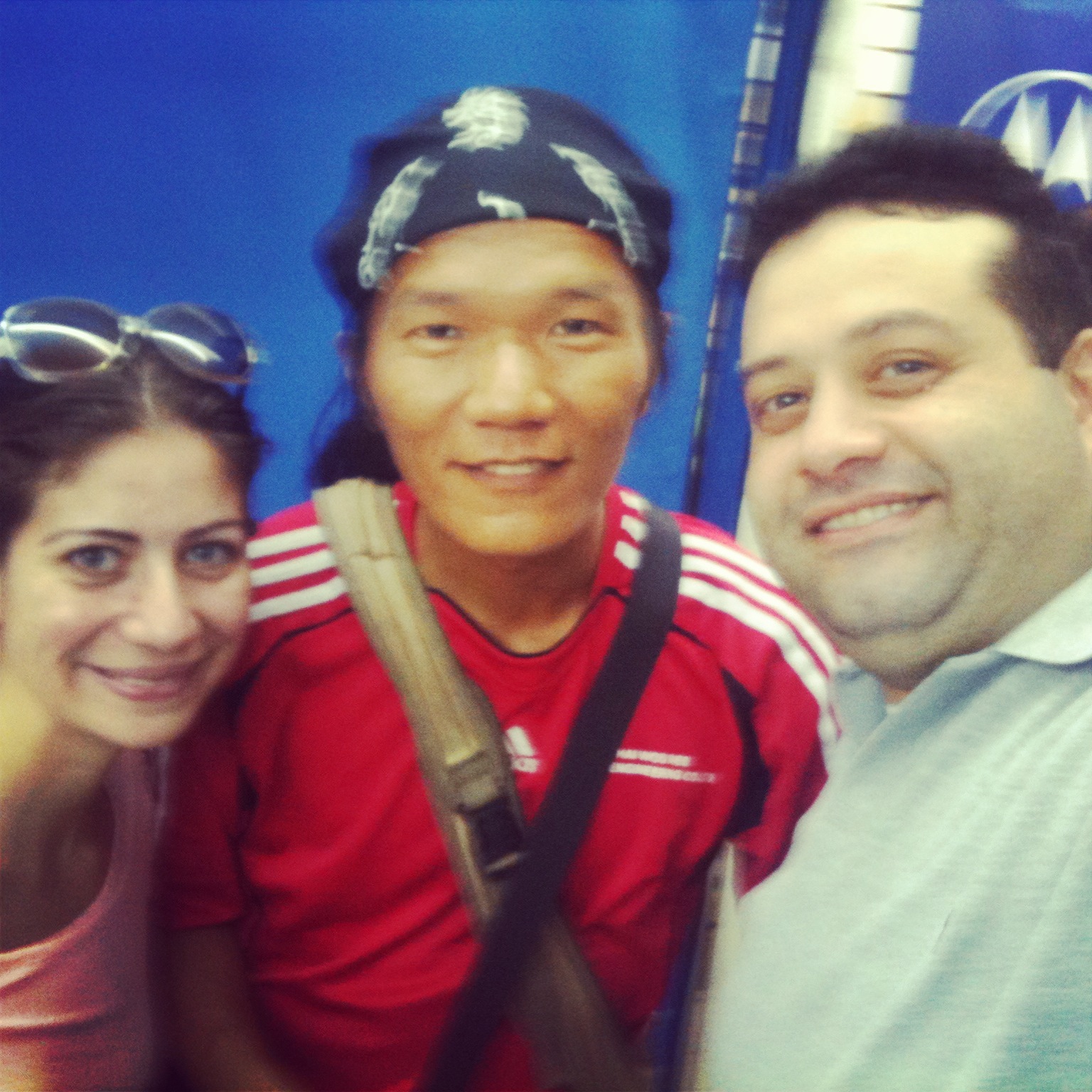
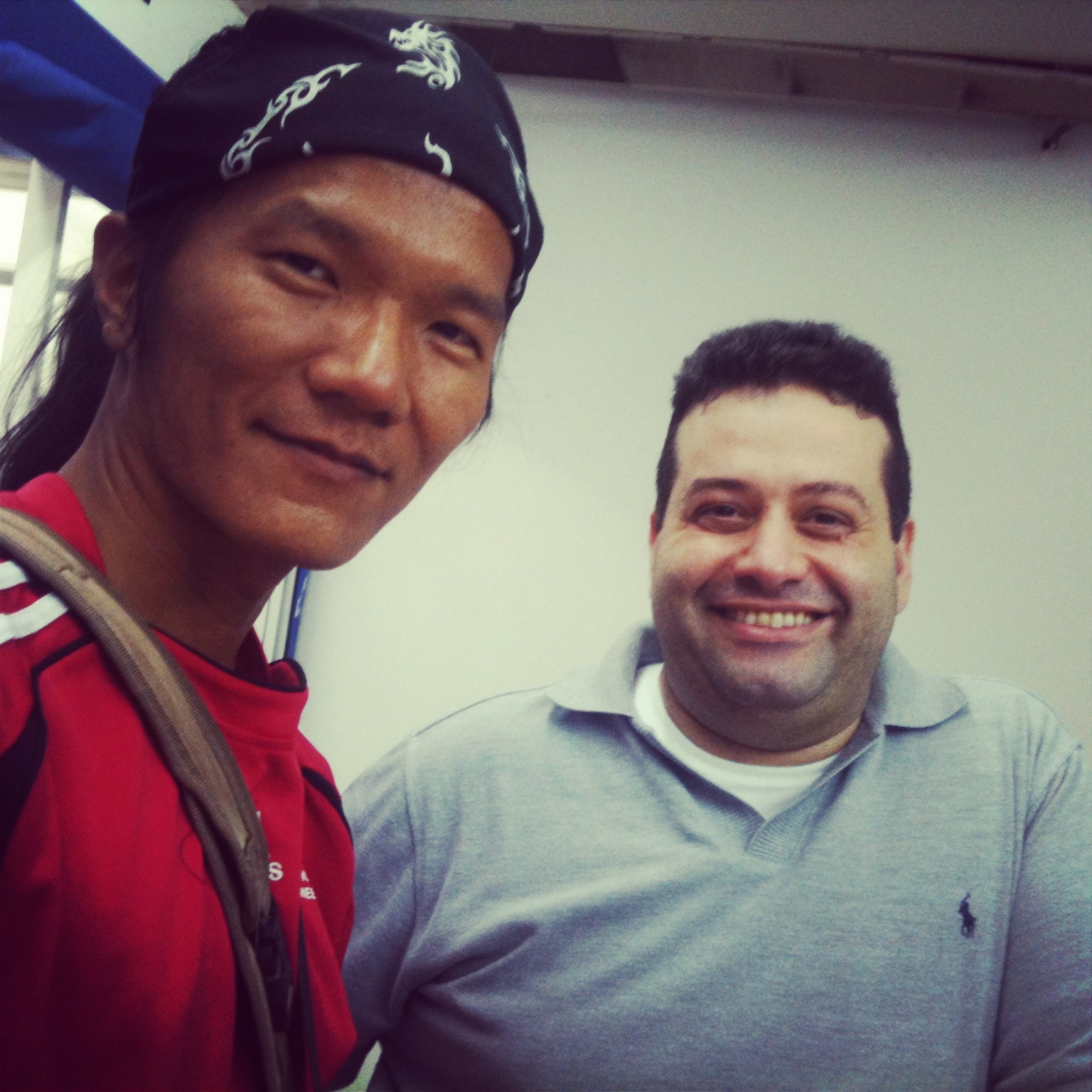
About two years ago I met Chi. He had been travelling at that time for 1  year. He had left his native Taiwan to travel for 2 years the world. We met though couch surfing.  I organized a dinner celebration for Chinese new year for him 3 years ago. We hosted at the time.

When he arrived in our place he had crossed China overland, then Mongolia, Russia, entered Europe through Estonia went all the way down to Greece, traveled overland Eastern Europe to Western Europe and I had met him when he had reached England.


At the time I was doing my Phd at the LSE. He met my friends. He heard about about my research in the middle east.  My housemates. My ex-husband and I liked him so much that we convinced him to just stay with us all of his stay. He had such an interesting view on travelling. He who was from Taiwan and had traveled overland sleeping in a mattress thought the biggest difference in people was city versus villages.


Now, twp  years  later, he is still on the road… He has left home 3 years ago, after having worked 2,5 years to  save up. He used to feel he could only travel for two years. Now he feels he could still go on for 8 years on that money.

I wake up very early to meet him. He is tanner, has long hair now and had just been to Rio in Carnival. He is in Brasil he tells me for 3 things: carnival me, and the Amazon.


I love Chi. He is so unique. And so I take him to do the stuff I need. First of all… I take him to Kamal. I want to give my Coffee from Colombia. Kamal for those of you who read me is the guy from Siria.

We walked  from my house till we reach Avenida Paulista.  We talk about life. Where has he been. We no longer really care about how many countries, or borders. We care about people. So though I ask where he has been the following  years. I am most interested to know how was going to South Sudan to Sudan and then Egypt,  and then Israel, and then Turkey and then my most desired destinations ( together with  Burma), to Iran!!!

“The people in the middle east are too good. It is sad to see them be oppressed as they are.  Though I think the Arab spring was real chaos…. It is only spring for the news….South Sudan was the best introduction to Islam. People took their time for people. They visited each other every Friday. They are strong not because of the economy or the army. The people are strong because they care about each other. You know what it is funny… in every country they are afraid of the next. They are always afraid that something would happened once I crossed the border”


I know. What he talks about. So we get to Kamal. In the mall where there are so many Chinese immigrants. And when I bring my coffee Kamal is happy, he is moved. I tell him Chi is my friend. He has been travelling with a back pack for 3 years. Kamal is amazed. Kamal who came to Brasil  when he was 17. Kamal explains to people around Chi travels with backpack sleeps on a mattress,  has a pot to cook.  People are amazed. Chi asks me to ask him how was Brasil.

photo (6)

I tell Kamal to tell the truth. I don’t care. I want to know this.

“ I love this place. Brasil opens its arms,  hugs  and welcomes you.  I have been back to Siria 4 times. You know. My brother stayed. And I go there and I know he is a good person but I don’t know him. He has been now here for 3 months. But he has a stuck mentality. If you don’t agree with him, he stops talking. I look everything from above and  is ok to disagree. In the middle east it is different.”

I am impressed learning what he thinks. I tell Kamal that I brought him the coffee from the cooperative. I explain the whole story and he gets it.  Very soon there is coffee in front of  me. He is curious about Chi.  We all talk in mix languages. I tell him, I have to go, and he tells me I need to come more often. I promise to do so. I learn so much about Kamal today. I learn so much about Brasil.

And then I take the tube/metro to go to Liberadade, a Japanese neighbouhood. There is something I want to get there. We enter a shop and we are helped by an old looking like Japanese man. He is from Shanghai.  I introduced him to Chi, they speak Mandarin. The old man had lived in Brasil for 45 years. The lady who works with him is Brasilian but she tells me her children are fluent in Mandarin.

I am shocked. How come? Was she married to a Chinese man? Not the case. She explains to me the school around the corner teaches Chinese to children. Her children are 12  and they had learned since they were 2. The school receives Chinese children, mix children, but  Brazilian like her children as well.

“ I cant understand what they write.” And she smiles

She is happy.  Chi and I walk around talking about life, people, films, lao tse. It is just so good to reencounter someone you know. I find out some of the people  I met in Asia or in Palestine have hosted him. People from different continents that now know each other. It is so good to discover a bit more my own city with a foreigner. None of us care too much about the touristic things. I want to show him, what matters to me.

I want to take him to my little home as I am creating it. As we walk out of the Tube  I hear my name.  I look and I see Bruno who plays in CIdao every Monday. Bruno who last time I wrote played my favourite songs in my little carnival. Turns out he is almost my neighbor.


I feel happy. I have reencountered a dear friend who like me cares about people. And I can finally show him what my home is. Which means very soon I will take him to the  Casa do Nucleo, the project  of the Pianist Benjamin Taubkin… and tomorrow I will take him to see Cidao. Then I ll take him to climb.

He insists I must not get tired.  He is just here to see me.

He does  not need to see anything. And I explain I am so happy he is here. I am so happy I can show someone I deeply respect a bit of where I come from. Finally I can, and soon we will go with my godfather back to the  Centrakl Market.

I know where I come from, Benjamin was right it is where the new is possible, Kamal is right it is a place that welcomes you with whatever it is that you come with.