Unknown's avatar

About julietafalavina

Eu escrevo da minha vida, e agora sobre a minha recuperação da saúde .

This World

Image

My dear friends,

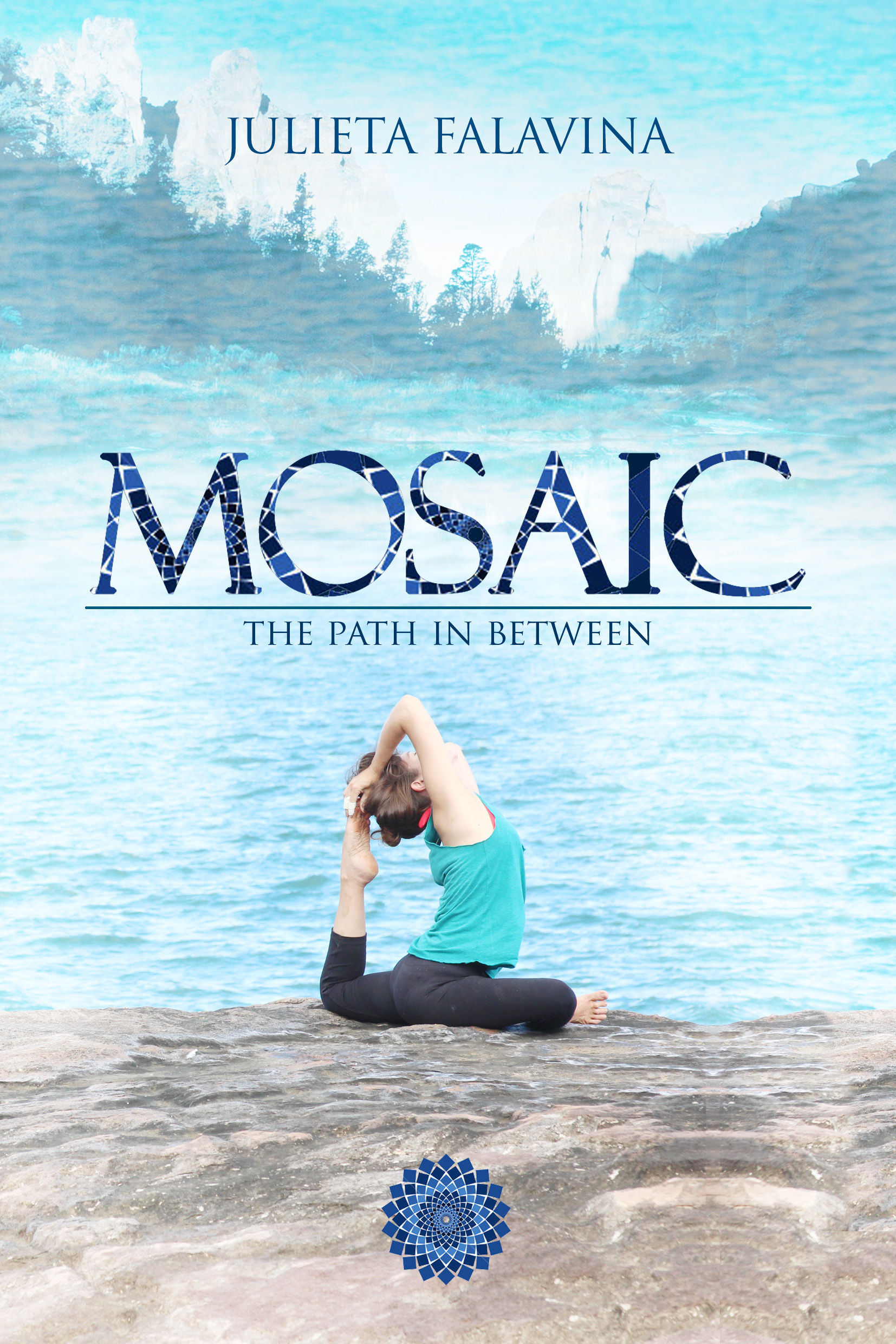
I have not written in a while… that is because I am almost done with my book. Mosaic, the Path in Between…..
But there is a last episode I owe you… and I want to share before my book should be print by the end of the month… when I plan to be in Switzerland to show it….
but this is my last news… of my last hospital trip…. it is important so please read…

Dr. Getulio


“This is truly unbelievable! Just completely unbelievable. Just like you can refuse a doctor I can refuse a patient. I want to say something very serious to you. If you do not take your medicine I will not be your doctor anymore. I can’t take this anymore Julieta!  You are beautiful, intelligent, brilliant! Why did you not take your pills Ju! Why?”


Dr. Getulio entered my life as the neurologist who was to explain me why was it that my brain was destructing itself. It has been now almost 6 years that he entered my life. I was terrified at first because what I could possibly have was multiple sclerosis. For the past  I never really knew much about Multiple Sclerosis, but it terrified me.  For  the last  6 years I know Dr. Getulio I have been on epilepsy medicine. Since I was first admitted to Hospital six years ago I have embarked on a journey to attempt to try to understand what had happened to me.


Multiple Sclerosis became eventually a long faded possibility. You all have now read my last episode. I woke up paralyzed one morning and  that  is not why Dr. Getulio is furious with me. He is furious because of “now”. This week, just as I am about to print this book which has been put together in a very short time, with the help of all of my friends I just decided to stop my epilepsy pills because I visited a doctor that said that that was a possibility.


I did not follow the advice of that doctor fully either. He was a homeopath and he told me I could stop. I should have waited and should have been more cautious, I should have done it properly, I should have reduced it cautiously. But being me, always so willing to ditch allopathy I just stopped the medicine all together on my own way.


I was playing piano to a friend, Eduardo Simanthob, a brilliant poet and writer (and who is now one of the editors of this book) when suddenly I had too much energy in me. I do not remember anything anymore. I seized. I hurt my whole body in that fit. I was once more admitted to hospital and it is because of that that Dr, Getulio, my family and my friends are now  furious.  For once in my lifetime, I  was actually not scared of the seizure. I felt protected.


“ I have no idea what caused all the rest that happened to you Julieta. I don’t know why you lost myelin in your brain. I do not know why your tongue one day was paralyzed. All exams show  absolutely nothing.  But  there is one thing I am certain of, and that is that you are epileptic. I am not sure what caused the loss of myelin in your brain 6 years ago but that has left a focus of epilepsy. You do not not need to do anything but take one pill a day to control this! Why can’t you do it?”


Dr. Getulio is a brilliant doctor. He is trusted by all. I trust him. And I have just decided to add him here as my last super character. He is not here because he is a brilliant doctor,  I chose to put him here  because he changed something structural on the way I think this week.


I decided to write this book so that we all could live better, so that we would not have to quit the world. I always knew I should write a book, but I have never fully known what it should be about. In a conversation with my friend Paula Gabriel, we concluded we both, who are nice people had been quite suicidal. We wondered what was happening, that so many people were so unhappy? Paula pondered that we had been born seeing cartoons of the future, and that now we were all terrified with the collapse of the world. Suddenly, we all wanted to be present. Paula and I always talked about how this form of being present, just to satisfy egoic chemical releases left us in the end completely lost, alone, and disconnected.


When my book eventually came about, I knew I wanted to write a book so that we,  people, who cared for others, we most of us genrous people, , could find a way to sstop wanting to quit the worldt. My answer, or the beginning of it seemed to be in gentleness, in more care of those around.


This week when I seized, and could deal so well with the pain of the attack that must have been something wrong. I realised my feeling ok with the attack was almost as a total lack of care for life just like my previous wanting to die phase.  As I was about to print this book, a book where I call for a more caring world,  my body reminded me one more time that we live in a physical world. I realised that when I attempt to negate allopathy altogether to have cures that come solely from ideas, or beliefs I once again quit the world and the human experience. I forget the absolute importance of those around me.  When I do not take my medicine, I realise, I do not value the work of so many people I deeply respect, I do not value my own life, when I do not take the medicine I quit the world.


I have a body that is having unnecessary pain now because of an ideological choice I made. I can deal with the pain well now. Those around me do not deserve to go through this pain. So I add Dr Getulio here as a way to apologize to all. In an act to understand that my life is precious and worth to be lived in its best way.  As an act of realization that in not taking simple measures to prevent harm to myself I hurt myself and others.


DR. Getulio embodies to me an abandonment of my total idealism.


“ I speak as a friend nor as a doctor Julieta. I will one day write a book. Though I am a neurologist.  I confess I believe most diseases are psychosomatic. One day I will write a book about that.”


I am sure he will. I am sure it will be a brilliant book. And I hope I can be part of this book. Dr. Getulio is a friend.  Someone I did not meet before these six years but someone who has been always a friend. Someone who  has called me daily on my cel phone to know how I was, when I begged to leave Hospital.


Thank you Dr. Getulio, Thank you.  I promised I will take the medicine everyday for as long as you believe it is fundamental. And I do understand that might be forever.


I add this part here because Dr. Getulio reminded me that I want to live well, that I want to stay in this world treating life as sacred.  I add this part here in order to thank all  of my dear friends who kept me grounded and whose work I believe is fundamental to the well being of so many in the world. I thank you Getulio Dare Rabello, Francesco Lombardi,  Laura Moriyama Silveira, Aquiles Paiva, Ivana Mendes, Camilla Amaral, Sara Al Saraf, Bruno Bueno, Cris Formiga,  Cristiano Sanna, Ilda Bondioli

Re-Encounters – Around the World in Sao Paulo

photo (7)

I don’t know how it happened but one day re-encounters have become way more important to  me  than encounters. Don’t get me wrong I still love encountering people, But now, I love reencountering them more.

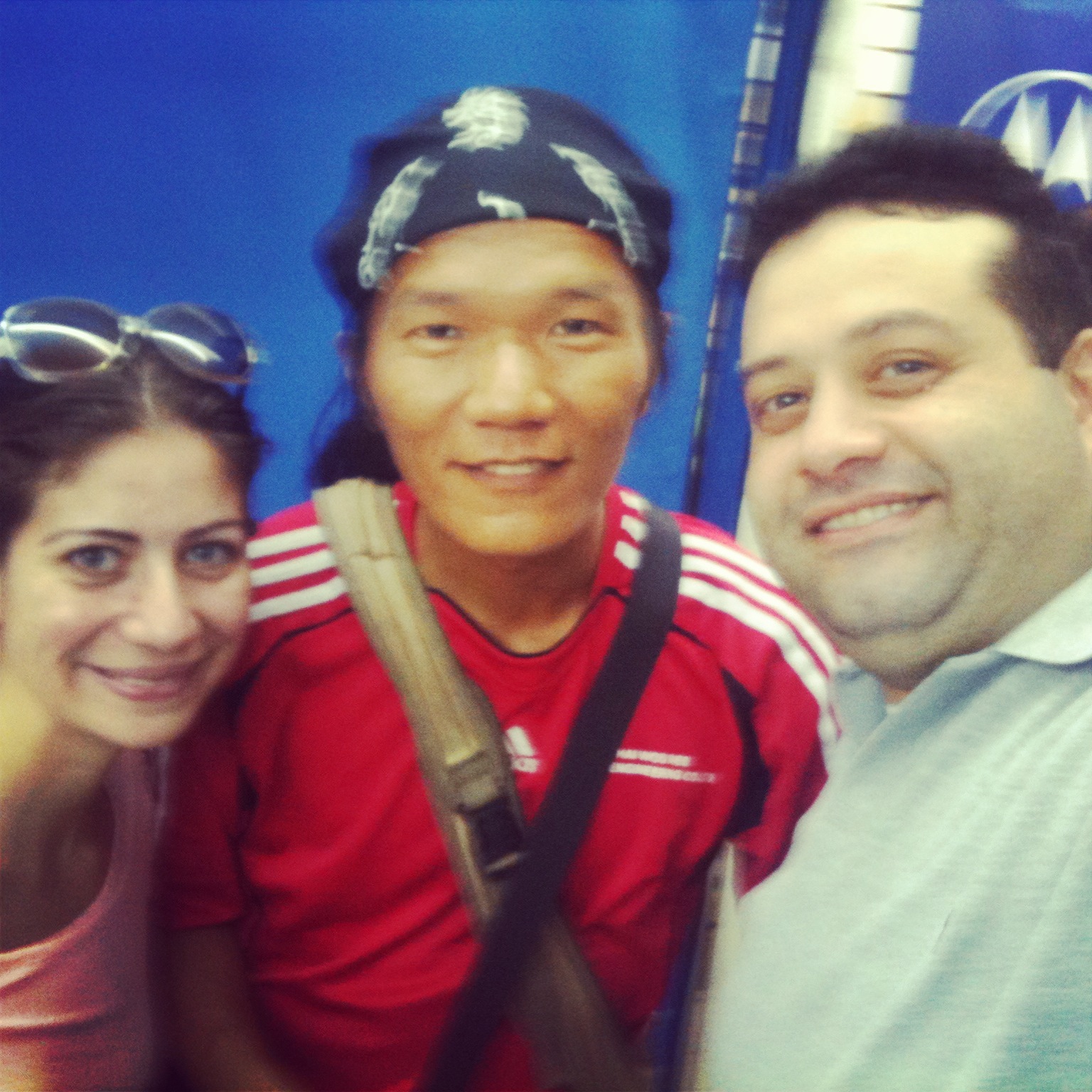
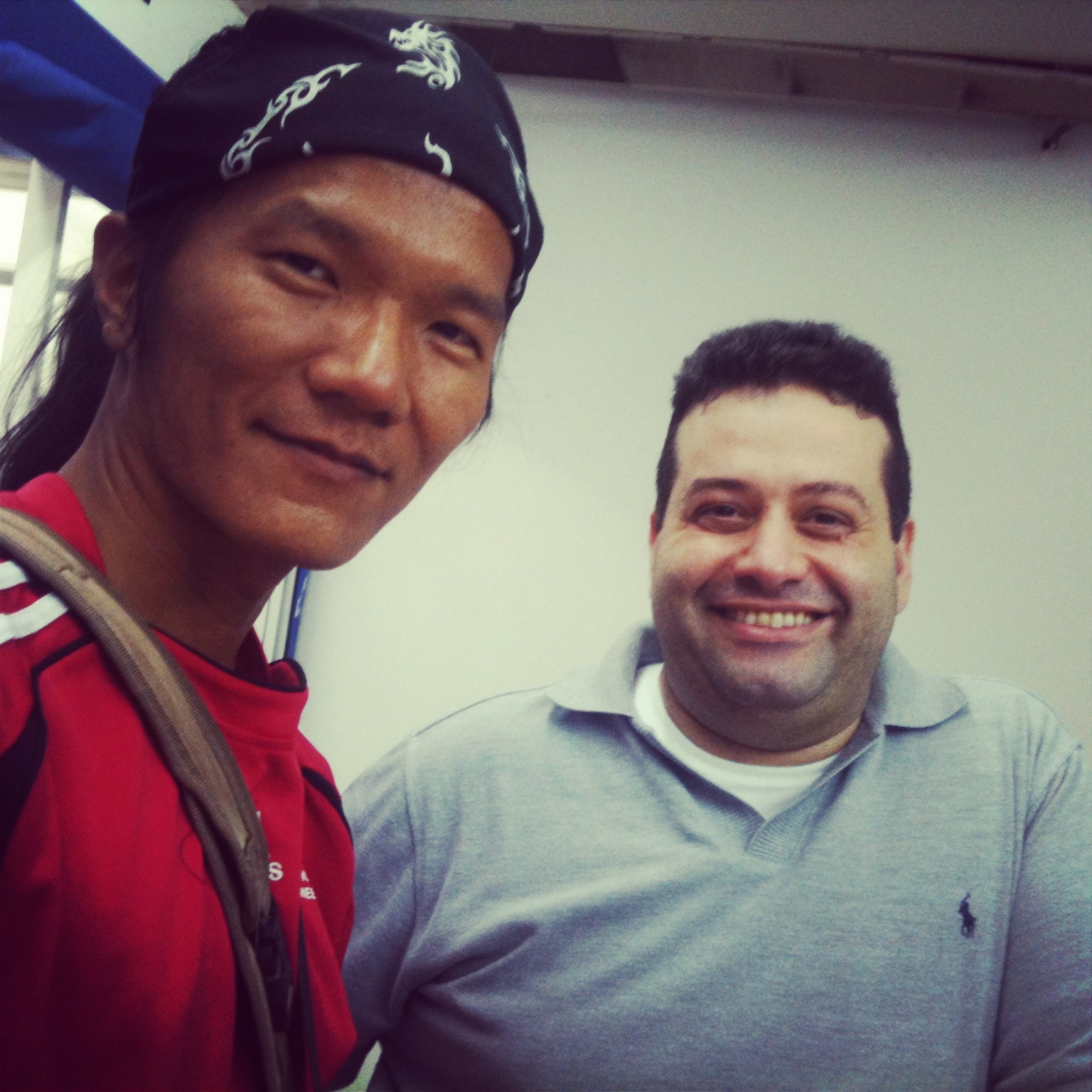
About two years ago I met Chi. He had been travelling at that time for 1  year. He had left his native Taiwan to travel for 2 years the world. We met though couch surfing.  I organized a dinner celebration for Chinese new year for him 3 years ago. We hosted at the time.

When he arrived in our place he had crossed China overland, then Mongolia, Russia, entered Europe through Estonia went all the way down to Greece, traveled overland Eastern Europe to Western Europe and I had met him when he had reached England.


At the time I was doing my Phd at the LSE. He met my friends. He heard about about my research in the middle east.  My housemates. My ex-husband and I liked him so much that we convinced him to just stay with us all of his stay. He had such an interesting view on travelling. He who was from Taiwan and had traveled overland sleeping in a mattress thought the biggest difference in people was city versus villages.


Now, twp  years  later, he is still on the road… He has left home 3 years ago, after having worked 2,5 years to  save up. He used to feel he could only travel for two years. Now he feels he could still go on for 8 years on that money.

I wake up very early to meet him. He is tanner, has long hair now and had just been to Rio in Carnival. He is in Brasil he tells me for 3 things: carnival me, and the Amazon.


I love Chi. He is so unique. And so I take him to do the stuff I need. First of all… I take him to Kamal. I want to give my Coffee from Colombia. Kamal for those of you who read me is the guy from Siria.

We walked  from my house till we reach Avenida Paulista.  We talk about life. Where has he been. We no longer really care about how many countries, or borders. We care about people. So though I ask where he has been the following  years. I am most interested to know how was going to South Sudan to Sudan and then Egypt,  and then Israel, and then Turkey and then my most desired destinations ( together with  Burma), to Iran!!!

“The people in the middle east are too good. It is sad to see them be oppressed as they are.  Though I think the Arab spring was real chaos…. It is only spring for the news….South Sudan was the best introduction to Islam. People took their time for people. They visited each other every Friday. They are strong not because of the economy or the army. The people are strong because they care about each other. You know what it is funny… in every country they are afraid of the next. They are always afraid that something would happened once I crossed the border”


I know. What he talks about. So we get to Kamal. In the mall where there are so many Chinese immigrants. And when I bring my coffee Kamal is happy, he is moved. I tell him Chi is my friend. He has been travelling with a back pack for 3 years. Kamal is amazed. Kamal who came to Brasil  when he was 17. Kamal explains to people around Chi travels with backpack sleeps on a mattress,  has a pot to cook.  People are amazed. Chi asks me to ask him how was Brasil.

photo (6)

I tell Kamal to tell the truth. I don’t care. I want to know this.

“ I love this place. Brasil opens its arms,  hugs  and welcomes you.  I have been back to Siria 4 times. You know. My brother stayed. And I go there and I know he is a good person but I don’t know him. He has been now here for 3 months. But he has a stuck mentality. If you don’t agree with him, he stops talking. I look everything from above and  is ok to disagree. In the middle east it is different.”

I am impressed learning what he thinks. I tell Kamal that I brought him the coffee from the cooperative. I explain the whole story and he gets it.  Very soon there is coffee in front of  me. He is curious about Chi.  We all talk in mix languages. I tell him, I have to go, and he tells me I need to come more often. I promise to do so. I learn so much about Kamal today. I learn so much about Brasil.

And then I take the tube/metro to go to Liberadade, a Japanese neighbouhood. There is something I want to get there. We enter a shop and we are helped by an old looking like Japanese man. He is from Shanghai.  I introduced him to Chi, they speak Mandarin. The old man had lived in Brasil for 45 years. The lady who works with him is Brasilian but she tells me her children are fluent in Mandarin.

I am shocked. How come? Was she married to a Chinese man? Not the case. She explains to me the school around the corner teaches Chinese to children. Her children are 12  and they had learned since they were 2. The school receives Chinese children, mix children, but  Brazilian like her children as well.

“ I cant understand what they write.” And she smiles

She is happy.  Chi and I walk around talking about life, people, films, lao tse. It is just so good to reencounter someone you know. I find out some of the people  I met in Asia or in Palestine have hosted him. People from different continents that now know each other. It is so good to discover a bit more my own city with a foreigner. None of us care too much about the touristic things. I want to show him, what matters to me.

I want to take him to my little home as I am creating it. As we walk out of the Tube  I hear my name.  I look and I see Bruno who plays in CIdao every Monday. Bruno who last time I wrote played my favourite songs in my little carnival. Turns out he is almost my neighbor.


I feel happy. I have reencountered a dear friend who like me cares about people. And I can finally show him what my home is. Which means very soon I will take him to the  Casa do Nucleo, the project  of the Pianist Benjamin Taubkin… and tomorrow I will take him to see Cidao. Then I ll take him to climb.

He insists I must not get tired.  He is just here to see me.

He does  not need to see anything. And I explain I am so happy he is here. I am so happy I can show someone I deeply respect a bit of where I come from. Finally I can, and soon we will go with my godfather back to the  Centrakl Market.

I know where I come from, Benjamin was right it is where the new is possible, Kamal is right it is a place that welcomes you with whatever it is that you come with.


Sao Paulo and Rio, Carnival- Resistence or Separation?

A1

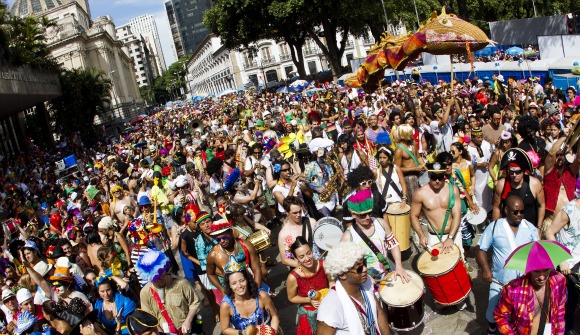
I am trying to reconcile myself with where I am from.  Brasil, the land of syncretism, of inequality, of multitude of narratives, of joy, laughter. Sexuality that swets out of peoples bodies. The land of Carnival. And it is carnival, and I who never could see what was soo Brazilian of me, decided I would celebrate it in silence.

Then, I decided, I should go to Rio to discover carnival. So, I called Lu, a childhood friend and she agreed to it immediately . On the same night we were in a bus to Rio. Elisa, who hosted us, is from Rio but does not really like carnival, nor the beach. We are friends since we lived in NY. So Lu, who went with me, and I went to the streets to celebrate while Elisa went to visit her parents.

We got out, with the intention to reach a Bloco de Carnival.  Carnival is celebrated  all over in Brasil. Usually in the streets. Blocos are basically a block of music… There is a concentration of people in the streets dancing and parading. Blocos have different themes. Different music.  Different people listening , drinking, dancing in the streets. It is open and free to all.

Rio, is overtaken by blocos during the whole day all over the city during the carnival week. I had searched for my friend Paula on one last year on a broken foot. At the time I looked for Paula Gabriel, my friend I met during my Master at the LSE.  There was too many people last year and I had a broken foot and.  I just could not reach her.

bloco

This time,  we had phones, plans, and still it took a long time for me to find her. And when I did I felt relieved and happy. It felt like ” It took a year but I am here now”. Paula and I are writing a book together. I hugged her. And now I could be really in the bloco.

Brasil is a mix place. Yet like in Colombia there are 3 main groups the indigenous, the African descendents, and the outsiders… from Europe, from the middle east, asia etc. In Brasil, it seems to me that we are way more mixed than in Colombia.

In the blocos you see them all. So I was there enjoying the music.. when I saw a man in his 50s started a conversation with a blond Brazilian girl next to me. She refused him, he attacked her Brazilianess, she was obviously not Brazilian to him. I hated that man then. Yet I just observed him. And watched him grab a Mulata ( a mix of white and black woman) and pull her saying to his friend,, this one is a whore let’s take her.

I wanted to shout at him. This blond girl, this mulata, you  are all the same. Cant you see it?? We are all inheritors of this huge massacre that took place here, and still does. I did not.  Then seconds later I saw a drunk guy coming to the blond girl. She ignored him as well, than she was rude. And I being me, I went to talk to him. He eventually left furious.

“ This girl believes she is better than me because she is blond!? How can you be her friend? You are a good person I can tell”

He was drunk. He left. I suggested to him he should drink water. He should take care of himself. One part of me rememembered when I was in Colombia and started to cry when a boy left me dancing alone. It was not him, but the loneliness in the middle of the salsa that was unbearable to take. So I knew this boy, drunk as hell, felt so abandoned there in the middle of so much joy…. That it ached me.

Minutes later I saw a 5 years old black child lost. I asked him whether he needed help. He hesitated. Huge part of me knew he was poor, probably used to all of this. Yet a 5 year old lost in a crowd of beer and music and people desperate to send sadness away can  nor should ever be used to it? Should we? So I walked with him. Till we found his “cousins’ I still knew he would get lost again.. Someone else would help him agaom for 3 minutes. But I stayed with him for a while, explained his cousins he was too little, I stayed with him till he told me I could go.

“ Juliano, take care of yourself. I know you can do it alone. But we must take care of ourselves and others around”

He shook my hand. There was sooo much grief in his eyes… that after that…..I stood a bit more but I had to leave eventually. Grief in a 5 years old… it is too much.

I was exhausted.

I once wrote that I thought Joy was the last form of resistence. And this carnival I understood it… how much resistence even while laughing it is just still separation.

Uganda

It truly was. It was this last attempt to not to let anything go in. NO matter what happens, it is to stay and laugh, and kiss, and attempt bold gestures with people who do not matter.

Yet, in the craziness of carnival, even the rejection of a blond unknown girl can hurt too much. It hurted me. Watching the joy of all singing songs of people who had pain. Who sent pain away.

There is some enormous beauty to carnival.  Yet it coexists with shallowness. Nothing can ever be too profound. Maybe it is because nothing can go really in. And then love, and joy, feels almost stolen from its proper correlations to sadness. In most people, and most places, but not in all..

I came home, and I bid farewell to my friend. I just had to listen to my body it was too much. I needed a rest. And so I took a bus back to Sao Paulo and I went for dinner, with my dear friend the brilliant pianist Benjamin Taubkin. We had Japanese food.

We talked about carnival. About life.  About music. I felt my carnival was finally taking place. I drove to the bar of Cidao to see my friends play. I did not even have to ask my favorite songs. They started playing the Choro “Desprezado” by Pixinguinha, http://www.youtube.com/watch?v=A9XJs_iIzB8

and then Migalhas de Amor  by Jacob do Bandolim, http://www.youtube.com/watch?v=A9XJs_iIzB8

when they saw me.  The know I love it.

There was this older lady there. I saw her listening to  the music. She was beautiful. She heard the Choro.  Choro is a kind of music that is a mixture of African rhythms and European ones…  the name choro means  “ cry,” or chorinho  “a little cry). And  I could almost see the music in her body travelling. I wrote her a message.  In a napkin something along the lines

“  You hear music in silence. It is so beautiful. Thank you for making my carnival more beautiful”

I folded it and took it to her. Then I went back to my seat and stayed there till the musicians had stopped playing. I felt such a joy. She came to me, and told me she was from the northeast. That she would keep my message. She thanked me. We hugged. In celebration of joy, of music, of recognizing music goes inside when we allow that we smile while feeling pain without costumes. We eventually let the music, and the people around unweave the sadness, in a celebration.

So in Sao Paulo, a place not known for carnival, I reconciled myself.  I heard music that unweaved me.

a4weaving

Love is Subversive- Written for Varal do Brasil

“ Love is subversive”


It was what I thought  when I finished reading Gabriel Garcia Marquez “Love in the Time of Cholera”. Florentino lived stories where he was never present, waiting his whole life for a childhood love. In Colombia of the book, it was only possible when the flag separates them from it all, the flag of the Cholera. Because Cholera is contagious, and love could only exist in this way contained in a boat in a river because in society it corrupts everything. It corrupts all the visions.

This thought came to my mind a thousand times. Every single time that I have been to violent places. Every single time when I have been to very developed places. Why is it that love is so difficult?

In my whole life I have searched to give love to so many people in so many places. There was however always a point that I left. It was because the love that I searched to rescue me from myself, could not do it. Love made me vulnerable. It was because love was missing inside of me.

Love collapses something from which we are not prepared for Ideas versus the body. We feel love or some form of it in our body and we think about it in some other way.

I feel that love is compassion. Compassion is to understand what Asians philosophers; religious men, sociologists and many others have touched the idea that we are all of the time individuals in a plural world. Love collapses separation from the other. Love is human.

And as has Victtorio Arrigoni, the Italian activist killed in Gaza, said, we must stay human.

When I crossed the wall of separation in Israel, to get to the West Bank, (against the will of my friends) I, for the first time, met Palestinians. At the time I already used to write the stories of the people I met around the world. From Palestine I wrote about my daily life.

One day an Israeli philosopher with whom I was supposed to meet and kept postponing because I kept staying everyday one more day in the West Bank, sent me a text message saying he wished he could see what I was seeing.

I offered to send him the emails I had sent to my friends and within hours he sent me a text message saying,

“I cannot see you anymore”.

I asked him whether it was because of what I had written in my emails and he agreed. I was intrigued since I had not written anything about the occupation or the politics. I called him and he explained to me he did not know why it was so difficult. I insisted, after all he was a philosopher that was his job to make something familiar, strange.

“It is too human”.

It was difficult for him to say this. I was thankful. He followed by saying: “had you written about the occupation or the politics, I would have understood. I could have agreed or disagreed, I am prepared for that. But when you write about yoga or love or how they take care of you like we do here, it is too human”.

That day I went to Jerusalem to talk to him. I have never seen him again. But that has remained in my mind forever. When I write about the Human, I collapsed all separations, all of them.

And there is nothing more human than love, collapsing the mind versus the body dichotomy. It is very difficult to deal with all the confusion that comes from the enormous vulnerability of love, of being human of not being separate from the other, the others.

In Colombia, not along ago, I met a man from Gaza. He has a bar/restaurant in Taganga, (a fishermen village by the Tayrona Park). It was his way for fighting for Palestine: serving food.

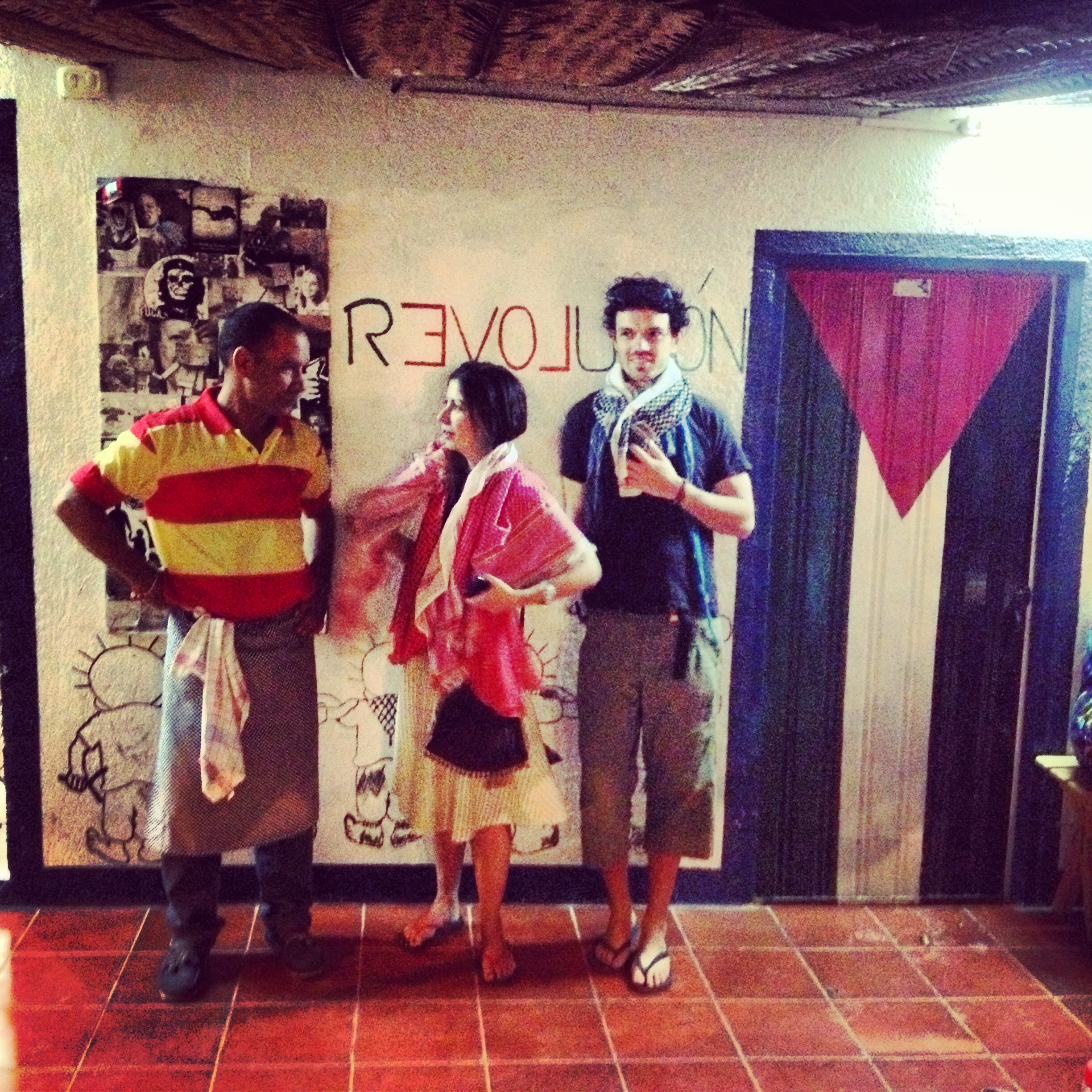
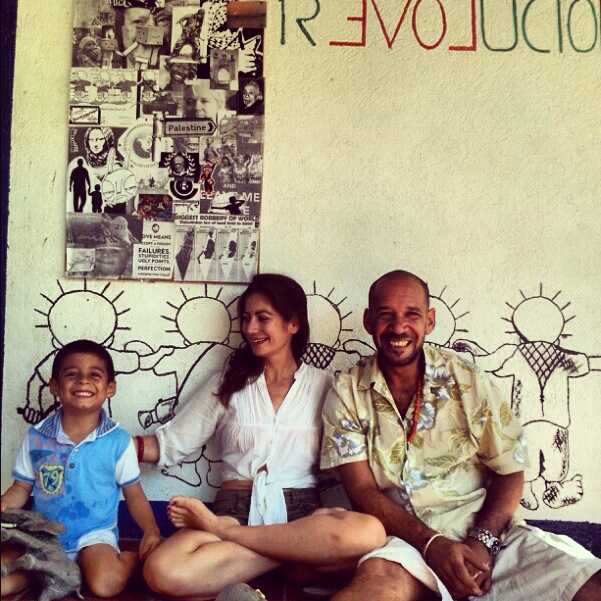
In front of his cafe/restaurant, there were drawing of Handalas and “revolucion” written on the wall.

photo

Handalas is a cartoon. He is the most famous character by the Palestinian cartoonist Naji Al Ali. Handala is depicted as a ten year-old boy, the figure has turned his back to the viewer, and has clasped hands behind his back.

He has always his back turned to the viewer and hands clasped because Naji Al Ali was critical of both Israeli and Arab leaderships. He rejected all peace solutions that came from outside.

It is different in Colombia. When I arrived in Taganga, I first saw the Palestinian flag, and then the Revolucion written in the wall and then the Handalas. I introduced myself to Yassert, the owner of the cafe/restaurant as someone who loves the Middle-East and who has friends in both sides of the wall.

I went back to Yassert’s cafe every single day. I went back to hear his story, to drink his coffee, and to see his son, he had become a friend.

Right on the first day I had been there, I went back to my hostel and decided to research more about the character Handala. I read why he had clasped hands. He refused help of the outside world.

I immediately remembered that there in Colombia the Handalas painted in the restaurant of a man who had fought in the Intifada, who had been released by the Red Cross, held hands in a massive hug. I remembered that one carried a key, the other a weapon; one had a sling shot downwards. All carried by their shoulders.

I disliked seeing a weapon. I however, when I read that Naji al Ali had made them in clasped hands and separated, with their back to the viewer, felt relief. There in Colombia they held each other. There is one who carries a weapon in his shoulder, but his arms and hands supports the other. The neighbour.

I looked back on my mind, to remember that the WORD Revolucion was written differently as well. There was the word LOVE in the middle backwards. It was in bright red letters. There where love was so subversive that was kept in a boat, a man who had fought in an Intifada, serves food. He fights for his cause with his restaurant, feeding people, bringing those who are willing to talk to talk.

photo(7)

And in his wall Handalas hug and the biggest word is LOVE.

Love, is subversive, but has not been contained by the boat of Florentino. Love is human. With all it perfect imperfection. And Vittorio Arrigoni, italian activist who was killed in Gaza, knew that.

I have been sometimes disturbed by activists who seem to all fight their own ghosts in other places. The same thing I have done myself in so many places in the world.

That day, someone I love, showed me for the first time Vittorio’s blog. His main message was “Stay Human!”

To love is to remain human. With the weapons, the cameras, and the fears. Love is subversive because it forces us to stay. It collapses all divisions.

So from Colombia, from Taganga, I thanked the universe, humans, god…. that cholera had been contained, but not love. Love exists in every part we allow it to be. That might be the path: to allow it to be in its full humanity, in all its perfect imperfection.

Brazil, waiting in Sao Paulo, Coffee and writing

Tempo

Life is what is happening now, while you are waiting.”


I heard these words from my speech therapist. I have heard them before. But now they freaked me.


I am back in Brasil. And I am home. I feel home. And these days I started a new tradition: going to the Central Market of Sao Paulo ( Mercado Municipal)  with Toninho, my godfather.

So, the central market in Sao Paulo is a fascinating place. I had been there before. This time I am with Toninho, and he grew up there. So he tells me the fascinating stories about all that came through rivers to Sao Paulo, how it was at first something like a stock exchange of food. I am fascinated by this. Even more fascinated I am by the people around. Tourists, and the now very pricey stalls, with what is best there is of fruits, and nuts, and meats. The owners are old. They have been there for too long. Toninho knows these people. His own great grandfather “is” somehow there. His grandfather took rides with a donkey who could drive him home everyday while he slept. Everyday he got drunk there.

Oh yes there are bars as well, and a Lebanese place to eat. I choose immediately the Lebanese place. We seat to eat watching the market there. I hear stories of these people who are not here. But they still are. All these old men selling fruits, and nuts, and different kinds of food… I can see them too. And their grandchildren, and the grandchildren of their first clients. They are all there. I eat what I know from the middle east.

how much I crave for the middle east usually. Not today. Today I am with Toninho in the Mercado Municipal.


I tell him I am writing a book. I take out my new fiction short story. I never write fiction. Too difficult. I just don’t feel it could be called fiction, because I notice as I type it gives me a strange feeling of ownership. And nothing in this world is really just mine. It is all social. We are social and individuals at the same time.


As I daydream of the implications of this… I abandon the market in my imagination. The market that exists, the market that now exists even more profoundly because I know the stories of the people. People I have never met but that Toninho has. My mind flows back to my broken phone.


Some of you might remember when I went to fix my phone with a Lebanese man in a mall where mainly Chinese illegal immigrants worked. It has been almost a year now. I take a cab there. Hearing from the cab driver the prejudices he has towards illegal immigrants. The cab driver who himself is discriminated by the people in Sao Paulo because he comes from the northeast. I try to explain to him the irony of it. Why is it that some people are oppressed and then become the oppressor and cant see it?


I walk by the Chinese mall, and i know how to get to Marwan, the Lebanese man who has fixed my phone before. I go down. He is working. I look the stand next to him. Kamal from Syria (pro Bashar) is not there. I wonder what has happened to him. But as my mind flies around I hear him from inside the stand of Marwane. ” How are you?” I reply ” Salem Aleykum. His stand now has become a coffee place. And from what I get Kamal now works with Marwan”


” Are you ok. You have been sick? you look so skinny”


I say jokingly ” Kahua, Ana Bdi  Kahua” Something like “ Coffee, I want coffee.. “in what I remember of Arabic. I tell him this thinking of Yassert in Colombia. I tell him I have been sick and I am amazed he remembers me so long ago. The man next to him, is Lebanese. Ibrahim. He has just come out of Hospital. I ask Marwan how many days without phone will I be. ” For you 50 minutes. Is that ok?” I am impressed. It usually takes days. He is a very busy man. but I know he is being kind to me. 50 minutes is Nothing


So I spend the following minutes talking to Kamal and Ibrahim about coffee. The coffee that appears mysteriously for me. That coffee place belongs to Kamal now. You must eat too! So I ask for Cheese Bread ( Pao de QUeijo) and we talk. And talk, and Kamal teaches me how to make coffee with Cardamom. He loves coffee. He is a chef. We talk of life. I show them the Ibrahim mosque in Hebron. Of course..only because my phone is ready before I am…and I can show pictures on it..I show Yassert in Taganga. Time flies…. .

Kamal does not let me pay for the coffee. I know it will be pointless to argue on that. I know because I know Yassert and I know Palestinians. I just know. He knows I know but he knows I am Brazilian.  So I insist. He disagrees. I tell him he has a coffee place. He cant not charge for coffee. Ibrahim says he will pay my coffee. I tell Ibrahim I have just met him, Kamal is an old friend. I know I cant pay.


And I remember my friend Paula Gabriel, who has once written about Mauss The Gift and Branding ( but i ll digress too much now… my free flowing mind). In short lines, Mauss, argues that a gift is a relationship. When you give one you are establishing one. I know if I pay i am declining that. I do not decline a relationship. I accept. And then comes to my mind more coffee. Jose Carlos in Colombia.


The day I go down the mountain I visit  Jose Carlos finca, a coffee farm. According to all in Minca,  it is the best organic coffee from Sierra Nevada. Jose Carlos had brought his last batch of coffee to me when I was falling apart sick in Minca. Nacho had told him to sell it to me. It was real treasure… I realised as people kept showing up to talk to him later. I promised to visit him in his FInca once I came down the mountian… it was up in the hills… and I went ( as you might remember to see the snowed capped mountains), I stop.


Very few things disturbed me in Colombia as much going to this Finca did. The FInca is brilliant. it is in the mountain. It is all organic. The coffee is great. Jose Carlos tells me it all. He tells me his life. He came from a family of fighters, in very rich family of Colombia. They were Marxists, and then they lost the civil war, and moved to the US. Jose Carlos became a business man. Now, he had quit it all. and he lived in a shack in this mountain alone to find happiness. He went to the city once a month. I feel he is journeying the same fight now on his own. I feel he is unhappy. I feel unhappy. I see Peter admires this lifestyle. They have this notion they are too fucked up, they need to be perfect before they can be with someone in this world.


I walk out. I ran away inside of me. I cant take anymore abandonment because people feel they are not good enough. I hear Jose Carlos.. but I want to save him. I want to save myself. I bring his coffee and I am afraid to drink it. But I do it. And I buy more coffee from a cooperative. It might be not so special as JC coffee is but I feel at ease drinking this coffee that comes from people who understand they need others.


I have 4 bags of this cooperative  coffee from Sierra Nevada here. And I think it is sacred this coffee. Jose Carlos coffee is perfect but it lacks what i most crave. Imperfection. I love his coffee.. but there is only two people I can give it to. To my parents. I do no longer feel that abandonment I used to feel. So I can give them the best quality coffee I have, and yet my most difficult coffee to give. And I drink it with them.


So the few packages  I have of the coffee of cooperative.. I keep to give the right people. And the right people must really love coffee… and already have a real social relationship with me.


I give one to Toninho, my godfather,  with whom I went to the market, I tell him all the story in Mercado Municipal of Kamal. The other I give to my dear friend Victor. The third I decided that day, I would give to Kamal. He loves coffee.. and yes I accepted that coffee..without paying. I accepted the social contract of a relationship. A friendship.


I still have one left which I will wait for the right person to come and drink it with me.

My speech therapist is right, life is what happens while you are waiting. But when you have something very worth to wait for. You live it all that is around more profoundly making what you had never done before. Waiting.


And so I wait. But while I do it life becomes more and more interesting. And I write a book with all that belongs to all. All of us. And I am capable to send to my family to read. And they read and tell me what they think. And I take what they can give. I change what I have written acording to their thoughts. their combined thoughts. My thoughts.


Someone once told me in Colombia. And this has been blocked to an extent in my mind that i cant know who it was.  Whether it was in real life, or in the internet… where it was… someone told me I was a writer. I answered what I usually do. I was a story teller….That to be a writer it is like to be a musician, a poet. It is sacred. And this person who now almost feels like a character in my imagination replied. ” You struggled so much to live a life of meaning, a sacred life”  Why cant you see it in you?


So, yes, I wait, I write, I am a writer. I struggle to be one. And I am finally, home.

Colombia, The Payment and the Mountains

Image

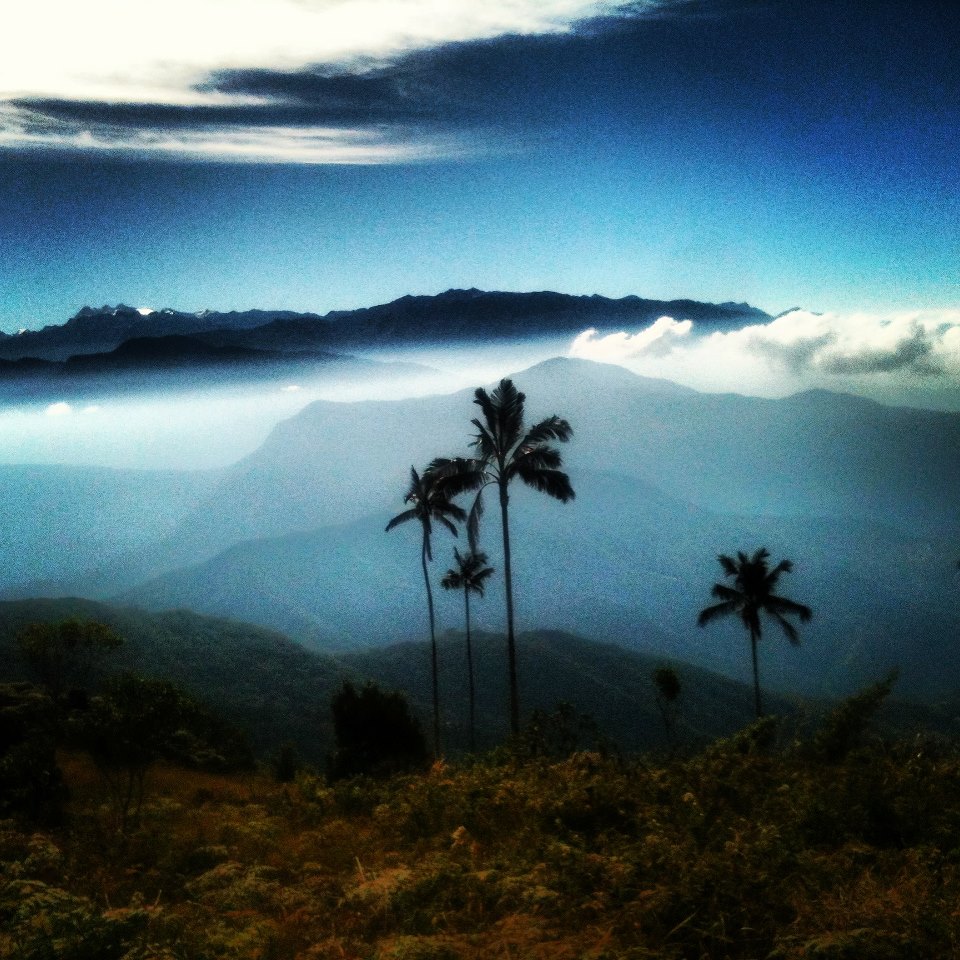
As I last wrote I discovered more about the place I stayed in Minca because of Nacho, and because of Nacho I know more of all the alternative narratives there are in Colombia. When I first arrived in Colombia I heard the Costeños ( the people of the Coast) who were mainly descendent of Europeans, then I met the campesinos ( the people from the fields), then I tried to see the Kogi ( an indigenous population) and yet as I walked the Sierra Nevada for 3 days I understood I could not meet the Kogi like that. They were living in other place, the real Kogis, might not even be or look like Kogi after all. It did not make me sad, I respected what was more to respect: the Mountains. And then I met Nacho.

Nacho was from the Andes, though not indigenous he was married to Erika who was indigenous descendent. He never cared much about that till one day he started going deaf. His mother in law told him to go to see a Shaman.  He did it out of respect  for the mother in law and the shaman healed him. Years later when he decided to join the army to fight the guerrilla he was shot by the Farc he almost died. He was in a coma for a long time and one day he woke up but he was not well and had lost a leg. Once he was awake he remembered the Shaman.

Nacho came from the Andes region. His father is a professor of Sculpture. And when this accident happened he decided to follow the Shaman to Minca the village I was in which is in the Sierra Nevada.

The hotel I was staying had been called  was called by Nacho the casa grande ( the big house). He explained to me that it was indigenous ground. The paths still preserved were indigenous. And after no longer being for a while a convent it had become a big house where indigenous peoples from different places came to talk to and to live. Nacho had lived there for 10 years to recover. During these 10 years he had learned the ways of different tribes . He had healed. He was particularly close to his Shaman. But he learned to respect nature and the mountain. He told me, he still had a leg prosthesis to walk and yet this journey had healed his soul. I understood Nacho very well.

We talked in a car journey to Santa Marta because I wanted to buy a Kogi bag, and I had learned from someone there was an indigenous house where I could buy from the Indigenous people so that the money would go fully to them. Nacho was taking some tourists to go Santa Marta, Peter and I took a ride with him.

In this ride I learned something important: that according to Indigenous ways I should not help the entire world. People have their own journeys. I debated this with Nacho. I explained to him I was soo helped always and though I could not get the help, I at least months later could understand what was said to me earlier. So I thought we must help. He agreed. But then you have to let it go when people just keep refusing help. I understood it, and I am understanding it now, that sometimes I help the unknown,  I hear stories to safeguard myself. To not be too vulnerable. There are many stories which are fundamental for me to hear. But not all. And when I don’t make this distinction I abandon those who are so close and are the most important to me.

I abandoned Peter many times trying to listen to all these narratives. And I understood watching him that my own departure hurts the most important people around me. Yet, there are stories I needed to hear. I am still learning this complicated balance.

Nachos story had to be heard.  So I heard. And I was told by Nacho I should go see the snowed capped mountains. It was the most sacred place there was. And that I should visit the Cumbre, the mother of all waters. And Nacho explained me I should make a payment to the mountain.

A payment, he said,  could be anything, it had to be something of value. He often gave tobacco. Words. What it was there to be given.  I told him I d like to go. It involved us getting to 2800 meters. I asked him to find the right people to take Peter and I. He did. Eqlias and Jose. Two brothers who were one of the 150 real people from Minca.

I was excited.  He told us to prepare ourselves for cold. And told us to go at 4 am. I came home and started to think what I could give to the mountains. I knew I could give my words. But what should I give of mine. Some part of me thought I should give my bracelet but immediately realized I was not prepared for that. So I remembered Thailand.

Some of your who read me for a long time, might remember that last year as I decided to ride a  bike for 57 km in unknown part of Isaan. I was then with my very close friends to this day Andre and Sandra, and Fred from Norway.  In that ride, we ate, and searched for coffee, and  I had found a little bag in the one shop we saw in this remote area. The shop where I bought iced coffee.

I wanted to buy the bag to put coins, and the old Thai lady rushed towards me, and removed the things from the inside of the bag. I realized right then that the bag belonged to her and so I apologized. She touched her hearth and made a gesture to give it to me. I refused it; she pointed to the sky and repeated the gesture. It was a gift. I had tears in my eyes. I could not speak Thai or her English. So I looked inside my bag and could not find anything special. So I took the scarf in my neck. The scarf I had bought in the Middle East, and had travelled the world with. And I gave it to her. She refused it like I had and I also pointed to the sky. It made me happy. I carried that bag ever since as a little treasure.

That was it: I would  give the bag to the mountain.

Eqlias picked us up and we took more than 2 hours to get  up the mountain in a motorbike. I wore all that I had to be able to go from 30 celsius to 5. I froze. I spoke sometimes but most of the time I looked the forest.  We stopped sometimes because it was too hard to go by bike.  Peter and I walked. We stopped when we met the military that was there to prevent the guerrilla. I who do not even like the military took pictures with them. I heard them too.

And then we got to a very high place. The mountain was covered and we could not see  the snow capped mountains. I thanked the sun for warming me up. A man, Leonardo, who worked in a cel phone tower there brought us coffee.  I dislike the cell phone tower there. But I liked the coffee and Leonardo. Peter and I did yoga, stayed in the sun, took pictures, till it was time to go to the Cumbre.

We had to go under some barbed wires with the help of the army to reach this place. It was a different place. It did not look like the mother of all waters. It reminded me of Harry Potter enchanted lake. I walked there. Took the bag and opened it. Peter said he would put the tobacco. He explained to me it was just returning tobacco to nature where it came from.  I put some as well, and I understood my bag could not be returned there.  I opened my bag where I had put the tobacco and we started putting it in the water.  I made thought after thought of payment ; most of it was love, and thankfulness. Then I knew , Peter without telling me, had shown me the bag did not belong to that place. But as I opened the bag I saw a little sculpture.

In Thailand when I broke my foot and all people came to say farewell, a Dutch man who lives in Nong Khai brought me once his work.: Buddhas …he told me it was a gift but I should choose one. I choose one that did not really look like a Buddha. It looked like a monkey. He had his eyes covered.  I always joked I did not know it was a monk or a monkey.

When I saw it this time,  I decided the monk, the monkey, the gift belonged there. So, I followed Peter s advice put the monk overlooking the Cumbre. I watered it, remembering Raphael, the 3 years old boy of the travelling family I once wrote about.  When he came to Nong Khai he asked to water the Buddhas like in temples. So I watered the monk/monkey with the freezing water and I thought if he is a monkey he was back in nature, if he was a Buddha he was in place taking care of it all. I stood up and I walked towards the mountain.

I sat and I asked Eqlias whether the mountain was sacred to him. He told me he was half Palenqueiro ( free slave descendent), and choco ( black community of Colombia). Yes the mountain was sacred tp him. I told him I had made a payment. He told me the mountain was sacred because Nacho had taught him about it.  We talked about the mountain he had the real respect for it just like Nacho had it though they were not indigenous.

Image

I asked him about his family, he told me his father had abandoned him when he was 3, his mother had disappeared on the mountain when he was 15. I had tears in my eyes covered by my sunglasses. I asked him what he wanted to have happened to his mother.

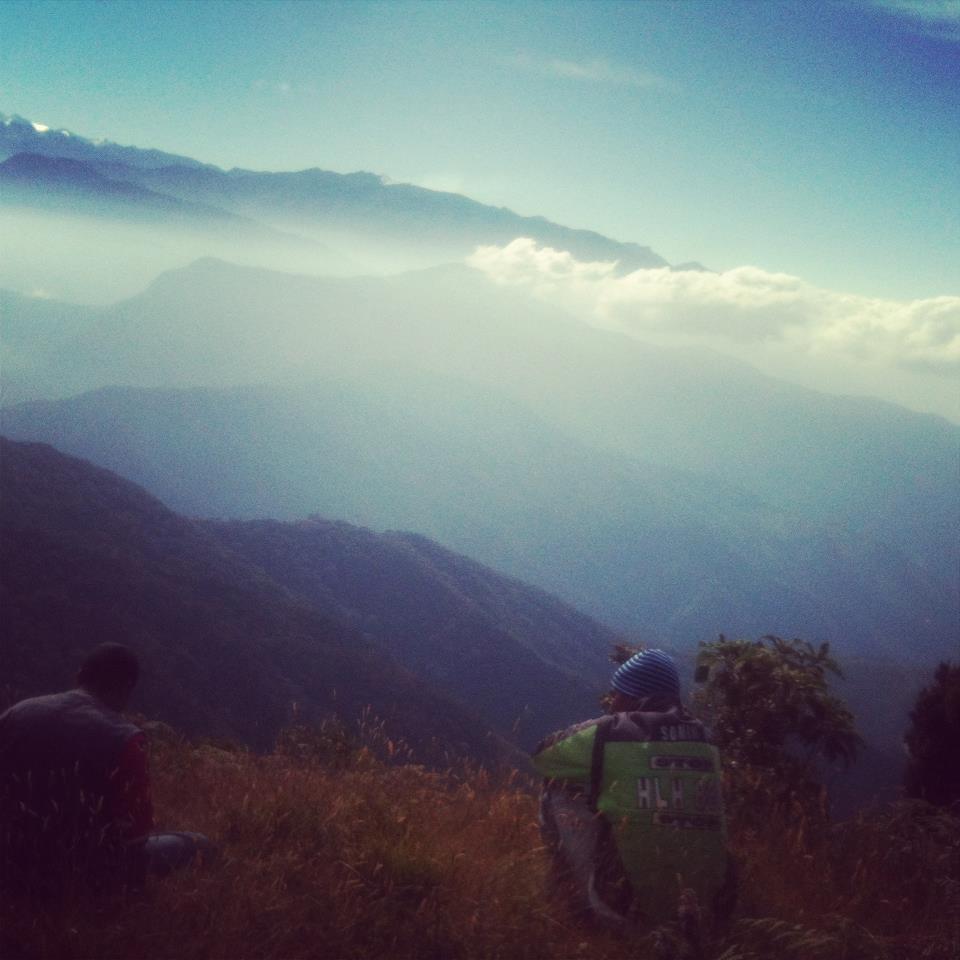
He told me he wished she had abandoned them. That this way she is not dead. As he told me this the clouds went down and down. I could see the mountains, the trees, the palm trees and the snowcapped peaks at 5700 meters in front of me. What a sacred place I thought. I had seen how close to each other were Eqlias and his brother Jose were. Now we spoke of their lives.

I told him I thought that if she was dead maybe she is in a better place, if she lost her memory maybe she is happier somewhere else in a different life.. but I doubted that someone who has abandoned a family could be happy. He smiled.  I told him that like him I wished her happiness.

I told him I had made a payment to the mountain and he understood what I meant. And there I knew that the sacredness of the world, the stories, and love belonged to all of us who inhabit this universe. I took my little bag and I told him the story of it and I told him the bag did not belong to the mountain, but it was sacred to me, so it belonged to him now, someone who took me to a solemn place. I gave it to him

“ Eqlias, do to it whatever you want. Keep it, maybe berry it, give it to your daughter, or keep when you hear from your mother. I give to you because I was going to give it to the Cumbre. It does not belong there, but at the same time it does. You brought me here to the most sacred  place there is. I give it to you because you told me your story. I give it to you because I am thankful.”

He understood. Jose understood I gave them. Not only Eqlias. Jose had been only 7 when his mother disappeared.  And we watched the mountains for a long time.

When I bid farewell to Minca I was taken to Santa Marta by Nacho and Erika his wife. I had met his whole family the day before. I had brought icecream to his 3 daughters and his son. I had met the dog and the turtle.  This time Erika came to say goodbye. We drove to Santa Marta. We went to buy our indigenous bags the ones we would recognize.  Peter recognized his immediately.  It was from the mountains. I recognized mine only  with Nachos help 🙂 He took me to buy the best coffee ( which is another story), and then he took me to get the best bus. He took me to go. Erika told me I had to come back to her house, In the Andes.

I was taken away from Minca by newly made friends who would stay with me like my dear friends Andre and Sandra have stayed ever since that bike ride. I was taken away by people who gave me what they had of most sacred. I left having learned so much.  I learned one more time, in my skin, that all this world belongs to all of us who are part of it. That I am part of the massacres that happened and happen daily in the world. That in my daily choices I impact the world. That I cannot help all, but some. And  the most important lesson I have learned might have been that sometimes I make wrong choices. And my friends, ( Nacho,  Andre), I depend on you, to remind me of the right choices, so that I do not loose what is the most precious. The voices that have not been heard.  Specially mine, and of those I love the most who are so close to me, and yet sometimes listening to others I let them feel I am not there.

Love,

me

Image

Colombia- Minca, Art and Stories

480970_10151195655695723_106011115_n
My feminine nomad soul comes through generations. My mother loves traveling. She made sure that I was educated in several languages so that I could be raised for the world. My grandmother in her trips, which started early on, always learned something from the people.  Nowadays I learned from her to appreciate something that is handmade.

I never bought anything. I always traveled hearing stories but markets were for me just to see people. I heard stories of carpets in Morocco and I never wanted to have one. I never had anywhere to put it.

So in Colombia I decided I would find myself something to bring home. I did not know it. I did not look for it. And one day I was walking Taganga, a village who became more mine because of my Gazan friend Yassert, and Yuhhi who is Guajira descendent and who I talked to every breakfast. And for the music of Alejandro who looked like a blue phase painting of Picasso, and for Joselito who told me the stories of people and introduced me to my guide and friend Eliecer.

So when I bid farewell to taganga it made me cry. I sat in Yasssert’s place.  Eliecer had just come the night before all the way from his village with his wife Tati, and his 4 year old son Christian to say goodbye. I thanked them, I played with the child and I knew I had some dear Colombian friends.

Then the following morning I walked down the mountain to say goodbye to Joselito, to buy him a juice because I know how much beer he takes everyday. I searched for Alejandro and did not see him. And I went to have my last breakfast in Bansai. It was hot and I had a long sleeve shirt. I asked Yuhi if it was ok for me to be in my Bikini inside her place or disrespectful.

She looked at the tourists in Bikini, looked at me and said. It is ok for them, but not for you. I knew in her sentence she knew I cared what was respectful to her. She took me to be from the people who care. And I kept my blouse on.

And then Yassert told me he had a child, a son, and he went to get him, we waited for him. I spoke that day only of this, his life. And we sat playing with a toy elephant and I asked his 4 year old child to take a picture. And we sat in front of the Handalas while Peter took several pictures of us. I love those pictures… I almost died when I thought I had lost them. But they are here. And we sat in front of the handalas… and we laughed.

photo(7)

I cried when I was about to go. I love this people. I love this place. Yassert tells me Brasil is next door. I should not cry in front of his child. I tell him I cry of happiness.

And I walk back to our guest house called Techos Azules. Blue ceilings. And in South America to be Blue is to be happy. Or at least in Brasil it is. I always wondered why in English to be blue was sad.

I felt both feelings. And I decided that for me, blue is all there was about being… in true contact with feelings. To me now to be blue is to be fully human.

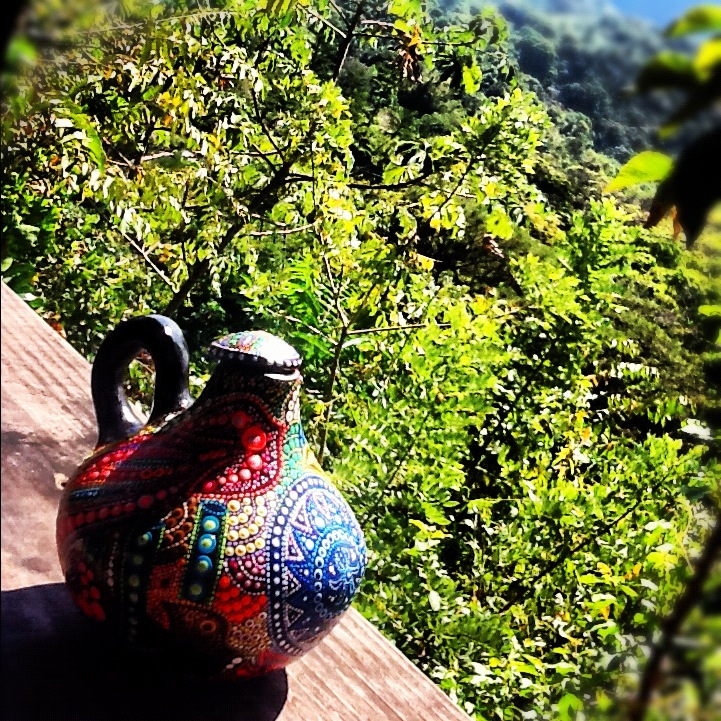
And then as I walked I saw some artwork. I sat to look at it. And Nathalia the artist told me the story of it all. Most of them were made of White Clay, but my favorite piece was made of Brown clay, which was made in  province called Chamba Colina. She had walked peoples houses to find these pieces. And she painted them.

She looked under beds, and behind wardrobes and she found this viniera. A viniera is a bottle for people to drink Chicha or whatever brew that comes from the earth.

She painted a pointilist style, which she explained to me she learned from the Australian Aborigines. And the painting was a praise to the carribean. I looked at it… and I knew that was my first ever bought piece of art. I sat with nathalia who was interested to know who was taking something that was more precious than the rest. I told her I learned it with my grandmother, and my mother to value that which is made by hand.

photo(6)

And suddenly I realized that I learned through my life to value artistic culture as the best manifestation of humanity.  That piece of art carried the story of tradition, of Colombia and the celebration of nature, and the art that is manifested everywhere.

I bought it and I showed to everybody I could.  And I carry it as my precious treasure. And then I said goodbye to Taganga carrying a piece of art, friends in  my heart, the feeling of saudade ( the brazilian word that is a nostalgic feeling of the past wishing for the future). I left feeling Blue in Portuguese and in English.

And I came to Minca. A village in the foothills of the Sierra Nevada. A mountain range by the Caribbean that reaches 5,700 meters. And I ended up in a Hotel that has a truly Gabriel Garcia Marquez touch to it.

It was not the first place I was in. But it is the place I take with me. Here I met Claudia, a Colombian lady from Bogota who is a psychologist and has worked in Brasil and who could recognize my little Viniera for what it was. A treasure! As I walked this place I thought it might have been an old colonial farm house of coffee… but she told me it was a Convent till the 1930’s.

And that it was said here that the main nun had fallen in love with the priest, it was a huge scandal in the land where “Love in the time of Cholera” was written. This nun helped the community a lot because she felt guilty for her love. And One day she died. And she is thought to have reincarnated as a Parrot. A Guaca Maya! This Guaca Maya lives here with us and is thought to only like men and not women. So when I see her I always talk to her in my mind. I tried to preach love. To ask her blessings. I look at the Guaca Maya in her blue and red color. And I know she too has felt blue in both Portuguese and English.

photo(8)

And as I am about to leave this country I carry with me love, art and stories. I am finally a celebration to humanity in its fullest and most beautiful version.  But as I learned about it there is sooo much more to this place. But I will only know better tomorrow after I once again go back up the mountains through the words and care of Nacho who has lived in this hotel when it was indigenous ground. Tomorrow I am taken to see the snowed peaks and the the mother of all waters. But of that I can only write later, when I have once again entered truly sacred land.

Colombia, Sierra Nevada, Resistance and the Human Journey

Image

I was asked by my doctor not to climb for a few months.  So when I came to Colombia I was asked by my family not to bring my brand new climbing shoes. I was not planning to do much here but to recover in Cartagena so I only brought flip flops.

I was told by many friends that I had to visit the Tayrona park while in Colombia. And that is why I got to Taganga where I met Yassert, the Plestinian from Gaza I last wrote about. Taganga is a small fishing village that is close to Santa Marta. It has through time become a backpacker village.

As I explained the last time I wrote, I heard about another battle of resistance taking place around here. So I went to find out about it.

Everything I will write from now on is what I heard from the people. People that I asked so much about. I was asked by an Italian to go see the Playa del Muerto. Now, it was called Playa Crystal. I took an incredibly scary boat ride to get to this beach, which is in the Tayrona Park.

The Tayrona were an indigenous population, which has been entirely decimated. The park Taryrona is a natural reservation and I was told is under the administration of a French man who is friends with the sons of Uribe.

Playa del Muerto has people living in it. People who were being massacred for tourism. I walked the Taganga beach till I found Joselito, a local who is known by all. He told me his version of the story as someone who was related to the people there. I took a boat and I got to the pristine beach now known as Crystal Beach. It was full of tourists. I searched for the senora Rufina who was a local I was told to look for. She was not there. Her grandson was. I asked him to tell me what was going on. He looked first scared… then he told me he wanted to tell me about it.

He introduced me to other guides who had in their shirts written “Playa del Muerto”, which was obviously an act of resistance. According to these people, the Tayrona came to Playa del Muerto and lived there for many years. They buried their people and their treasures. Now people who had lived there for many years were being evicted for tourism to prosper so they wanted to hide the past of this place by changing its name. The boy told me about his family members he had that had been killed there. I asked whether they were afraid. And he said they were resisting it. They were now armed. I left the beach not knowing what to think.

Image

I came back to Tagana and I decided that though I did not have climbing shoes I was  hearing the calling of the mountains. So I decided to go there.  First, I visited Joselito to tell about my trip and my desire to see the Sierra Nevada. He introduced me to Eliecer a great guide he knew and who was a campesino of the Sierra Nevada.

Eliecer came from Santa Marta to explain me how it would be for me to walk to the lost city. I told him I was in fact just more interested in walking the mountain and to see the Kogi if I could. He agreed to that. And I for the following 3 days started a long walk in the mountains of Colombia.

Image

I asked Tayrona, Kogi, and ultimately permission from the mountain and the spirits of the forest  to walk in what it felt like a sacred place. I asked for permission, connection, and understanding. I remembered how I once was a very critical of these ideas; how as an anthropologist I condemned perspectivism. Yet, as I entered Indigenous land I asked for permission of the spirits of the mountain.

Before that I asked about the Farc, the paramilitary, Uribe. I asked about all there was of politics that I read about. I asked the people. But suddenly as I walked in, it came to my mind my friend Nathalie. The woman who taught me about hearing those who have not their voices heard.

For those of your who have read me for a long time… she was the Australian I met in my first trip to India and who had gone to Afghanistan alone just before the war. Nathalie loves Colombia. And as I walked the sacred mountains I somehow knew Eliecer,our guide,  might know her. He did. It felt special, so special that all my interest in the politics, the conflicts all subsided and instead I focused on what was happening to me. Why was I walking a mountain.

In not even 3 months after thinking I was going to die ,I was walking a mountain. I, who could not walk nor eat, could suddenly do it. I walked that mountain with all the respect that I have developed for mountains and myself in these years.

Image

I observed the Kogi beautifully dressed in their white clothes. Yet I knew I could not know much of the Kogi in so short time. I walked those mountains thinking of my own relationship of the massacres of the indigenous peoples of South America. How much of a Holocaust had happened here…. Through theses centruries. I apologized to it. As I walked knowing I was part of it… In some distant past I was part of it.

And as I struggled to walk a mountain in flip flops I realized something incredibly important: I could recover my sense of independence because I was being taken care of by Eliecer, his wife Tati, and my friend Peter, who I found out in this journey was half Italian and half Jewish. Somehow it fell all inside of what I knew. He was born in the US. He was part of the Gaza mission and yet he was Italian and Jewish two people I know so well.

As I walked I felt I suddenly knew in my whole body it takes full care of someone to allow us to endure a human journey. I had it here. I was struggling between nonexistent muscles, wrong shoes, weakness, heat, cold, and I could do it because there was someone taking care of me completely. And I understood I needed it forever. And that life was too kind to me to always have given it to me.

I walked back exhausted yesterday. A day I survived. And today I visited Yassert. He had a gift for me. Some artist called Vladimir had painted us while we talked. I wanted to take a picture of the painting… but Yassert said it was for me. I took that precious gift just as Mattias the chair of the Religion and Politics of the Upsala University in Sweden showed up.

Image

Mattias had been to many flotillas of liberation to Gaza. He was in the Marmara mission with his wife. They told us how two people were shot by the IDF  before they came down.; how terrified the IDF soldiers were; how all their recording video was taken away from them. They told me of the different treatment they had compared to the Turkish people because they had a different passport. I heard it all intrigued. Yet I thought peace could not happen there.

We sat with Yassert for coffee… And I could only speak to Yassert that though I was impressed by people who went to those missions, I thought peace could not happen there.

I explained to Yassert I wanted to hear him play the Oud. Peace had to happen through the collapse of separations. Through art. Through similarity. Not in things that made stronger divisions.

I remembered how once from the West Bank I spoke how subversive I thought love was. How an Israeli philosopher I had met who was against the occupation could not deal with what I wrote.  I asked him why… and he said, “it is too human.”

And that is what it is. All separations and divisions, and occupation depend on the idea that people are very different. Collapsing these systems takes us understanding we are not very different. We are all human, Indigenous massacres depend on people believing the indigenous are less humans; occupations can only take place because people believe Palestinians are a different kind of human.  Slavery was only possible because humanity was stolen to slaves. We are however fundamentally human! We are all how capable of amazing cultural diversity yet we are human beings who are so fundamentally flawed and amazing.

When my dear friend Michal told me now she had been to Hebron with Breaking the Silence ( the ex soldiers of the IDF who speak against the occupation). I cried. It hurt me to imagine my dear friend seeing the absurdities that go on in Hebron under her name.

I knew she would suffer seeing what the settlers did there. How could she live after? I did not wish that for her. A collapse of her system, yet I was so proud that she did it in spite of it. And I gave her what I could do of most valuable…. My unconditional love.  I could never do that before but in this X-mas, I finally could and that is what I did . I gave full unconditional love to my two cousins who made me survive my disease. And then to Michal. I gave them, and thank them to make it possible for me to give it. And in doing so I understood that only being unconditionally loved we can venture in a human venture full of mistakes, pain, love, happiness. I gave Michal because I could, because I could, and because this way she could venture in the difficult journey of humanity knowing she would always be loved.

I walked these mountains as weak and as strong as I have never been. And I understood I too needed to be cared for, loved to be able to step one step next to the other. It hurt me to imagine some of my ancestors massacred these indigenous peoples of the Americas. Yet I could take the pain because I am not directly responsible for it; but most importantly, because nowadays I take different choices.  I do know, and understand, I am part of a whole process of colonization. And yet, I can walk one more step in these indigenous lands feeling part of it as well.

Image

I hear all stories of Uribe and Farcs and Bolivarian ideals, and I am more convinced then ever that ideologies are just one more thing. Time goes away and takes it all. I take one step and I almost fall on a loose rock.  I have to ask help. And I do. Even when I feel so fragile to this help, I finally can ask for it.

And when I finally return to Taganga I go to see Yassert. He is my oldest friend here. He has read me. He thanks me. “Thank you, Just thank you. Thank you for my people” I am moved. But as we sit for coffee today I tell him. Yassert “ I know you crave to go home. I know middle easterners have different conceptions of time, and relationship of land.” I remember as I tell that of Hannah telling me of the people who go back to Europe to visit where they came from before the Holocaust and it does not exist. They all suffer.  So I tell him how much I felt lost in this enormous world. Always looking for home.

In Colombia, I know finally where home is. Home is in an encounter. For me it is when I can seat here and write of those who have no voice. I can be home where I am allowed to be vulnerable. Where my vulnerability does not oblige me to run. I take one more step.  I breathe in and out and the weakness of my body does not do much to me. I inhabit here now.

I sit and hear a man, Alejandro, an old Peruvian playing songs from Latin America. I feel home in his voice, in his music. In the fact that I take the guitar and I sing. I feel finally home in all that I am…. Till I loose grips to it again. I encounter Yassert one more time as I am about to go to my hostel. I tell him one more time I want to hear the Oud, and tell him to go to sleep and rest.

And there I somehow know that home is when we take care and are taken care of. It is in the cultural production we all have in the world. I feel exhausted but so happy that I could walk for 3 days the mountains. I feel mountains will always be where my soul lies. Where I can recover my sense of belonging to this world. And I could only be there because I understood in my whole my body that I could only be an individual because there were people taking care of me.

Image

Taganga, Gaza and the Message of the Condor

ImageI am in Taganga about to go tomorrow see the natural park of Tayrona.
My last email I started by saying I had received an email from a
Palestinian. So this email I wanted to start by saying that my first
response to my last email talking of al Naqbah was from Hannah who is
an Israeli who I met when I first came to Israel. She wrote with the
concern of a mother and the words of someone who has worked on
grassroots movements to finish the bloodshed of the occupation for a
while. Though I met her years ago I feel love for Hannah and Motti her
husband who hosted me on Yom Kippur. It was then my first time in
Israel and she was the first person I met who was open to talk about
the Palestinian cause. She is now in my list and this time she wrote
me concerned with my health and also talking of the symbolisms of the
key.

And just as she wrote me a friend from the US arrived to see me here
in Colombia.  He came to Colombia to see me. We had met also through
couchsurfing years ago. And we had become friends because he had been
to the first flotilla mission to Gaza in 2008. He was responsible for
making sure there were satellites transmitting what was going on so
that it would be safe to all. This mission was before the 2009 mission
you all know about.

Peter my friend, knew Vittorio Arrigoni, the Italian who had been
living in Gaza and was killed when Lorenzo took me to see the wall of
separation. I sat for Vittorio’s funeral with my Palestinian friends
Yahyah, Jaafar, and Samir. Though I did not know much of Victorio. I
was upset that day. It was said he was killed by Palestinians. Most
people I know thought it was Mossad. Till this day it is a bit of a
mystery what happened. I was upset because the activists spoke in that
memorial in us vs them terms. I could not believe it. I who then was
with my Palestinian friends, felt they had to explain to me they were
not going to kill me. I thought the woman could have phrased as in
“some lunatics” killed Vittorio but not create yet another problem
within the movement of resistance. No one knew who had killed him. All
those that knew him loved the man. Meeting him, has changed Peter’s
life who till then just worked a normal job but in seeing Vittiorio’s
passion he understood he needed to do something that mattered.

So we are in Taganga. And here I saw a Palestinian flag painted on a
door. Next to it was written Revolution, Free Gaza.. and there were
painted the cartoon Handala. Handalas are painted by Naji al Ali who
was a Palestinian cartoonist, noted for his political criticism of the
Arab regimes and Israel.

Handala is his most famous character. He is depicted as a ten-year old
boy, the figure has turned his back to the viewer and has clasped his
hands behind his back. The artist explained that the ten-year old
represented his age when forced to leave Palestine and would not grow
up until he could return to his homeland; his turned back and clasped
hands symbolised the character’s rejection of “outside solutions”.
Handala wears ragged clothes and is barefoot, symbolising his
allegiance to the poor.

Here Handalas do not have clasped hands. There a few Handalas They
have arms around each other. The first carries a key, the last a sling
shot. Those in between have arms in a hug. They carry different
objects but not in their hands. They hold each other. The objects are
in their shoulders. One has a weapon in his shoulder, the other a
camera, the middle one just wears a Keffiiyeh ( Palestinian scarf) .
As I saw this all I wanted to meet the owner  of that place. And now,
I just did.

Yassert is from Gaza. He has a food place in Taganga. His Palestinian
flag has been stolen  before, so now he has painted the flag in the
door. Together with the flag, and the Handalas you can also see a sign
written “no IDF and no Mossad”.

I arrived there and I introduced myself as being who I am: someone who
has enormous love for the middle east, for both Israelis and
Palestinians. Enormous gratitude for the Palestinians I met in the
West Bank. I introduced him to Peter who had been to Gaza. He was
nice. He brought us tea, then coffee. We ate. And I took my phone to
show him my pictures from the West bank. He saw Ibrahim Mosque and
started to become moved. “I am going to cry” He said. I told him it
was not a problem as I always cried. I told him all that I could while
he worked non stop. And then he gave me coffee. Made me Hummus and
Falafel.

I asked him his story and in between serving lots of people he told
me. He had been arrested in the second Intifada. Taken out by the red
cross to go to Switzerland, and then since he could not find jobs in
Europe he came to Colombia where just like in Brazil there was a big
Lebanese Syrian community.

“Why are you in Taganga” I asked?

Taganga is a small  fishermen village. It is close to Santa Marta.
Close to the natural park of Tayrona. He told me he came one day and
saw there were many Israelis. Here was where he was going to do his
fight for Palestine. He set up his restaurant. He wrote in big letters
“Free Gaza”. I asked him whether he served Israelis. He told me only
if they were against the occupation. I asked how often that happened.
“In 5 years I had met one person”

It is not surprising. Israelis that come to Taganga come after serving
for the IDF ( the Israeli Defense Force). Those who go to Asia tend to
be more in the search of Cannabis and spiritual paths. South America
is the continent of Sex, of music, nature, and Cocaine. So the
Israelis who come towards us tend to be the ones who are even more
traumatized then the ones I saw in India.

I pity all of them. As I sat there eating my hummus, seeing a grown
man moved by me being in love with the middle east I could not help
but remember that last night I heard Peruvians play music from the
Andes. This Palestinian man bought me chocolate when he heard I
wanted. When I wanted to pay for it. He told him I had brought him
happiness. I had heard this before in the Westbank. Yet the Peruvian
music came back to me. The people from the andes had a message of the
Condor for us. South America should unite beyond borders. I tell them,
not only south America we all should united beyond borders. And yet
keep the plurality of the world. They agreed it is the spirit of the
mountain… unity.

As I come home to write this. I read that Handalas were political
because they had clasped hands. I look into my mind and I remember
that not here in taganga.  Here they hold each other. One carries the
key, But all of them hold each other. They are together in a massive
hug observing whatever it is that they do. I get some hope out of
this. Whoever painted it knew not… but the movement towards peace
cannot be in clasped hands. It takes holding your neighbour.

But now I must go as we are expected by an Italian to learn about some
other resistance movement  that is taking place in one of the beaches
of Tayrona. The word revolution in Yassert’s place has the word love
backwards. Love is in Red. Yes.  It is big and red! That makes me
smile in the land of Garcia Marquez who went up and down the river in
“Love in the time of Cholera”. I smile and think thank God Love has
spread more than Cholera.  Now a man who fights for Gaza in South
America puts the biggest and brightest word in the middle of his
revolution. It is love. And we all hold each other looking for the
message of the Condor. Yes we should all Unite.

Love,
Jules

The Bracelet and The Key

I have found my bracelet. Mysteriously like everything else that happens here in Colombia. In this mixture of  Africa, Europe and indigenous culture we can expect anything to happen. I however, never expected   for the first email that I got as a response to my last to come from Palestine, from my first Palestinian friend I had met the first day when I crossed the separation wall. That day it was the birthday of his best friend, and so Lorenzo (who is now here with me) was also there. It was in Ahmad s house that I met Lorenzo for the first time. This only came to mind as I read Ahmads email saying he thought it was a beautiful story and that he wished I found my misplaced bracelet, and that he wished he could be here with us.

I was  exasperated first to find out Ahmad read me. I somehow never thought he did. Then I was touched he  understood it was important for me a lost  bracelet, as I did understand in life sometimes we put emotions in things. And I had mine  ( feelings of belonging) there. And somehow in reading his words, I remembered the keys Palestinians kept since Al Naqbah ( the great disaster when Palestinians lost their houses..). Palestinians kept
the key to the front door of their houses, when they had to leave them in 48, hoping one day to return.The key is full of symbolic meaning. And I till  very recently used to feel we should all just let things go and move on. Now thought I still carry this belief in me, I understand, we must do it, but not before profoundly understanding where it came from. And yesterday I understood that well.

We went out dancing, Cartagena is the land of dancing. I love dancing. I have friends from my hostel, but also locals now. And as usual I put people together. And I danced, and danced. And yet…. there was this loneliness in me last night so I walked away from my friends…and I wandered off. I was taken by a looking like middle eastern guy to dance. He was a brilliant dancer. And I was silent. I danced without saying anything particular of me. And I felt so happy. And suddenly just as he came from nowhere… he disappeared.

I, for my own shortcomings, felt abandoned, and even sadder… And I kept wandering in that place. I had a desire to cry. In fact, I just could not contain my tears… so I cried feeling like a boat that is wandering aimlessly and does not want to be seen by any fellow sails men. I remembered Ishmael in Moby Dick.

And as I made my way around and was taken to dance by other Colombians. I decided to just not care about anything anymore yet I was sad and did not want to loose connection to what i felt.. It took me so much to get here. I could not trace where it came from this saddness. Or maybe, I could the beginnings of it… but not deeply it…. I had no courage to follow the thread of my feeling of loss. And suddenly, I bumped into the guy again. And I decided to talk to him.

It was a great thing to do. Because now he has a story. My abandonment was just mine. And it had no relationship to the world.

This middle eastern looking like, came from San Diego. He was born out of a father that came form Colombia, and a mother from Mexico. Though he looked in his 30s he was 19. He had just started a trip through South America to find out where he came from. His own father left Colombia when he was 11 to become American . Chris, the boy, had never been here. He was also a climber and had saved money to come to a trip to south america. It would pass through Brazil as in California he joined some Brazilian church.

So we stood out and talked. He told me about being raised by a grandmother who usually had described the house she was from. It was hand made by the family. It was there that his father was born. Now he had been to Bogota and had visited this house. I had tears in my eyes listening to him trace back the journey of his life. Discovering all that he came from, and yet knew not. We spent hours speaking and I understood why I needed to make internal home.

I understood the keys from Palestine. I understood the need we all have to go back and understand things. This boy is wondering south america learning a new language and meeting people. He is deeply religious… and yet all I could see of his trip was how human it was.

By the time he finishes he expects to be able to speak better Spanish. He expects to talk more to his family. I expect him to find out, what is south american of him. I understood last night so much of this existential quest. I understood though I did not carry a key like that of Al Naqbah ( the great disaster) I also did wish I could go back to my home. Yet for all of us it might be unreachable. We do not need the key, nor the house, but somehow we need to understand where do we come from.

Being here makes me understand so much of me as a traveler. It also makes me understand Al Naqbah much more deeply. So I wish one day my Palestinian friends will, (like I hope I do) understand we dont need to carry a key, or a bracelet. We need to carry a bigger space inside. One that allows us to create what we are. I do understand though today that we all must take this journey to an nonexistent past by carrying some special things.

So as I mysteriously reencounter my bracelet, jut as I loose my key to my lock. I am taken by joy the bracelet is still containing me, while happiness the lock can be broke. I ask for someone to break it. I get my passport back, my money and I feel both contained by those I love, and yet free to find out where I ll go.