The Loss of Hope- Sayed Kashua

Sayed Kashua

Years ago I left my country to study and sea the world. Somehow, I ended up  arriving in NY days before 911.

Maybe it was then that I started to care so much about the middle east. First because of the absurd that was happening in the US. Later because my path would lead me to meet people from these areas.

Years ago I started to read about the Question of Palestine. Then eventually I was there. Breaking all the prejudices I had learned through my path. Some of you here in this list remember when I was in front of the separation wall between Palestine and Israel. How much I cried that day, not fully understanding because by then I had friends in both sides of the wall that in any other world could have been friends.

Here in Brazil my own family gets startled by the fact that I care so much about a place that is so far away. They do not understand I was treated like I was home everywhere there. They took care of me. In both sides, they really took care of me.

I was there when both Vittorio Arrigoni and Juliano Mer were killed.  And I am so thankful to so many people in both sides of the wall that  I decided to write this simple message. It is not because of the profound pain I feel…. The human pain for humanity, it is because of the sadness, the loss of hope, and because I read today what Sayed Kashua had written for the Guardian.

I had read soo much of what he has written through these years. Which is always painful and sarcastic. I had seen a whole documentary  about his life. A Palestinian writer that wrote in Hebrew. But today, I write because his voice went to the depth of my soul.  Sayed Kashua who had already spoken of always being scared was now leaving Israel.

Together with Sayed, I also heard the voices of many Israelis who were not the most left wing people also planning to go away.  I heard the voice of one of the people I most trust in this world feeling tired, scared, disappointed and somehow hopeless.  But who, am I? to say anything? So I will copy and paste… the voice, of the Palestinian who writes in Hebrew… this time, in English. His words say more than mine..

Sayed Kashua

  •  Sunday 20 July 2014

Sayed Kashua: why I have to leave Israel

The Arab-Israeli author moved to Jerusalem as a child and has devoted his life to telling Israelis the Palestinian story. But last week he decided to emigrate with his family to the US


Sayed Kashua in Jerusalem. ‘I wanted to tell the Israelis a story, the Palestinian story. Surely when they read it they will understand.’


Quite soon I am going away from here. In a few days we’ll be leaving Jerusalem, leaving the country. Yesterday we bought little suitcases for the kids. No need to take a lot of clothes, we’ll leave our winter clothes; in any event they won’t be warm enough given the cold of southern Illinois, USA. We’ll just need a few things until we get settled. Perhaps the kids should take some books, two or three in Arabic, and another few in Hebrew, so they don’t forget the languages. But I’m already not sure what I want my kids to remember of this place, so beloved and so cursed.

The original plan was to leave in a month for a year’s sabbatical. But last week I understood that I can’t stay here any longer, and I asked the travel agent to get us out of here as fast as possible, “and please make them one-way tickets”. In a few days we’ll land in Chicago, and I don’t even know where we’ll be for the first month, but we’ll figure it out.

I have three children, a daughter who is already 14 years old, and two sons, aged nine and three. We live in West Jerusalem. We are the only Arab family living in our neighbourhood, to which we moved six years ago. “You can choose two toys,” we said this week in Hebrew to our little boy who stood in his room gazing at boxes of his toys, and he started to cry despite our promises that we will buy him anything he wants when we get there.

I also have to decide what to take. I can choose only two books, I said to myself standing in front of shelves of books in my study. Other than a book of poetry by Mahmoud Darwish and another story collection by Jubran Khalil, all of my books are in Hebrew. Since the age of 14 I have barely read a book in Arabic.

When I was 14 I saw a library for the first time. Twenty-five years ago my maths teacher in the village of Tira, where I was born, came to my parents’ home and told them that next year the Jews would be opening a school for gifted students in Jerusalem. He said to my father that he thought I should apply. “It will be better for him there,” I remember the teacher telling my parents. I got in, and when I was the age of my daughter I left my home to go to a Jewish boarding school in Jerusalem. It was so difficult, almost cruel. I cried when my father hugged me and left me at the entrance of the grand new school, nothing like I had ever seen in Tira.

I once wrote that the first week in Jerusalem was the hardest week of my life. I was different, other; my clothes were different, as was my language. All of the classes were in Hebrew – science, bible, literature. I sat there not understanding one word. When I tried to speak everyone would laugh at me. I so much wanted to run back home, to my family, to the village and friends, to the Arabic language. I cried on the phone to my father that he should come and get me, and he said that only the beginnings are hard, that in a few months I would speak Hebrew better than they do.

I remember the first week, our literature teacher asked us to read The Catcher in the Rye by Salinger. It was the first novel I ever read. It took me several weeks to read it, and when I finished I understood two things that changed my life. The first was that I could read a book in Hebrew, and the second was the deep understanding that I loved books.

Very quickly my Hebrew became nearly perfect. The boarding school library only had books in Hebrew, so I began to read Israeli authors. I read Agnon, Meir Shalev, Amos Oz and I started to read about Zionism, about Judaism and the building of the homeland.

During these years I also began to understand my own story, and without planning to do so I began to write about Arabs who live in an Israeli boarding school, in the western city, in a Jewish country. I began to write, believing that all I had to do to change things would be to write the other side, to tell the stories that I heard from my grandmother. To write how my grandfather was killed in the battle over Tira in 1948, how my grandmother lost all of our land, how she raised my father while she supported them as a fruit picker paid by the Jews.

I wanted to tell, in Hebrew, about my father who sat in jail for long years, with no trial, for his political ideas. I wanted to tell the Israelis a story, the Palestinian story. Surely when they read it they will understand, when they read it they will change, all I have to do is write and the Occupation will end. I just have to be a good writer and I will free my people from the ghettos they live in, tell good stories in Hebrew and I will be safe, another book, another movie, another newspaper column and another script for television and my children will have a better future. Thanks to my stories one day we will turn into equal citizens, almost like the Jews.

Twenty-five years of writing in Hebrew, and nothing has changed. Twenty-five years clutching at the hope, believing it is not possible that people can be so blind. Twenty-five years during which I had few reasons to be optimistic but continued to believe that one day this place in which both Jews and Arabs live together would be the one story where the story of the other is not denied. That one day the Israelis would stop denying the Nakba, the Occupation, and the suffering of the Palestinian people. That one day the Palestinians would be willing to forgive and together we would build a place that was worth living in.

Twenty-five years that I am writing and knowing bitter criticism from both sides, but last week I gave up. Last week something inside of me broke. When Jewish youth parade through the city shouting “Death to the Arabs,” and attack Arabs only because they are Arabs, I understood that I had lost my little war.

I listened to the politicians and the media and I know that they are differentiating between blood and blood, between peoples. Those who have become the powers that be say expressly what most Israelis think, “We are a better people than the Arabs.” On panels that I participated in, it was said that Jews are a superior people, more entitled to life. I despair to know that an absolute majority in the country does not recognise the rights of an Arab to live.

After my last columns some readers beseeched that I be exiled to Gaza, threatened to break my legs, to kidnap my children. I live in Jerusalem, and I have some wonderful Jewish neighbours, and friends, but I still cannot take my children to day camps or to parks with their Jewish friends. My daughter protested furiously and said no one would know she is an Arab because of her perfect Hebrew but I would not listen. She shut herself in her room and wept.

Now I am standing in front of my bookshelves, Salinger in hand, the one I read 14 years ago. I don’t want to take any books, I decided, I have to concentrate on my new language. I know how hard it is, almost impossible, but I must find another language to write in, my children will have to find another language to live in.

“Don’t come in,” my daughter shouted angrily when I knocked on her door. I went in anyway. I sat down next to her on the bed and despite her back turned to me I knew she was listening. You hear, I said, before I repeated to her exactly the same sentence my father said to me 25 years ago. “Remember, whatever you do in life, for them you will always, but always, be an Arab. Do you understand?”

“I understand,” my daughter said, hugging me tightly. “Dad, I knew that a long time ago.”

“Quite soon we’ll be leaving here,” as I messed up her hair, just as she hates. “Meanwhile, read this,” I said and gave her The Catcher in the Rye.

Sayed Kashua is a Palestinian writer whose novels have been translated into 15 languages. The film Dancing Arabs, based on his first novel, opened the 2014 Jerusalem international film festival. His most recent novel, Exposure, was published by Chatto & Windus. Translated by Deborah Harris

Article in the Guardian here:

http://www.theguardian.com/world/2014/jul/20/sayed-kashua-why-i-have-to-leave-israel?CMP=fb_gu
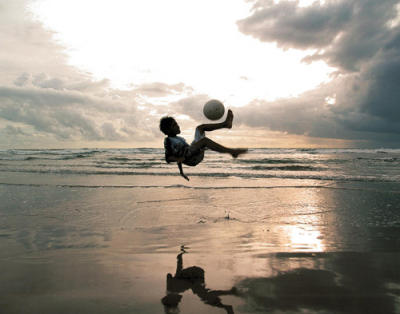
Football and The Brazilian People

Foot

I was not going to write anymore about the world cup, but since so many people have written me to ask what I think about what happened, and I actually have explained to some here it goes.

I think it was a mystery that Brazil could go as far as it did. Short of mind-boggling. No, not them loosing, but them reaching as far as they did with a team that was not very strong. Even more amazing was to see the population go from apathy to total fury because of the 7-1 yesterday in the game between Germany and Brazil.

Seriously, how could anyone actually  have expected that Brazil would beat Germany?When most of their team play together in Bayern München and have so much experience playing together.  Germany has been a great team for such a long time now.

Today Argentina will play Holland.  And many Brazilians are supporting Argentina. Intriguing isn’t it?  Some rationalise it, that they want the  cup to remain in this continent. Other’s like me really admire Messi. Could Argentina win in one player only? Who knows? Holland should definitely be taken seriously, yet, to be quite honest they have played so violently so many times.. that it is hard to invoke the admiration to the old dutch team in our memories.

The reason I write today about this, is because, in fact I was quite appalled by the reaction Brazilians (who first did not want Brazil to win) had. Flags were burned, bussed were burned, foreigners were harmed. And that is definitely shameful.

I remembered Darcy Ribeiro, the anthropologist and writer who ran away from hospital to write the book called “O Povo Brazileiro” ( the Brazilian people). There he argues that Brazilians were not Africans, nor Indigenous, nor Europeans. He claims that because of the mix ( true love and rape etc) these mixed children were rejected by all. They were Brazilian. I would add that it goes way further than this beginning of interaction. Brazilians learned to accept all that came in their path.

Till very recently our main Cathedral in Sāo Paulo held Jewish, Christian and Islamic events when Mosques and Synagogues did not exist here. Everything else was integrated…. from Asia to middle eastern cultures. Everything was incorporated, in a symbolic system that in Brazil antagonism did not really matter. That is not the same to say that in Brazil there is no violence, no inequality. It is to say that they received Jews and Nazis, Japanese and Chinese, Sirian and Lebanese. And that they have learned to incorporate their beliefs with indigenous and Africans.

That is why, it was so embarrassing to hear people were attacking property and people for something that till a couple weeks ago they did not want.

But today, when the day had risen I went to the buss station to exchange my tickets since I have a cold and as I entered the bus station, after having read so much crap in the internet I saw hundreds of Argentinians in Sao Paulo singing. It was actually quite beautiful. It was even more beautiful to see that Brazilians filmed it. Watched it and did not start a fight. It was the same in the tube, and even close to my house. There were dozens of Argentinians singing.

It made me happy.  At least the usual respect for the outside remained here, even when their arch-rival was singing in our lands.

Who knows… maybe Messi can win alone 🙂 And if they don’t, a game between a non motivated Brazilian team and Argentina should definitely  text how strong is “o povo Brasileiro”.

PS: After the game: I supported Argentina the whole time! And Messi did not win alone. Mascherano was amazing! In fact both teams played really well.  But Romeno is way better keeper than the Dutch guy.  I am happy they won. I am happy that all their joy I had seen yesterday all over Sao Paulo had result. How could one not admire those who came in every single way here,  knowing their economy is collapsed to support their team. It was really beautiful!  Congratulations!

Equality, Respect and Responsibility

India2

I come from a very different world. I am from Brazil. I have been to both middle east and India. And I love both places. I travelled by myself every time and to be quite honest I was  never afraid of people.

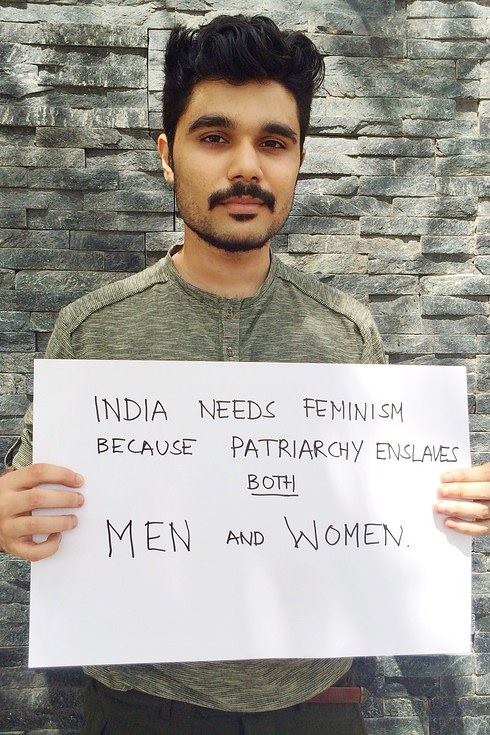
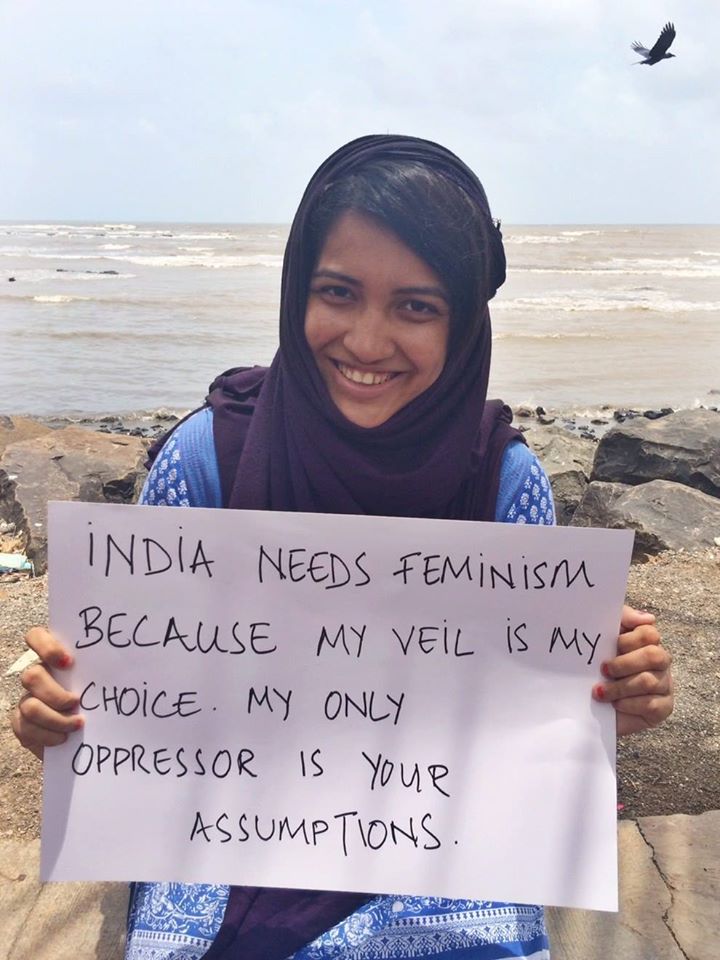
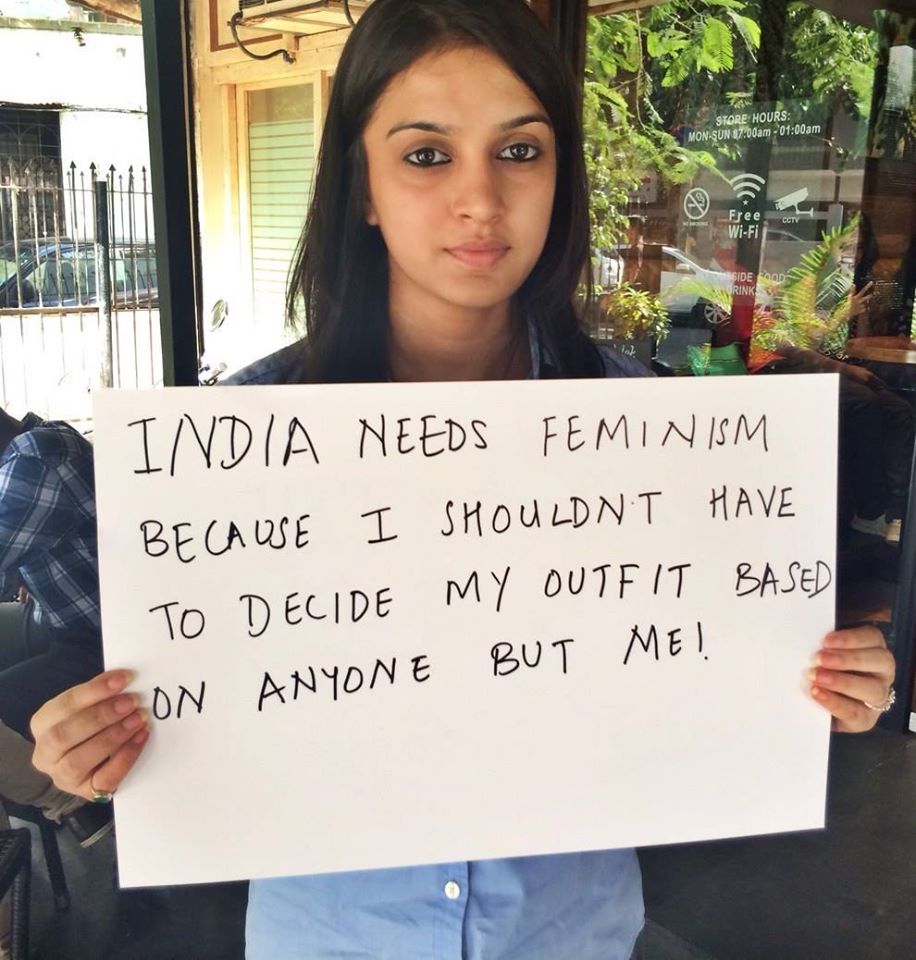
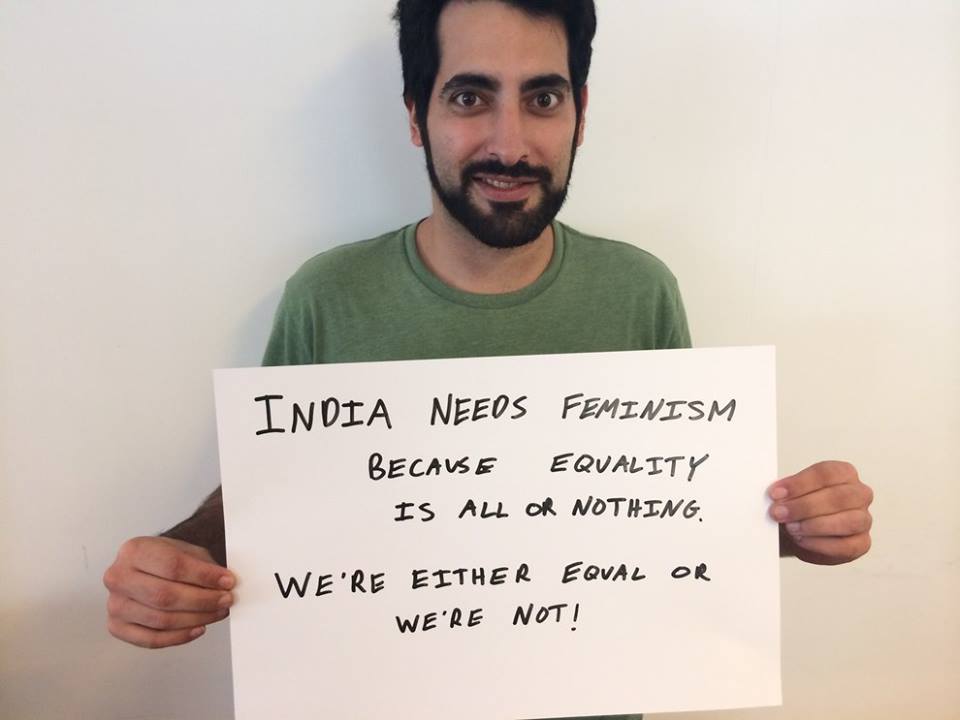
Today someone sent me these photos asking for feminism in India. They are beautiful. All of them. But as I watched, and read I kept thinking we should not substitute  male chauvinism for feminism. We should walk the path of equality of rights, justice, and respect to all.

veil


I stayed in the houses of people I met along the way. And because of that I have an unabated faith on humanity in general.  So much so that even now, after almost dying last year, I bought another ticket to travel on my own to the northeast and north of Brazil. It is true, that as a woman all men in busses would stare at me… But I would speak to them. They would get quite shocked in India, but eventually those who initially had been agressive protected me from something I never really knew what it was. I was never mistreated anywhere, nor have I stopped  going somewhere alone.

clothes


When it was Ramadan and I was in Kashmir I followed it, in Morocco no one asked me to do it and I followed it… in fact no one ever asked me to follow Ramadan because I am not a muslim. I did it anyway…or almost did it because in Morocco I drank water. Out of respect to the place where I was in I drank without anyone seeing. I veiled in mosques, and outside in the streets of Hebron, in Palestine also not because they asked me, simply because the women put it in my head and they thought i looked beautiful in a hijab.

Brazil, is another world. We walk half naked, we go in very small bikinis to the beach… and it is also not exactly a choice…. We are taught to do it. So many beautiful women go under non necessary plastic surgery for no other reason but to satisfy a society that values the body of a model.  Educated women fully believe they they choose to do that. But choice is such and intriguing thing…. How much do we actually consciously choose?

Do the indigenous who always walk naked dress now because they choose? Do they even keep these clothes on once non indigenous leave? Do they have higher rate of rape because people are naked?

How do we know what is choice? Do we like choice? The burden that comes with it?

Nowadays, I stop and I think… will a person be separated from society? Will they not get a job, a boyfriend/girlfriend, a wife/husband  a friend if they have not behaved in the way they believe they are choosing ( and is also the same way most people in that society is behaving). What happens then? Are they marginalised?  Are the answers to all of my questions about their social engagement is immediately NO?  Then we should know this is not a choice, It is a social practice, some way we were taught to behave  in that society, it is not really a choice. There is not really anything wrong to follow society. But we should know it is not a non-influenced choice.

I saw all pictures from this community called “The Logical Indian”. It is beautiful. But more importantly as I started in the beginning of this post  we should not exchange male chauvinism to feminism. We should fight for justice, respect and equal rights. So that people can evaluate really what it is that they are choosing.And finally, this is a path that should be walked not only in India but in the whole world.


But that in fact asks from all of us total responsibility….and I am not sure everybody  really wants that.

equality

The World Cup, Resilience and Strength

Copa

People take me not to bet from Brazil all the time.  And that has nothing to do with the fact that now it is the world cup. It happened before too. Maybe the only places people took me to be from there were Italy, France, Turkey, and Israel.  It is funny, but apparently the amount of time that I have spent abroad has changed the way I structure my sentences. I wish it was only that, apparently it has also changed my mind 🙂

It is the world cup here  as you might know. Yes I am in Brazil.  And first people wrote me to ask how excited I was about it, and then  they wrote to ask whether I am safe. I must say that nothing has really changed in my life, apart from the bars that I like being more crowded by foreigners grabbing me. You know Brazil… where most football fans imagine Brazilian women are all sluts!

People usually also asked me from abroad whether Brazilians were excited about the world cup. And I remember Brazil being stopped in the middle of the night to see the world cup in Asia. I remember the excitation all had about every single cup. But this time it has been different.

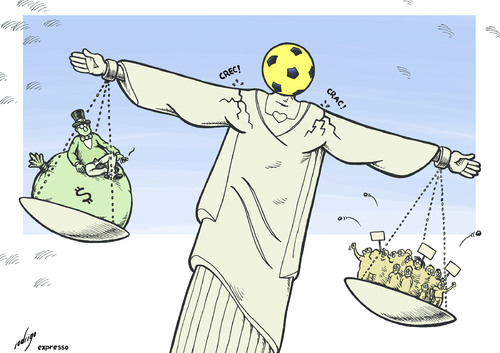
It is really the beginning of it, but I must say that before this week most people were furious. I read somewhere that the last world cup costed 4 billion dollars, and this one 11 billion. Brazilians in spite of all their love for football were furious. Money that was not spent in education, health, welfare  system was spent to build stadiums in the middle of nowhere, and of course who knows where else. So there were protest against it all. No tube, no busses people in the street. On the other hand TV tried to get people to be very excited about football for months. And I heard from rich and poor that they would rather have Brazil loose games immediately so that the people could wake up for the disparity, the corruption that has been part of Brazilian culture for centuries.

And then the world cup started, and little by little you started to see Brazilian flags in cars, and houses. I must say there are not that many. Still it felt somehow poignant  that people could not resist. They cheered.

I must say I usually like football but I did not see a single game so far. And I started to pay attention to something I thought was rather more interesting than the football itself. And that was the amount of foreigners in Sao Paulo, and Brazilians who started to go out to meet them.

Brazilians are in general very friendly people. The women were dazzled by these people some have never met before. Most of them have never been abroad. But also even men were taking care of foreigners around. When  a total asswhole came to disturb me in a bar where I know everybody…. And I was polite to him till he told me Palestine did not exist, a guy came to check on him. They were not friends, he was a Brazilian man that came to check whether he was well.  He asked the guy ” are you ok?”

How could I be a threat to an Israeli soldier? He told the guy I was actually very interesting and tried to  hold me several times. I dismissed it and went to dance with the waiter who is my friend. See this is Brazil. Even the waiter stops sometimes to have fun.

I met another Israeli and told him about that guy. He was appalled  and embarrassed. I told him he did not have to explain any of that to me. Yet the reason I write about this is because in any country there are amazing people, and stupid people. We should not generalise a whole population by what we have heard from someone, or from one encounter.  My Israeli, and Palestinian friends know this. They know I have been to both sides of the wall, that I have friends there and that I inherently trust people.

What is quite amazing about not seeing the world cup that is taking place here. Is to see people who have never met foreigners and who would like to know them. They come to meet them. They take pictures, have brief encounters etc. Obviously there are exponentially more men than women who come from abroad to see the world cup. And that is funny too. Brazilians pretend to be foreigners to attract their own fellow citizens.

We hosted 2 Mexicans here. And we taught how to get by in Brazil, basics of Portuguese. Today when I passed by the lady where we practiced putting credit in a phone she asked me. ” Where are you from? You speak portuguese quite well!”

I explained  her I am from here. Actually from the street around the corner but as I walked I realised she is write I am not from here. I have spent too much time everywhere to be from somewhere. I asked the doorman where he thought I was from. He knows I am from here. I explained him  the story and he said ” Maybe, they think you are not from here because you speak very fast!”

And as I stopped here to write I realised it is true. I am not from here.  I am so scattered, there are so many parts of me in so many places, the people that I trust and love are not simply in different cities, they are in different countries, they are in different continents. My language has been so cut in so many ways, the philosophies and religions that have penetrated my mind come from so many different places, that it does not even surprise me that my brain has stopped sometimes either going too fast or too slow.

I stopped to think about the door man and he is write “it is because I speak too fast”. More than that I live too fast, too intensively.

I don’t care about the world cup. Not sure for how long Brazilians will also not care.  We all know it is panis et circenses. But there is some beauty in seeing their smiles back in their faces. Nothing has changed. All the structural problems are here. Yet they still smile.  I have written about this before… maybe this is the most powerful form of protest and resilience there is! It is to simply not allow all of the absurdity that goes on to go inside one’s soul. They stand up, they see the unfairness for what it is,   they find and know it is absurd and then they still dance and smile. There is no greatest strength than this one.


Freedom in solitude.

freedom

I have encountered in my life many refugees, many of which who had been kept as hostages. I have been to enough places to know that some people speak with fear and in almost silent words in front of me. Others speak casually about it all. I have learned through the path to recognise someone in pain. Nothing special about me, it is something that some people just also feel.

Today I was sent  an article to read about the life of a hostage who was kept in Iran for a long time. Nowadays , I choose carefully what I read. Yet I read it. And it moved me so much. It was a letter. I wondered how many people could actually identify with these words. I did.

I thought so much about it. I have never been kept as a hostage, nor have I ever been tortured why was it that I knew that, how was it that those words made so much sense to me?

There is something intriguing about reading it.  I did not laugh like someone told me, would have been the most compassionate way to read it. I could not possibly laugh at it. I did once see an Iraqi speak in a conference ” laughter is the easiest way to cope with something that is so painful that you can’t deal with.” I was impressed that day. He was Iraqi, ironically at the time ( the time of the Iraqi war) he had studied public health in Syria. Then he became a student at Harvard. I was an undergrad at the time, but because I was always so interested in the Middle East I was introduced to him by my professor. This was NY, a couple years after 911.

As I read it today, many years after. Having met so many people who are from countries that were, or are in a war now, those images lingered in my  mind.  Somehow I definitely could understand a student from Harvard, a doctor writing about laughter when his country was being bombed. He was a doctor.  But I can not laugh.

I read the article again and wondered why was it? And that are some thoughts there which are so powerful.  Shane bauer, the hostage, and journalist, in some part of his page says he never thought prisons in the US could be worse than in Iran.

But the reason I went to his page was to see who he was. More importantly because I was very intrigued by something in that article. And that is such a non popular notion but I really understood it.

Somehow he said it that being freed was harder than to be a hostage. If you are to say that to anyone. They would invoke the “Stocholm syndrom”. Yet this is not really why I thought it was so powerful. It is something else. The return to freedom, in a world where suddenly you can realise the superficiality of it all. The invoked tones.  The questions.  All of this is unbearable.

This is not even knew. I guess in manufacturing consent it is quite clear.  But the idea of the whole west being addicted to pleasures, chemical releases…. Addiction to Freedom, is always hard to tell people.

How many steps further you have to go to understand that a total search for “that” freedom cannot be disentangled from total abandonment of responsibility to the world where you live in. Where you actions do matter!

And so I go back to my love of Mountains, the admiration of those who do not need to conquer them for the chemical release that comes from that. They were born there.

In my mind I go back to Tibetan  lamas who are capable to be in silence, self-contained,  and are able to control brain chemistry through meditation.

In my mind I go back to the indigenous I have met in South America, who tell you all over to not take away a person from a hole. Let them lay there.  I used to find it cruel. Yet, it is not. It comes from an awareness of discovering  self resilience, strength, and the value of one’s own life.

I doubt any Tulku, or Shaman abandons anyone. They are there in silence.

So when I read Shane Bauer I can but think, that I understand he found his strength his value. And was almost convinced he was freed. Only to realise that Freedom is internal, to be externally Free in a world where  most people have not found their own strength leads you to feel completely lonely. Free in a world of disconnection, oppression done under your name.

It is painful to see around you all of those addicted to something vaguely related to Freedom. It almost makes you hate freedom. It almost makes you want to be trapped so that you can at least know who your enemy is. But, in the end, we must realise that this is not  freedom. Freedom is inside.


The article by Shane Bauer is here

“You’ll Need to Relearn How to Be a Person”: A Letter to Bowe Bergdahl From a Fellow Former Hostage

 prison 3


Tibetans Compassion and Laughter

dalai lama

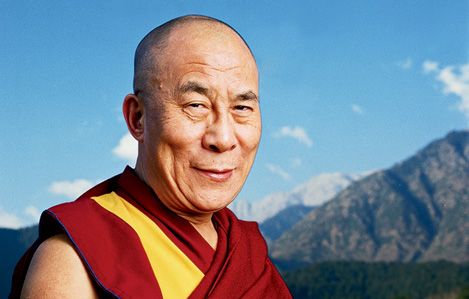
“Whether you believe in God or not does not matter much, whether you believe in Buddha or not does not matter so much; as a Buddhist, whether you believe in reincarnation or not does not matter so much. You must lead a good life.”  HH Dalai Lama

Sometimes I wonder why, I need to write. I no longer play, I no longer have the craving of the world to keep going without an end. I no longer am afraid of death. But I write, because inexplicably the people I have encountered in my journey have kept me going, have kept me living, have kept me believing and they wrote back.

I even wonder why I start with HH Dalai Lama, and without a question it is because HH touches my soul. I once did not believe in anything,  and even thought HH was a simple  political  figure that was  in the middle of the west and the east. The Us X China figure.

That what, before I sat in front of HH Dalai Lama. I was taken aback by his presence. Yet I thought that that was natural. He was  a political figure.

HH Dalai Lama started his speech by asking people to remain believing in what they did, He was a simple monk, a Tibetan Buddhist monk simply because he had been born in Tibet. Had he been anywhere else, he would have been raised believing in other gods.

“Keep what you believe in, it is too much work to change, keep from Buddhism what makes sense to you.”

How could one, not admire such a religious leader?  That was the first time I had been in front of a lama, and it was HH Dalai Lama. After that, in my path I encountered several Tulkus and Lamas. They always spoke of compassion. That really resonated with me. Simply because I loved Alyosha, the religious son of Fyodor Karamzov.  Till this day I take that book,  Dostoyevski’s last book as a sacred one.

And so my path followed, I searched so much. My father used to say I was in the quest of the Holy grail. And in that quest I got sick several times without much explanation. The last one,  I was taken into a coma, and I almost died. I did not remember much of anything once I woke up.

Dr. Getulio Rabello, my neurologist,  told me to write. And I worked so hard to attempt to do the impossible. To translated my thoughts so trapped in my mind into words. In the beginning it was a daily battle aggravated by the fact that I understood my brain, all that was said, and that I trusted someone very much that I shouldn’t.

For a while, all I could do was play music. Listen to music. Hallucinating  with songs I no longer knew the name of. It was a daily battle not knowing who I could trust or not.

HH Dalai Lama once said  ““The enemy is a very good teacher”

And it took me a while to fully understand that. So first I felt pain, then hatred, till nothing really mattered anymore.

And little by little came another sentence by HH

““Learn the rules so you know how to break them properly.”

And I did, I learned all rules, yet I broke them wrongly feeling inexplicably sad. The fact that I understood the rules helped me in understanding that my brain was healed. Yet there was so much pain. What can you do, when you understand, when your brain is capable but the pain does not stop existing?

Time went by and HH came to me one more time

“Love and compassion are necessities, not luxuries. Without them, humanity cannot survive.”  HH Dalai Lama

I knew that. I have always known that. Yet, I could not feel it. I sincerely thought I was somehow dad inside. Without any possibility to recovering.

And I went once again to Dr. Getulio, and he was once again amazed that I was well. He insisted that I should have a project. I told him I had none, and about all that I had found out about my brain. About music. About meditation. He told me to go back to music, to study psychology. And I asked him whether I could finally climb.

climbing

He was shocked at first, but I explained how safe it would be. And he let me climb indoors. He let me drive in Sao Paulo. And I was happy beyond belief. I was almost back.

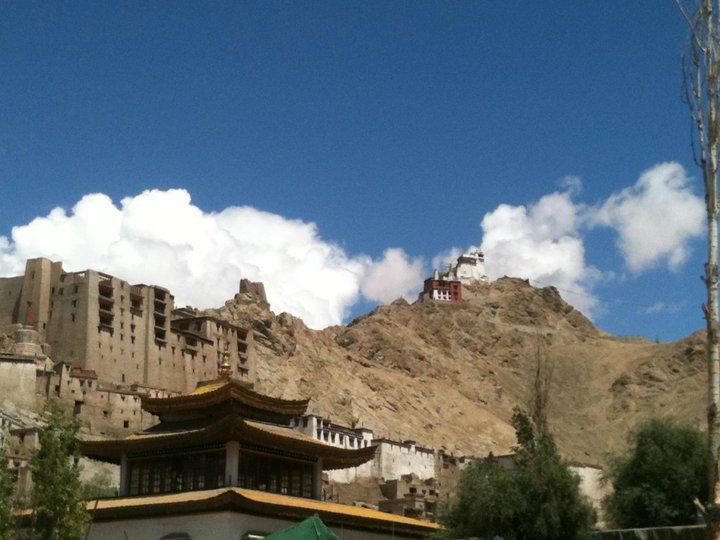
I drove under the rain listening to Choro, I saw my friends who remembered me and all that had happened to me. I explained though I had great equipment I did not remember really well how to go about it. They helped me. I climbed slowly after having done an hour of yoga just before…  and having had pain in my whole body for months. And as I was going up I remembered why mountains were sacred. They are grounded and they reached to the sky. I remembered Ladak, the cold air in my face, the stupas, how happy I was then, and now  how happy I was again.

ladakah

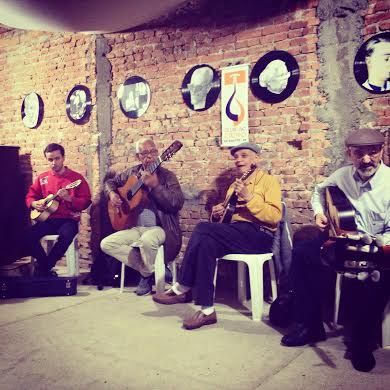
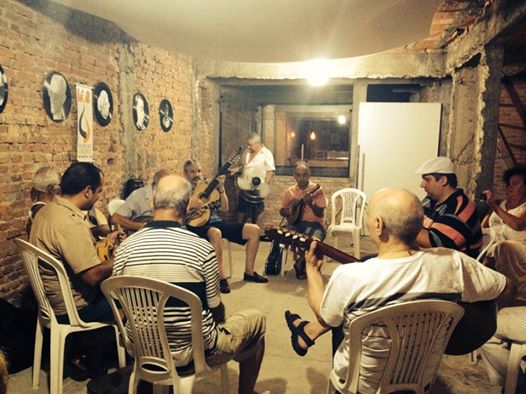
I drove away under the rain. I hugged my fellow friends from climbing. I cried. I knew them. And I drove to a place where the most amazing musicians of choro meet every week to play. Not a bar, just a studio.

I came with tape in my hands, blisters in my fingers, climbing shoes hanging from my bag, and I sat right in front of the musicians, next to Dona Inah and I felt pure joy. From yoga, to climbing, to Choro. I was for a whole day in a total meditative state.

choro

It lingered while I drove, when I fell asleep till today. It broke sometimes, when I remembered the injustices inflicted on me, and others. But I decided to listen to HH Dalai Lama, since he has been present supporting in silence my struggle against myself.

It came to my mind, the voices of people of all over the world, asking me to come back to believing in humanity.


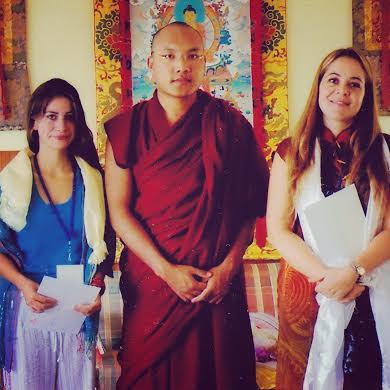
And as I just heard him laughing, after listening to HH Karmapa. After talking to Denise I knew I had to write to share this. I don’t know what is the path that Dr. Getulio wants me to walk, but I know, I must write, I know I need music, I need yoga, I need mountains. And finally, I feel totally in peace.

karmapa

“This is my simple religion. No need for temples. No need for complicated philosophy. Your own mind, your own heart is the temple. Your philosophy is simple kindness.”

14th Dalai Lama

Wanderings about Art.

BULLFIGHT_n3_Savador_Dali

Art is such an intriguing thing. Sometimes it feels like it is one of the most subversive things there is. In others it feels like an example of force of those who already have it.

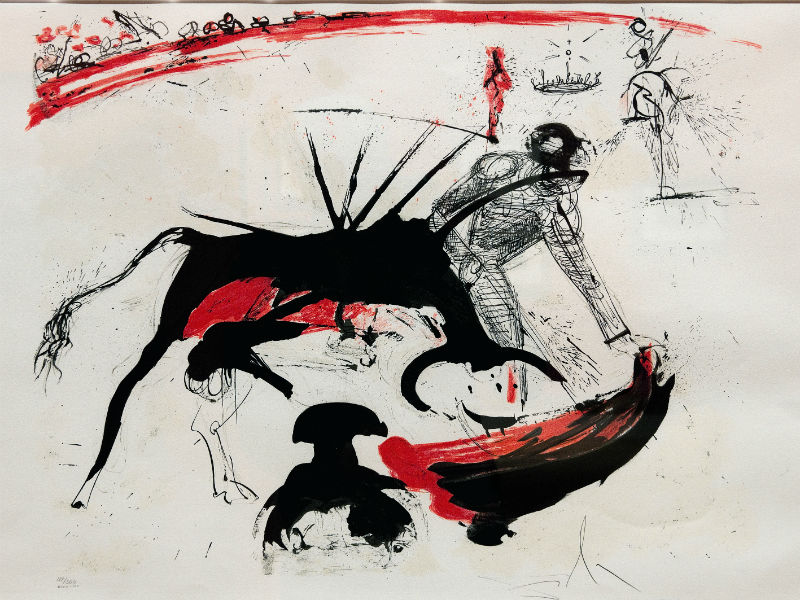
I just came home from watching a beautiful exposition of works by Picasso, Goya and Dali. The exposition was put out by my cousin and her colleagues. The public opening to the world is tomorrow. Today I was lucky to be invited to go to, and was accompanied by my almost 90 years old  grandmother.

The topic was the Tauromaquia, in other words the bullfight. It is far from being something that I admire, though I must say I have never seen one, nor do I have the desire to see it. My grandmother, whose brother was years ago the Ambassador of Brazil in Spain took her to see it. So I watched those powerful paintings with mixed feelings. My grandmother told me she was very afraid to go to see the bullfight, but that it was one of the most impressive rituals that she had ever seen.


I heard it, still was convinced I still did not want to see it, but was wandering why three important painters would have painted it. Without a question it is part of their culture, but there was more to it. You could feel it was also a political act. Sometimes, a protest against Guernica itself.  I could feel it, even before reading it.

I was brought back to England when I was taken to see an exposition of modern Art. I rarely like modern art because it is so plain obvious that one must be educated to accept that language, that I find it itself unfair and discriminating. In fact, in a sense, I find it less like art. Today, very few things had to be read, or explained for you to understand the power of these works. Had they had no names probably would make no difference to me.

But I was brought back to England to that exposition where nothing really looked like anything at all, unless you would read the titles, or hear the explanation of an “art specialist”. I was brought  back to that moment when I saw this painting that looked nothing and decided to listen to the explanation. According to the that specialist that painting ( loads of nothingness with some colours) represented the pain of the victims of the conflict between Hutus and Tutsis. I simply could not believe it. I looked around to see if there was any african that would have the same feeling that I had, there wasn’t any and I asked a question.

“Who painted this? Where is this painter from?  ”

“Germany.”

“Has this person ever been to Rwanda or Uganda? ”

Obviously not. The expert was without words for a second and then gave me a lecture on the importance of modern art.

I was happy there was not a single African there. They were all mainly Europeans and I felt it would have been quite offensive to anyone who had been in a war to have seen that as the representation of their pain.

I thought so much about this after. How much do we have the right to portray that which we have not experienced? Probably all, after all in a sense we are all human beings who are survivors, and inheritors of every single massacre that takes place every single day.

However the brutality of that painting is not in portraying pain that is not yours. It is to expect that the other, even the direct victim of something will need to be educated into understanding it. That is quite violent.

So, as I walked around seeing paintings I wondered how can one know a true exposition from one made to be put in the media.

And as I was left to talk with a professor from an university in Milan who works with processes of peace through art , as well as with a diplomat and they spoke about the power of Art I could think of nothing but that art that IS art needs no explanation. Art in whatever shape that it is will always be subversive.

Even art that is just simply perfect, and beautiful is subversive. And with that thought I remembered that for instance, in Palestine one of the first movements towards radicalisation was to kill art.

Art does not need to be explained, it just needs to be allowed to bloom in whatever place and shape that feels it suits.

I still do not want to see a bullfight, yet I now could feel in my body the power that comes from it. Even without any explanation.


Withering Heart

Image

What can move one? It is simply so random and yet sometimes so poignant that it becomes like  an inexplicable exercise to attempt to explain the inexplicable. Yet we do it, we attempt to understand the logic of it all, we attempt to understand the process of life, the world, the universe, the body, the mind, and some even the soul.

Yet, having, searched for so much, I am quite amazed by the fact that what brings you total joy, which is different than chemical pleasure originated by chemical release, that joy I am wondering about is of of another kind.  We could attempt to map it in the brain what happens there, and yet it is almost completely futile.

For me, my brain returning to its past capacities gives me some kind of joy.  Yet it is not even that. It is impossible to write about it . The fact that I took my guitar to compose something was a bigger expression of life, than any chemical exam. Those processes are so complex, and yet simple. So what brings me joy is to be in place. It is not simply to be in place, but to be understood, to feel my soul is here as well as it is my body. So rare had it been for me these moments, yet, they are back to me. The beginning of it, is here for me.

So I realise that what gives me joy is to share what I find is so beautiful. It is not to work, it is not to travel, it is a true encounter with the other. Sometimes, what brings total presence is the totally unexpected message of a friend from another world with a poem. And I seat here, to share that, as it was written in his language, I value it more. Since it was translated, it makes me understand it. And I write simply because I must share that poem. It brings me back to Asia, a place where I almost died, yet a place where I love very much.  It gives me joy to share this here, and imagine than other people will like me feel it to.

一棵開花的樹

席慕蓉

如何讓你遇見我

在我最美麗的時刻 為這

我已在佛前 求了五百年

求祂讓我們結一段塵緣

佛於是把我化作一棵樹

長在你必經的路旁

陽光下慎重地開滿了花

朵朵都是我前世的盼望

當你走近 請你細聽

那顫抖的葉是我等待的熱情

而當你終於無視地走過

在你身後落了一地的 

朋友啊 那不是花瓣

是我凋零的心

A blooming tree Xi Murong

“How to make you meet me

at my most beautiful moment.

For this,

I had prayed to Buddha for five hundred years

for making us an earthen fate.

Thus, Buddha turned me into a tree

growing on where you would pass by everyday.

I carefully bloomed fully under the sunshine.

Each flower was the looking forward of my previous life.

When you got closer, please listen carefully,

those trembling leaves were my waiting passions.

When you passed by without noticing,

what had fallen on the full ground behind you,

my friend, those were not leaves

but my withering heart.”

I shared these poem with friends and loved ones I thought I should. And strangely people from all over  the world in spite of their religion were moved as well. So I decided to write. And as I wrote, I realised once again, that just like in the brothers Karamazov I took the path of joy and not truth. Because truth is so unattainable.  More importantly, this path is the path of compassion. Well, my friend comes from Taiwan so I guess it is Tao, it is simply the path…..


Of Refugees, life and Capão

the-moroccans-leila-alaoui-6

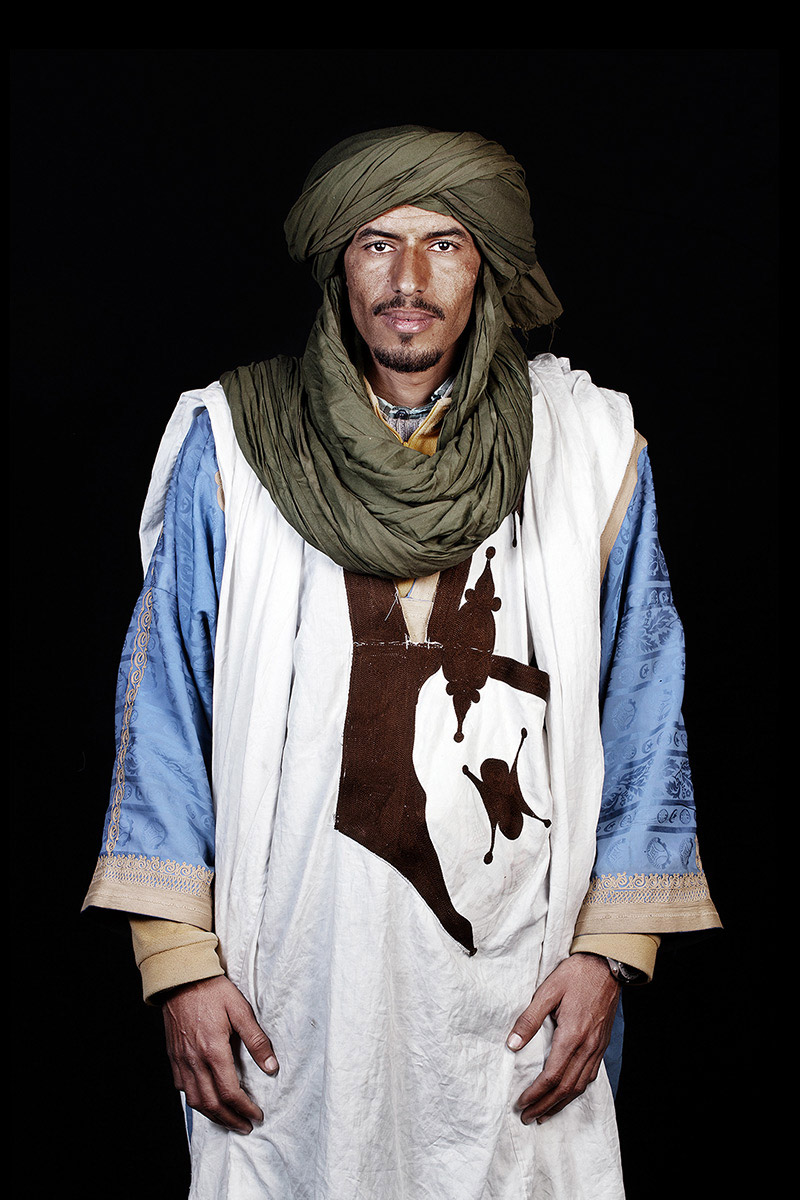
Leila  Alaoui is a brilliant photographer , she has been my friend since when she started to take pictures. She lived with me in NY, and I visited her house in Morocco years ago. Leila, now lives in Lebanon. She works with Syrian refugees. She was the first person that I spoke to on  skype when I was still so sick. She always called me to talk to me. And I was capable to speak to her in French… when I barely spoke portuguese. She made me feel alive just like she made me write again.

Leila 2

Today as we spoke she told me about a film she had made. I saw it and I was so moved by it, and even told her I would write about it. Leila worked with Refugees, with survivors of wars, she lived and took beautiful pictures of them. And she asked me to film me. Me? What could I possibly be interesting for?  Her video was just appallingly beautiful, with  deserts, refugees, tracks, stories…. And as I watched I cried.

Leila

Then I wrote her to tell her what I will tell you here. Tell her of the things that it made me think. Not simply about the beauty of it, nor the photography, but because it took me back to the border of Africa and Europe… there  where Morocco stops and Ceuta is. Ceuta is in the African continent but it is Spain now.

I still, after all these years, remember vividly my feeling, the images, the thoughts. There were so many people… I was walking back to Morocco. People sold even the paper that was free, simply because lots of people who could not know how to feel it. People carried toilet paper, clothes, begs, suitcases, dreams. People who were going back to Africa  I guess carried nostalgic feelings. People  going back home could come easily back to Africa. Now the people who were coming to Spain they were held for long times. I was young, and yet I knew we were all lost, in between….. that the people who were going to Europe were searching for a better life in an almost impossible future. The people who were coming back, you could almost see their face the feeling of loss, of failure, and of missing from where they came from.

My crossing was easy. I had the “Right” papers…. On the other side there were lots of cabs. I just took one in the middle of nowhere, in the middle of hundreds of cabs. I remember thinking, that most people would find that dangerous. But I felt in place. After all, most of these different people were like me… displaced.

All these images came to my head as I watched Leila’s film.  And then suddenly came to my had a meeting I had a couple weeks ago. As I  was about to go home, someone dropped a glass in my foot, and someone else stopped to help me.

The guy said Hi, said I was beautiful. And since he was so friendly I started to talk to him. Then suddenly he said

” Stop, talking to me. I am from Capao Redondo”.

I told him I did’t care, he had helped me. Why should I not talk to him?

” You do not even know where this is or what it means!”

“I do, I have been there. Actually twice.”

He was intrigued. And maybe I should  add here that that place is a dangerous neighbourhood in Sao Paulo. It has in the past had more people being killed in a year that in many places that are in a war.

I insisted and told him

” You know, I trust strangers. I went to your neighbourhood. I stayed in the house of people I met on buses in Palestine, in Kashmir etc. So I have no problem to talk to you, unless you don’t want to talk to me.”

“I am impressed. Really. I ll be honest with you, you are beautiful and I wanted to kiss you, but now I can’t. I can see you are real. And you have such a sadness inside of you that makes me want to protect you. What happened to you? Why did you go to these places for, what have they done to you there?”

I told him, all that had happened to me which was in no dangerous place. And then he said something that really intrigued me. First he understood my pain of total abandonment by someone I trusted. And then he said something so intriguing that reminded me of Leila as well.

“Ju, you are much more impressive than me. I was born in that neighbourhood. I did not choose to live there. You come from the richer side of Sao Paulo and yet you chose to go there to see people in a very dangerous place. You chose to go Palestine. To Kashmir, to borders. And that is why I can’t simply kiss you like you were one more superficial girl here. You are profound. You know death, life, war, borders, poverty. You chose even without needing to go to see the world how it really is. Why? Why were you not afraid?”

I was really taken aback… and thought about it…. and realised…

“No one that you barely know, can hurt you. It is people who really knows you, who you truly trust that can kill your soul. I was never afraid of losing things, being killed,raped bc as painful as that sounds…. it is in these places  that most people are afraid of that I was most taken care of. It is in truly harsh places that people have not lost the value of life. Of friends. Of shelter. Of food. Of love.”

So today, as I was speaking to my dear friend Leila I remembered that. She, just like me studied abroad, came from a great life and yet she always wanted to know the other. The borders, the refugees, the places were life is so felt.

I told her what could I possibly tell her in a film? I saw her  picture, her film. It felt unfair to all those in a real war.

“Jules, you inspire me.”

And so I seat here to write this, to wonder why would that be? And suddenly it dawned to me. It simply because we have not totally lost faith in humanity. It is because we search it in extremity. It is because we know, that in these places people know the real value of life. Just like they know the non importance of death.

I write again because Leila Alaoui inspires me too. And I am fortunate enough to have her as a friend.

http://www.leilaalaoui.com/

Dona Inah and Choro.

Inah

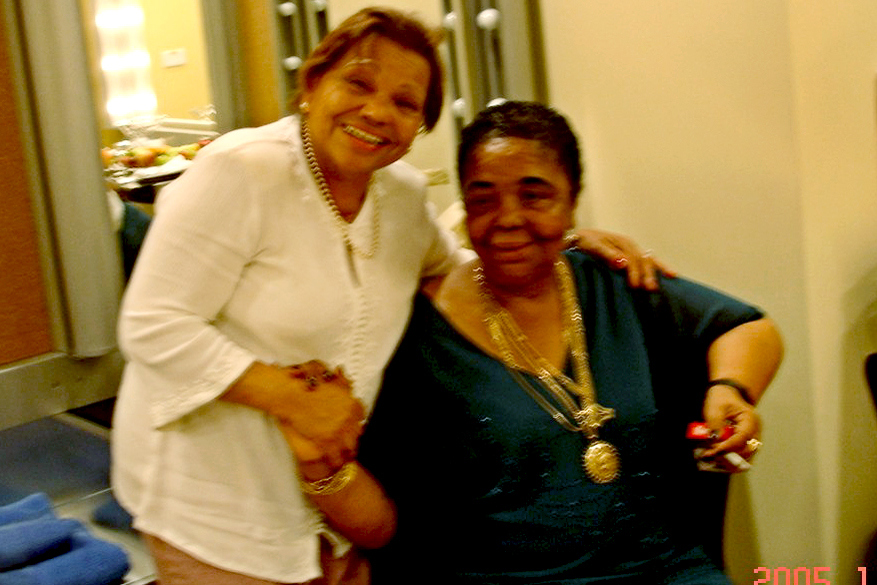
Time has passed. I dance every week. I seat listening to a real Diva: Dona Inah. Before I dance and listen to her, I seat and talk about her life. Every week Dona Inah tells me something new…. like about when she played with Cesaria Evora, or about when she had a concert in Morocco. We both love Morocco. Sometimes she tells me about her last trip to Cuba where she recorded a CD which is about to come out. She  who had played with many of the musicians of Buena Vista in other times.  She who had sang with Omara Portuondo and so many other amazing artist and yet she is so kind. Dona Inah is 78, and every week she sings till 3,5 am in Sao Paulo.

inah-e-cesc3a1ria-evora

I am literally flabbergasted by her. Her joy, her voice, her strength and her stories. Her life and music just flow through her.  She who had started singing professionally when she was only 12 in Araras, a country side town of the state of Sao Paulo, and who had only become famous when she was  in her 70’s. Dona Inah, like me, goes to listen to Choro in a small place where some musicians go every week. I go to listen to Isaias and Israel and so many other brilliant musicians  who just pop there every single Friday, bringing their instruments and their brilliancy… It is free,  and somehow hidden in a little studio. I feel I am very privileged to be invited to go there, so I never invite almost anyone else, who might make noise there, in respect to the musicians I go alone, or with someone who plays or deeply respect music.  And so we all seat to listen to Choro.

Dona Inah

This Friday there was a storm in Sao Paulo. It had been days that it had been incredibly hot, and strangely without rain. But this Friday there was a storm, so when we got there under the rain there was no light.

choro

It was then that the mystery and the sacredness of music could be really felt. We could not see anyone, and yet music flew, and was played perfectly. As I stood up and walked carefully to go the toilet I heard my name. Two of my very dear friends were there. They were amazed to see me there. I had not seen them in ages. They held me and told me that all would now be alright. Just like before… and somehow I knew they were right. And so we stood there listening to music.

The following morning I woke up with my body all in place. Simply all in place. I still had to go see Dr. Getulio today.  I knew I was finally ok.  Even before Carnival was about to start, my soul felt it could dance again. My tears became more scarce and it feels that soon, it will be nothing but joy.