The Sunrise!

I have a deep conection with the mekong. More precisely to my friends who I have met seing the sunset in the Mekong. How many thousands pictures could one take, how many painters have attempted to capture it?

They feel to me always like the shadows of plato’s cave. Some are naturally more beautiful, than others… yet they are still shadows.

I made a friend in a bus, just like I did before all over the world. She told me she was supposed to avoid the sun and that she had started a daily war with her own fear. She took pictures of the sunrise.

I have ever since attempted to see the sun rise here by the beach. It never really worked. Till today.

Just like any other day I could not see the sun rise. I sat on the sand and observed there was light. I did not know where it came from. I looked aound thinking: above the clouds in every plane you can see it is sunny. But where was the sun now?

I sat hearing the waves and suddenly I could see a pinkish, red “thorn” fighting to slide, glide penetrate the clouds. It was a long battle.

And suddenly I realised I could not antissipate the victory of the sun unless I looked that in fact it was all over lit. I could finally see it, when I looked at the sea. There he was. There he was clearer than in the sky. There he was.. The sun!

My mind naturally wondered back to Asia. Chinese medicine. Never tackling the exact point. It is in the reflection of all that is around that you can see the whole.

Not much longer, with all that needed to be lit already lit, with all clouds mysteriously disappearing I saw the bright yellow sun in the sky.

IMG_7206-1.JPG

Whispers of The Sea

“The wordl that is deeply inside of one cannot be the reflection of the world that is outside. Aware and conscious of that outside world, the world that is inside should search permanency in the impermanency of all that is around.
In fact, the world that is inside cannot mix “permanency” with rigidity and lack of movement. Amidst the impermanence of it all, and the internal effort to be permanent, it is always fundamental to fully understand TAO, the path. It is fundamental to take the path. Not any path, but a conpessionate one.”

20140807-195612-71772686.jpg

Israel and Palestine, two wars, seing both it doubles one’s pain. But it is fundamental!

I had so many answers to my last email about what my friends from Gaza, Israel and the west bank were writing, posting in my wall that I was impressed. Some people I never dreamed would be on facebook and are. The battle was being fought there, or more likely some
Conversation was possible, and the exposition was more absolute. Yet others, thanked me and asked me to tell more here..

First I must confess that maybe with some desire to fleeing my life I decided to go to a buddhist retreat in silence for 10 days. I barelly did not tell anyone I would be unreachable for 11 days. I disappeared from the net, from all that was happening in my life and in the life of my friends.

I got sick on day one, high fever, sleeping till 4 am everyday. Eating only at 6 and 11. After that, only water with lemon for those who had done it before. I had done it before, and I dont mind so much not eating but cold in a open space, fever, and no food, medicine in an open stomach were by the 3rd day an obvious path dounhill in my body.

I kept hearing next to me new people getting sick, coughing, sneezing and I could not sleep. And it was not the fever, nor the noise, nor the open cracks with chilly wind that kept me awake.

It was my total awareness that I had not told my friends in the mide east about it. It was my total awareness that a war was being fought, that my friends would have written me and I was there meditating. Incapable to write to anyone.

I once read my friend saying that abandoning a situation to feel better was the priviledge of the rich. Maybe it is even more than that it might simply be the path of the weak.

I am not a soldier, I am not there, yet there in the total silence all that I thought about was the film Amit had sent me, the words Yassert had told me.

I left the retreat. I did not know exactly where to go. I did not feel like going home. My phone, once returned to me had many messages of people of the middle east from obviously from both sides of the wall.

I came to the beach alone, to be in my house alone and quiet, I wanted to be able to reply. To know how they were.

I was gone for 3 days… And when I was able to talk to my friend from Gaza who lives in Colombia he told me, he could not reach anyone from his family, or friends. They were all dead. I sat alone in my house and cried. I do not know these people, but I felt the pain and I felt the total despair, loss and anger from where before there was hope for peace. It had become his personal fight. I cried.

We can’t be loosing the moderate in all sides. What can one do in front of such brutality? What possible reason people can find to keep going and to justify the bombing of an open prison, killing soo many children, who are the majority of that population?

I was also not capable to speak to other palestinians in the westbank. why? Was the internet gone? Were they all gone?

Filled with terror, I decided to look the paper. I do not trust the paper. The images of the leaders of the Shin Bet in the documentary The Gatekeepers kept comming to my mind… “No morality”. Even THEY knew they had walked the wrong path.So I searched one of the men I most trust in Israel. He had just written

Uri Avnery…

Uri Avnery was born in 1923. He survived the holocaust, was part of the Irgun, the Knesset, and was also the first jewish Israeli to meet with Arafat. He has been for years an avid critic of the Israeli government, a post-zionist and and a prolific writer. He is vilified in Israel by many. But since he fought for the Irgun and survived the holocaust, most people cant really criticise him so they say that he simply lost his mind bc of his age. Even if his fight has been happening for decades…

These are his words from today… They could be mine.. These is what feels to see a war from both sides…

Meeting in a Tunnel
02/08/14

THERE WAS this village in England which took great pride in its archery. In every yard there stood a large target board showing the skills of its owner. On one of these boards every single arrow had hit a bull’s eye.

A curious visitor asked the owner: how is this possible? The reply: “Simple. First I shoot the arrows, and then I draw the circles around them.”

In this war, our government does the same. We achieve all our goals – but our goals change all the time. In the end, our victory will be complete.

WHEN THE war started, we just wanted to “destroy the terror infrastructure”. Then, when the rockets reached practically all of Israel (without causing much damage, largely owing to the miraculous anti-missile defense), the war aim was to destroy the rockets. When the army crossed the border into Gaza for this purpose, a huge network of tunnels was discovered. They became the main war aim. The tunnels must be destroyed.

Tunnels have been used in warfare since antiquity. Armies unable to conquer fortified towns tried to dig tunnels under their walls. Prisoners escaped through tunnels. When the British imprisoned the leaders of the Hebrew underground, several of them escaped through a tunnel.

Hamas used tunnels to get under the border walls and fences to attack the Israeli army and settlements on the other side. The existence of these tunnels was known, but their large numbers and effectiveness came as a surprise. Like the Vietnamese fighters in their time, Hamas uses the tunnels for attacks, command posts, operational centers and arsenals. Many of them are interconnected.

For the population on the Israeli side, the tunnels are a source of dread. The idea that at any time the head of a Hamas fighter may pop up in the middle of a kibbutz dining hall is not amusing.

So now the war aim is to discover and destroy as many tunnels as possible. No one dreamed of this aim before it all started.
If political expedience demands it, there may be another war aim tomorrow. It will be accepted in Israel by unanimous acclaim.

THE ISRAELI media are now totally subservient. There is no independent reporting. “Military correspondents” are not allowed into Gaza to see for themselves, they are willingly reduced to parroting army communiqués, presenting them as their personal observations. A huge herd of ex-generals are trotted out to “comment” on the situation, all saying exactly the same, even using the same words. The public swallows all this propaganda as gospel truth.

The small voice of Haaretz, with a few commentators like Gideon Levy and Amira Hass, is drowned in the deafening cacophony.

I escape from this brainwashing by listening to both sides, switching all the time between Israeli TV stations and Aljazeera (in Arabic and in English). What I see is two different wars, happening at the same time on two different planets.

For viewers of the Israeli media, Hamas is the incarnation of evil. We are fighting “terrorists”. We are bombing “terror targets” (like the home of the family of Hamas leader Ismail Haniyeh). Hamas fighters never withdraw, they “escape”. Their leaders are not commanding from underground command posts, they are “hiding”. They are storing their arms in mosques, schools and hospitals (as we did during British times). Tunnels are “terror tunnels”. Hamas is cynically using the civilian population as “human shields” (as Winston Churchill used the London population). Gaza schools and hospitals are not hit by Israeli bombs, God forbid, but by Hamas rockets (which mysteriously lose their way) and so on.

Seen through Arab eyes, things look somewhat different. Hamas is a patriotic group, fighting with incredible courage against immense odds. They are not a foreign force oblivious to the suffering of the population, they are the sons of this very population, members of the families that are now being killed en masse, who grew up in the houses that are now being destroyed. It is their mothers and siblings who huddle now in UN shelters, without water and electricity, deprived of everything but the clothes on their back.

I have never seen the logic in demonizing the enemy. When I was a soldier in the 1948 war, we had heated arguments with our comrades on other fronts. Each insisted that his particular enemy – Egyptian, Jordanian, Syrian – was the most brave and efficient one. There is no glory in fighting a depraved gang of “vile terrorists”.

Let’s admit that our present enemy is fighting with great courage and inventiveness. That almost miraculously, their civilian and military command structure is still functioning well. That the civilian population is supporting them in spite of immense suffering. That after almost four weeks of fighting against one of the strongest armies in the world, they are still standing upright.

Admitting this may help us to understand the other side, something that is essential both for waging war and making peace, or even a ceasefire.

WITHOUT UNDERSTANDING the enemy or having a clear concept of what we really want, even achieving a ceasefire is an arduous task.

For example: what do we want from Mahmoud Abbas?

For many years the Israeli leadership has openly disparaged him. Ariel Sharon famously called him a “plucked chicken”. Israeli rightists believe that he is “more dangerous than Hamas”, since the naïve Americans are more likely to listen to him. Binyamin Netanyahu did everything possible to destroy his standing and sabotaged all peace negotiations with him. They vilified him for seeking reconciliation with Hamas. As Netanyahu put it, with his usual talent for sound bites, “peace with us or peace with Hamas’.

But this week, our leaders were feverishly reaching out to Abbas, crowning him as the only real leader of the Palestinian people, demanding that he play a leading role in the ceasefire negotiations. All Israeli commentators declared that one of the great achievements of the war was the creation of a political bloc consisting of Israel, Egypt, Saudi Arabia, the Gulf Emirates and Abbas. Yesterday’s “no-partner” is now a staunch ally.

The trouble is that many Palestinians now despise Abbas, while looking with admiration upon Hamas, the shining symbol of Arab honor. In Arab culture, honor plays a far larger role than in Europe.

At the moment, Israeli security experts look with growing concern at the situation in the West Bank. The young – and not only the young – seem ready for a third intifada. Already, the army fires live ammunition at protesters in Qalandia, Jerusalem, Bethlehem and other places. The number of dead and injured in the West Bank is rising. For our generals, this is another reason for an early ceasefire in Gaza.

CEASEFIRES ARE made between the people who are firing. Viz: Israel and Hamas. Alas, there is no way around it.

What does Hamas want? Unlike our side, Hamas has not changed its aim: to lift the blockade on the Gaza Strip.

This can mean many things. The maximum: opening the crossings from Israel, repairing and reopening the destroyed airport of Dahaniyah in the south of the Strip, building a seaport at Gaza City (instead of the existing small fishing jetty), allowing Gaza fishermen to go further from the coast.

(After Oslo, Shimon Peres fantasized about a big harbor in Gaza, serving the entire Middle East and turning Gaza into a second Singapore.)

The minimum would be to open the Israeli crossings for the free movement of goods in and out, allowing Gazans to go to the West Bank and beyond, and to support themselves with exports, an aspect which is too rarely mentioned.

In return, Israel would certainly demand international inspection to prevent the building of new tunnels and the restocking of the arsenal of rockets.

Israel would also demand some role for Abbas and his security forces, which are viewed by Hamas (and not only by them) as Israeli collaborators.

The Israeli army also demands that even after a ceasefire comes into force, it will complete the destruction of all the known tunnels before withdrawing.

(Hamas also demands the opening of the crossing into Egypt – but that is not a part of the negotiations with
Israel.)

IF THERE had been direct negotiations, this would have been comparatively easy. But with so many mediators vying with each other, it’s difficult.

Last Wednesday, Haaretz disclosed an amazing piece of news: the Israeli Foreign Ministry – yes, the fief of Avigdor Lieberman! – proposes turning the problem over to the United Nations. Let them propose the conditions for the cease fire.

The UN? The institution almost universally despised in Israel? Well, as the Yiddish saying goes, “when God wills, even a broomstick can shoot.”

Assuming that a ceasefire is achieved (and not just a short humanitarian one, that no side intends to keep), what then?

Will serious peace negotiations become possible? Will Abbas join as the representative of all Palestinians, including Hamas? Will this war be the last one, or remain just another episode in an endless chain of wars?

I HAVE a crazy fantasy.
Peace will come and filmmakers will produce movies about this war, too.

One scene: Israeli soldiers discover a tunnel and enter it in order to clear it of enemies. At the same time, Hamas fighters enter the tunnel at the other end, on their way to attack a kibbutz.

The fighters meet in the middle, beneath the fence. They see each other in the dim light. And then, instead of shooting, they shake hands.
A mad idea? Indeed. Sorry.
———————————————-
Seing two wars is twice more difficult, but it is fundamental!

You should watch the Gatekeepers as well, the second link has the whole film and subtitles

cosmos-documentaries.blogspot.co.nz/2013/07/the-gatekeepers-documentary-film-online.html

For uri, in many languages( arabic, hebrew, french, english, russian etc)
http://www.gush-shalom.org

Sent from my iPhone

The Loss of Hope- Sayed Kashua

Sayed Kashua

Years ago I left my country to study and sea the world. Somehow, I ended up  arriving in NY days before 911.

Maybe it was then that I started to care so much about the middle east. First because of the absurd that was happening in the US. Later because my path would lead me to meet people from these areas.

Years ago I started to read about the Question of Palestine. Then eventually I was there. Breaking all the prejudices I had learned through my path. Some of you here in this list remember when I was in front of the separation wall between Palestine and Israel. How much I cried that day, not fully understanding because by then I had friends in both sides of the wall that in any other world could have been friends.

Here in Brazil my own family gets startled by the fact that I care so much about a place that is so far away. They do not understand I was treated like I was home everywhere there. They took care of me. In both sides, they really took care of me.

I was there when both Vittorio Arrigoni and Juliano Mer were killed.  And I am so thankful to so many people in both sides of the wall that  I decided to write this simple message. It is not because of the profound pain I feel…. The human pain for humanity, it is because of the sadness, the loss of hope, and because I read today what Sayed Kashua had written for the Guardian.

I had read soo much of what he has written through these years. Which is always painful and sarcastic. I had seen a whole documentary  about his life. A Palestinian writer that wrote in Hebrew. But today, I write because his voice went to the depth of my soul.  Sayed Kashua who had already spoken of always being scared was now leaving Israel.

Together with Sayed, I also heard the voices of many Israelis who were not the most left wing people also planning to go away.  I heard the voice of one of the people I most trust in this world feeling tired, scared, disappointed and somehow hopeless.  But who, am I? to say anything? So I will copy and paste… the voice, of the Palestinian who writes in Hebrew… this time, in English. His words say more than mine..

Sayed Kashua

  •  Sunday 20 July 2014

Sayed Kashua: why I have to leave Israel

The Arab-Israeli author moved to Jerusalem as a child and has devoted his life to telling Israelis the Palestinian story. But last week he decided to emigrate with his family to the US


Sayed Kashua in Jerusalem. ‘I wanted to tell the Israelis a story, the Palestinian story. Surely when they read it they will understand.’


Quite soon I am going away from here. In a few days we’ll be leaving Jerusalem, leaving the country. Yesterday we bought little suitcases for the kids. No need to take a lot of clothes, we’ll leave our winter clothes; in any event they won’t be warm enough given the cold of southern Illinois, USA. We’ll just need a few things until we get settled. Perhaps the kids should take some books, two or three in Arabic, and another few in Hebrew, so they don’t forget the languages. But I’m already not sure what I want my kids to remember of this place, so beloved and so cursed.

The original plan was to leave in a month for a year’s sabbatical. But last week I understood that I can’t stay here any longer, and I asked the travel agent to get us out of here as fast as possible, “and please make them one-way tickets”. In a few days we’ll land in Chicago, and I don’t even know where we’ll be for the first month, but we’ll figure it out.

I have three children, a daughter who is already 14 years old, and two sons, aged nine and three. We live in West Jerusalem. We are the only Arab family living in our neighbourhood, to which we moved six years ago. “You can choose two toys,” we said this week in Hebrew to our little boy who stood in his room gazing at boxes of his toys, and he started to cry despite our promises that we will buy him anything he wants when we get there.

I also have to decide what to take. I can choose only two books, I said to myself standing in front of shelves of books in my study. Other than a book of poetry by Mahmoud Darwish and another story collection by Jubran Khalil, all of my books are in Hebrew. Since the age of 14 I have barely read a book in Arabic.

When I was 14 I saw a library for the first time. Twenty-five years ago my maths teacher in the village of Tira, where I was born, came to my parents’ home and told them that next year the Jews would be opening a school for gifted students in Jerusalem. He said to my father that he thought I should apply. “It will be better for him there,” I remember the teacher telling my parents. I got in, and when I was the age of my daughter I left my home to go to a Jewish boarding school in Jerusalem. It was so difficult, almost cruel. I cried when my father hugged me and left me at the entrance of the grand new school, nothing like I had ever seen in Tira.

I once wrote that the first week in Jerusalem was the hardest week of my life. I was different, other; my clothes were different, as was my language. All of the classes were in Hebrew – science, bible, literature. I sat there not understanding one word. When I tried to speak everyone would laugh at me. I so much wanted to run back home, to my family, to the village and friends, to the Arabic language. I cried on the phone to my father that he should come and get me, and he said that only the beginnings are hard, that in a few months I would speak Hebrew better than they do.

I remember the first week, our literature teacher asked us to read The Catcher in the Rye by Salinger. It was the first novel I ever read. It took me several weeks to read it, and when I finished I understood two things that changed my life. The first was that I could read a book in Hebrew, and the second was the deep understanding that I loved books.

Very quickly my Hebrew became nearly perfect. The boarding school library only had books in Hebrew, so I began to read Israeli authors. I read Agnon, Meir Shalev, Amos Oz and I started to read about Zionism, about Judaism and the building of the homeland.

During these years I also began to understand my own story, and without planning to do so I began to write about Arabs who live in an Israeli boarding school, in the western city, in a Jewish country. I began to write, believing that all I had to do to change things would be to write the other side, to tell the stories that I heard from my grandmother. To write how my grandfather was killed in the battle over Tira in 1948, how my grandmother lost all of our land, how she raised my father while she supported them as a fruit picker paid by the Jews.

I wanted to tell, in Hebrew, about my father who sat in jail for long years, with no trial, for his political ideas. I wanted to tell the Israelis a story, the Palestinian story. Surely when they read it they will understand, when they read it they will change, all I have to do is write and the Occupation will end. I just have to be a good writer and I will free my people from the ghettos they live in, tell good stories in Hebrew and I will be safe, another book, another movie, another newspaper column and another script for television and my children will have a better future. Thanks to my stories one day we will turn into equal citizens, almost like the Jews.

Twenty-five years of writing in Hebrew, and nothing has changed. Twenty-five years clutching at the hope, believing it is not possible that people can be so blind. Twenty-five years during which I had few reasons to be optimistic but continued to believe that one day this place in which both Jews and Arabs live together would be the one story where the story of the other is not denied. That one day the Israelis would stop denying the Nakba, the Occupation, and the suffering of the Palestinian people. That one day the Palestinians would be willing to forgive and together we would build a place that was worth living in.

Twenty-five years that I am writing and knowing bitter criticism from both sides, but last week I gave up. Last week something inside of me broke. When Jewish youth parade through the city shouting “Death to the Arabs,” and attack Arabs only because they are Arabs, I understood that I had lost my little war.

I listened to the politicians and the media and I know that they are differentiating between blood and blood, between peoples. Those who have become the powers that be say expressly what most Israelis think, “We are a better people than the Arabs.” On panels that I participated in, it was said that Jews are a superior people, more entitled to life. I despair to know that an absolute majority in the country does not recognise the rights of an Arab to live.

After my last columns some readers beseeched that I be exiled to Gaza, threatened to break my legs, to kidnap my children. I live in Jerusalem, and I have some wonderful Jewish neighbours, and friends, but I still cannot take my children to day camps or to parks with their Jewish friends. My daughter protested furiously and said no one would know she is an Arab because of her perfect Hebrew but I would not listen. She shut herself in her room and wept.

Now I am standing in front of my bookshelves, Salinger in hand, the one I read 14 years ago. I don’t want to take any books, I decided, I have to concentrate on my new language. I know how hard it is, almost impossible, but I must find another language to write in, my children will have to find another language to live in.

“Don’t come in,” my daughter shouted angrily when I knocked on her door. I went in anyway. I sat down next to her on the bed and despite her back turned to me I knew she was listening. You hear, I said, before I repeated to her exactly the same sentence my father said to me 25 years ago. “Remember, whatever you do in life, for them you will always, but always, be an Arab. Do you understand?”

“I understand,” my daughter said, hugging me tightly. “Dad, I knew that a long time ago.”

“Quite soon we’ll be leaving here,” as I messed up her hair, just as she hates. “Meanwhile, read this,” I said and gave her The Catcher in the Rye.

Sayed Kashua is a Palestinian writer whose novels have been translated into 15 languages. The film Dancing Arabs, based on his first novel, opened the 2014 Jerusalem international film festival. His most recent novel, Exposure, was published by Chatto & Windus. Translated by Deborah Harris

Article in the Guardian here:

http://www.theguardian.com/world/2014/jul/20/sayed-kashua-why-i-have-to-leave-israel?CMP=fb_gu

Football and The Brazilian People

Foot

I was not going to write anymore about the world cup, but since so many people have written me to ask what I think about what happened, and I actually have explained to some here it goes.

I think it was a mystery that Brazil could go as far as it did. Short of mind-boggling. No, not them loosing, but them reaching as far as they did with a team that was not very strong. Even more amazing was to see the population go from apathy to total fury because of the 7-1 yesterday in the game between Germany and Brazil.

Seriously, how could anyone actually  have expected that Brazil would beat Germany?When most of their team play together in Bayern München and have so much experience playing together.  Germany has been a great team for such a long time now.

Today Argentina will play Holland.  And many Brazilians are supporting Argentina. Intriguing isn’t it?  Some rationalise it, that they want the  cup to remain in this continent. Other’s like me really admire Messi. Could Argentina win in one player only? Who knows? Holland should definitely be taken seriously, yet, to be quite honest they have played so violently so many times.. that it is hard to invoke the admiration to the old dutch team in our memories.

The reason I write today about this, is because, in fact I was quite appalled by the reaction Brazilians (who first did not want Brazil to win) had. Flags were burned, bussed were burned, foreigners were harmed. And that is definitely shameful.

I remembered Darcy Ribeiro, the anthropologist and writer who ran away from hospital to write the book called “O Povo Brazileiro” ( the Brazilian people). There he argues that Brazilians were not Africans, nor Indigenous, nor Europeans. He claims that because of the mix ( true love and rape etc) these mixed children were rejected by all. They were Brazilian. I would add that it goes way further than this beginning of interaction. Brazilians learned to accept all that came in their path.

Till very recently our main Cathedral in Sāo Paulo held Jewish, Christian and Islamic events when Mosques and Synagogues did not exist here. Everything else was integrated…. from Asia to middle eastern cultures. Everything was incorporated, in a symbolic system that in Brazil antagonism did not really matter. That is not the same to say that in Brazil there is no violence, no inequality. It is to say that they received Jews and Nazis, Japanese and Chinese, Sirian and Lebanese. And that they have learned to incorporate their beliefs with indigenous and Africans.

That is why, it was so embarrassing to hear people were attacking property and people for something that till a couple weeks ago they did not want.

But today, when the day had risen I went to the buss station to exchange my tickets since I have a cold and as I entered the bus station, after having read so much crap in the internet I saw hundreds of Argentinians in Sao Paulo singing. It was actually quite beautiful. It was even more beautiful to see that Brazilians filmed it. Watched it and did not start a fight. It was the same in the tube, and even close to my house. There were dozens of Argentinians singing.

It made me happy.  At least the usual respect for the outside remained here, even when their arch-rival was singing in our lands.

Who knows… maybe Messi can win alone 🙂 And if they don’t, a game between a non motivated Brazilian team and Argentina should definitely  text how strong is “o povo Brasileiro”.

PS: After the game: I supported Argentina the whole time! And Messi did not win alone. Mascherano was amazing! In fact both teams played really well.  But Romeno is way better keeper than the Dutch guy.  I am happy they won. I am happy that all their joy I had seen yesterday all over Sao Paulo had result. How could one not admire those who came in every single way here,  knowing their economy is collapsed to support their team. It was really beautiful!  Congratulations!

Equality, Respect and Responsibility

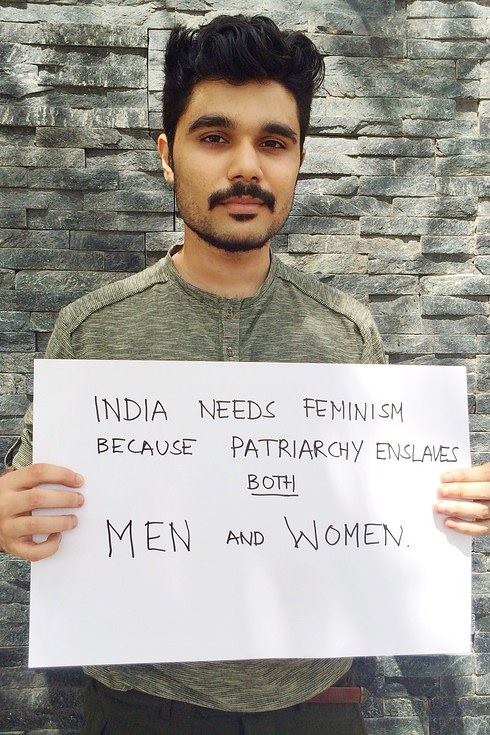
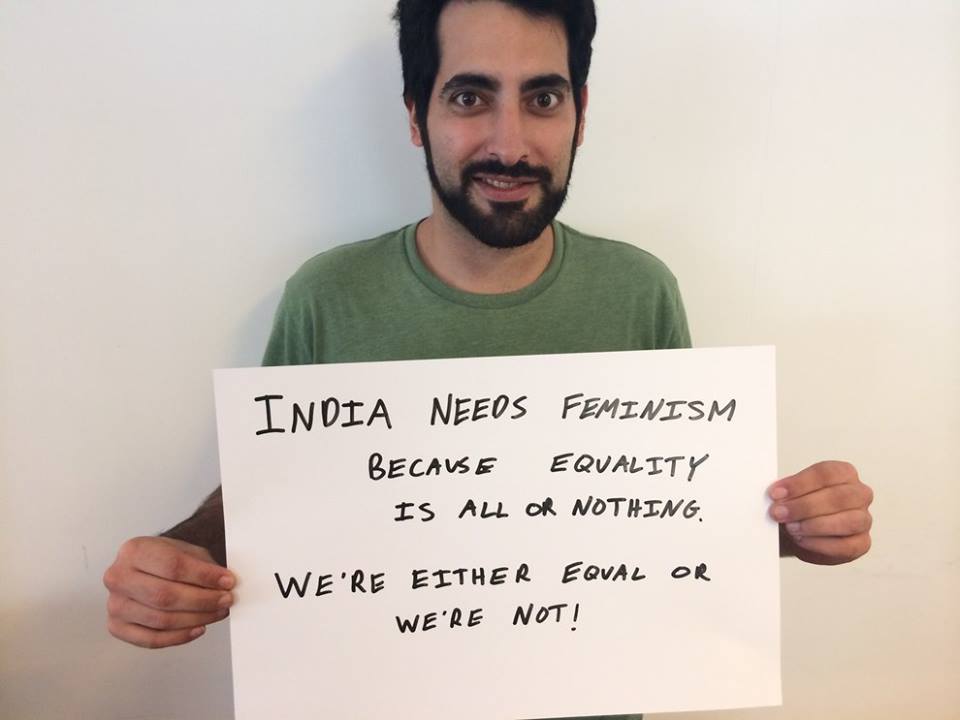
India2

I come from a very different world. I am from Brazil. I have been to both middle east and India. And I love both places. I travelled by myself every time and to be quite honest I was  never afraid of people.

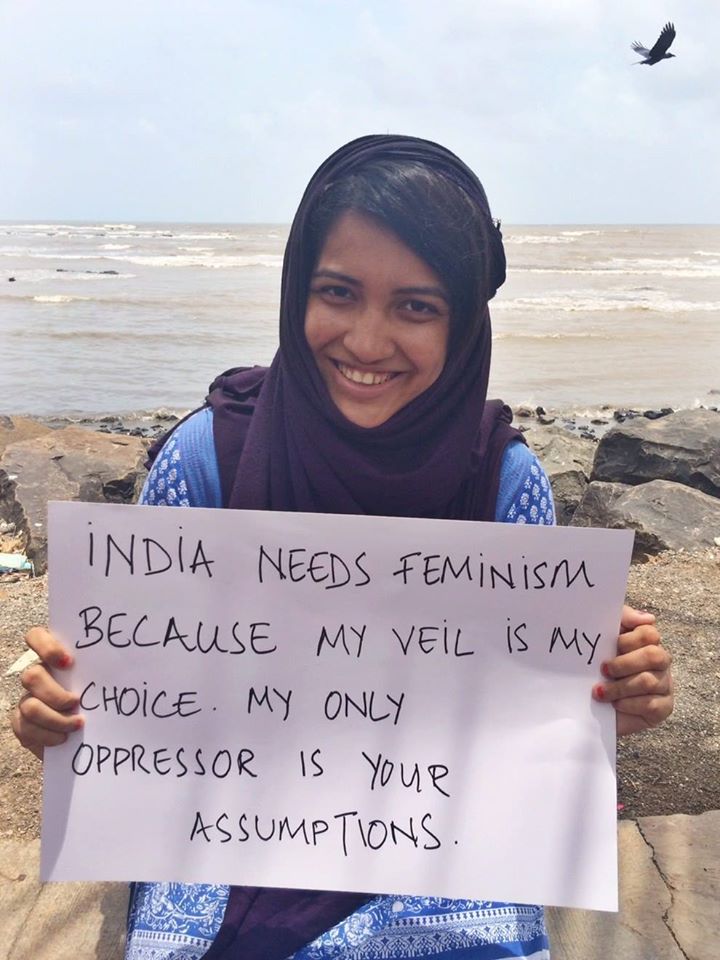
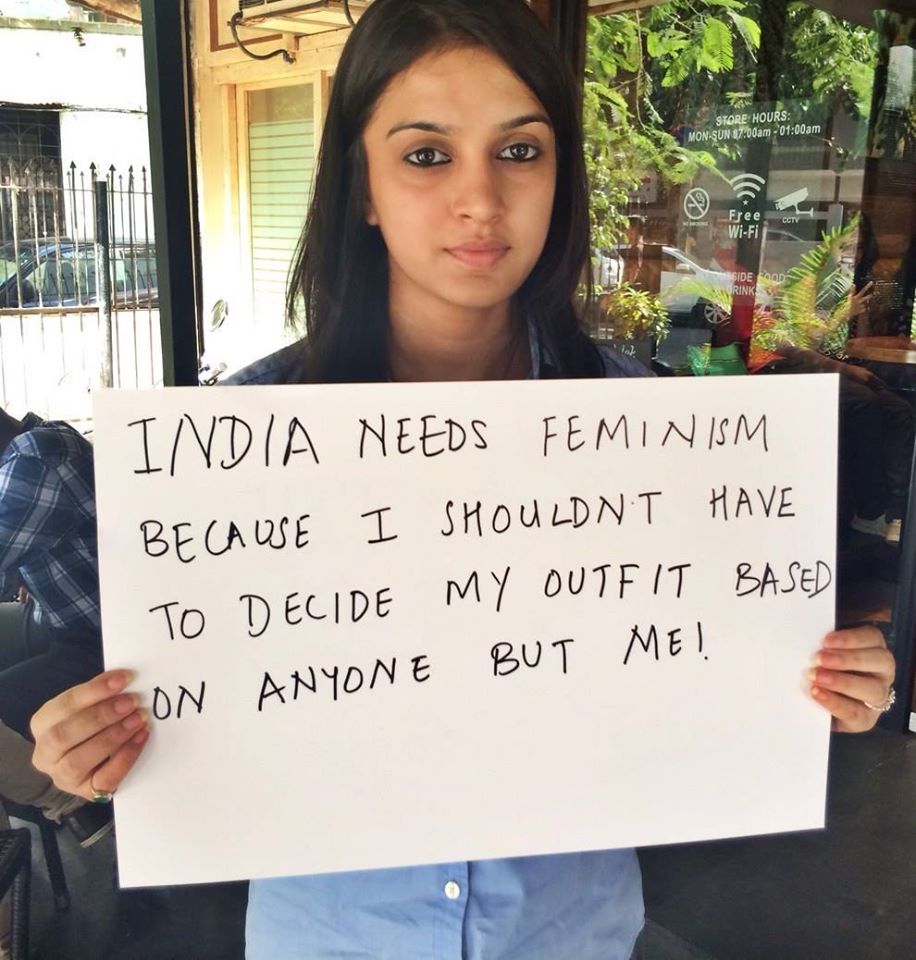
Today someone sent me these photos asking for feminism in India. They are beautiful. All of them. But as I watched, and read I kept thinking we should not substitute  male chauvinism for feminism. We should walk the path of equality of rights, justice, and respect to all.

veil


I stayed in the houses of people I met along the way. And because of that I have an unabated faith on humanity in general.  So much so that even now, after almost dying last year, I bought another ticket to travel on my own to the northeast and north of Brazil. It is true, that as a woman all men in busses would stare at me… But I would speak to them. They would get quite shocked in India, but eventually those who initially had been agressive protected me from something I never really knew what it was. I was never mistreated anywhere, nor have I stopped  going somewhere alone.

clothes


When it was Ramadan and I was in Kashmir I followed it, in Morocco no one asked me to do it and I followed it… in fact no one ever asked me to follow Ramadan because I am not a muslim. I did it anyway…or almost did it because in Morocco I drank water. Out of respect to the place where I was in I drank without anyone seeing. I veiled in mosques, and outside in the streets of Hebron, in Palestine also not because they asked me, simply because the women put it in my head and they thought i looked beautiful in a hijab.

Brazil, is another world. We walk half naked, we go in very small bikinis to the beach… and it is also not exactly a choice…. We are taught to do it. So many beautiful women go under non necessary plastic surgery for no other reason but to satisfy a society that values the body of a model.  Educated women fully believe they they choose to do that. But choice is such and intriguing thing…. How much do we actually consciously choose?

Do the indigenous who always walk naked dress now because they choose? Do they even keep these clothes on once non indigenous leave? Do they have higher rate of rape because people are naked?

How do we know what is choice? Do we like choice? The burden that comes with it?

Nowadays, I stop and I think… will a person be separated from society? Will they not get a job, a boyfriend/girlfriend, a wife/husband  a friend if they have not behaved in the way they believe they are choosing ( and is also the same way most people in that society is behaving). What happens then? Are they marginalised?  Are the answers to all of my questions about their social engagement is immediately NO?  Then we should know this is not a choice, It is a social practice, some way we were taught to behave  in that society, it is not really a choice. There is not really anything wrong to follow society. But we should know it is not a non-influenced choice.

I saw all pictures from this community called “The Logical Indian”. It is beautiful. But more importantly as I started in the beginning of this post  we should not exchange male chauvinism to feminism. We should fight for justice, respect and equal rights. So that people can evaluate really what it is that they are choosing.And finally, this is a path that should be walked not only in India but in the whole world.


But that in fact asks from all of us total responsibility….and I am not sure everybody  really wants that.

equality

The World Cup, Resilience and Strength

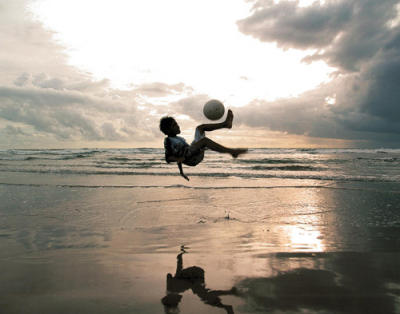
Copa

People take me not to bet from Brazil all the time.  And that has nothing to do with the fact that now it is the world cup. It happened before too. Maybe the only places people took me to be from there were Italy, France, Turkey, and Israel.  It is funny, but apparently the amount of time that I have spent abroad has changed the way I structure my sentences. I wish it was only that, apparently it has also changed my mind 🙂

It is the world cup here  as you might know. Yes I am in Brazil.  And first people wrote me to ask how excited I was about it, and then  they wrote to ask whether I am safe. I must say that nothing has really changed in my life, apart from the bars that I like being more crowded by foreigners grabbing me. You know Brazil… where most football fans imagine Brazilian women are all sluts!

People usually also asked me from abroad whether Brazilians were excited about the world cup. And I remember Brazil being stopped in the middle of the night to see the world cup in Asia. I remember the excitation all had about every single cup. But this time it has been different.

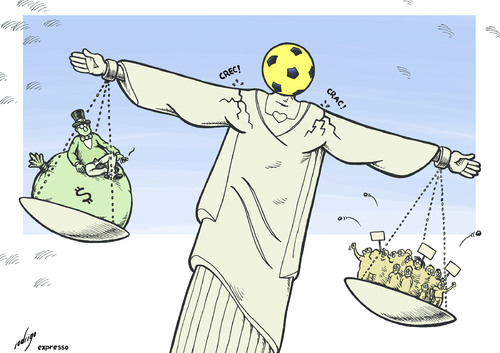
It is really the beginning of it, but I must say that before this week most people were furious. I read somewhere that the last world cup costed 4 billion dollars, and this one 11 billion. Brazilians in spite of all their love for football were furious. Money that was not spent in education, health, welfare  system was spent to build stadiums in the middle of nowhere, and of course who knows where else. So there were protest against it all. No tube, no busses people in the street. On the other hand TV tried to get people to be very excited about football for months. And I heard from rich and poor that they would rather have Brazil loose games immediately so that the people could wake up for the disparity, the corruption that has been part of Brazilian culture for centuries.

And then the world cup started, and little by little you started to see Brazilian flags in cars, and houses. I must say there are not that many. Still it felt somehow poignant  that people could not resist. They cheered.

I must say I usually like football but I did not see a single game so far. And I started to pay attention to something I thought was rather more interesting than the football itself. And that was the amount of foreigners in Sao Paulo, and Brazilians who started to go out to meet them.

Brazilians are in general very friendly people. The women were dazzled by these people some have never met before. Most of them have never been abroad. But also even men were taking care of foreigners around. When  a total asswhole came to disturb me in a bar where I know everybody…. And I was polite to him till he told me Palestine did not exist, a guy came to check on him. They were not friends, he was a Brazilian man that came to check whether he was well.  He asked the guy ” are you ok?”

How could I be a threat to an Israeli soldier? He told the guy I was actually very interesting and tried to  hold me several times. I dismissed it and went to dance with the waiter who is my friend. See this is Brazil. Even the waiter stops sometimes to have fun.

I met another Israeli and told him about that guy. He was appalled  and embarrassed. I told him he did not have to explain any of that to me. Yet the reason I write about this is because in any country there are amazing people, and stupid people. We should not generalise a whole population by what we have heard from someone, or from one encounter.  My Israeli, and Palestinian friends know this. They know I have been to both sides of the wall, that I have friends there and that I inherently trust people.

What is quite amazing about not seeing the world cup that is taking place here. Is to see people who have never met foreigners and who would like to know them. They come to meet them. They take pictures, have brief encounters etc. Obviously there are exponentially more men than women who come from abroad to see the world cup. And that is funny too. Brazilians pretend to be foreigners to attract their own fellow citizens.

We hosted 2 Mexicans here. And we taught how to get by in Brazil, basics of Portuguese. Today when I passed by the lady where we practiced putting credit in a phone she asked me. ” Where are you from? You speak portuguese quite well!”

I explained  her I am from here. Actually from the street around the corner but as I walked I realised she is write I am not from here. I have spent too much time everywhere to be from somewhere. I asked the doorman where he thought I was from. He knows I am from here. I explained him  the story and he said ” Maybe, they think you are not from here because you speak very fast!”

And as I stopped here to write I realised it is true. I am not from here.  I am so scattered, there are so many parts of me in so many places, the people that I trust and love are not simply in different cities, they are in different countries, they are in different continents. My language has been so cut in so many ways, the philosophies and religions that have penetrated my mind come from so many different places, that it does not even surprise me that my brain has stopped sometimes either going too fast or too slow.

I stopped to think about the door man and he is write “it is because I speak too fast”. More than that I live too fast, too intensively.

I don’t care about the world cup. Not sure for how long Brazilians will also not care.  We all know it is panis et circenses. But there is some beauty in seeing their smiles back in their faces. Nothing has changed. All the structural problems are here. Yet they still smile.  I have written about this before… maybe this is the most powerful form of protest and resilience there is! It is to simply not allow all of the absurdity that goes on to go inside one’s soul. They stand up, they see the unfairness for what it is,   they find and know it is absurd and then they still dance and smile. There is no greatest strength than this one.


Freedom in solitude.

freedom

I have encountered in my life many refugees, many of which who had been kept as hostages. I have been to enough places to know that some people speak with fear and in almost silent words in front of me. Others speak casually about it all. I have learned through the path to recognise someone in pain. Nothing special about me, it is something that some people just also feel.

Today I was sent  an article to read about the life of a hostage who was kept in Iran for a long time. Nowadays , I choose carefully what I read. Yet I read it. And it moved me so much. It was a letter. I wondered how many people could actually identify with these words. I did.

I thought so much about it. I have never been kept as a hostage, nor have I ever been tortured why was it that I knew that, how was it that those words made so much sense to me?

There is something intriguing about reading it.  I did not laugh like someone told me, would have been the most compassionate way to read it. I could not possibly laugh at it. I did once see an Iraqi speak in a conference ” laughter is the easiest way to cope with something that is so painful that you can’t deal with.” I was impressed that day. He was Iraqi, ironically at the time ( the time of the Iraqi war) he had studied public health in Syria. Then he became a student at Harvard. I was an undergrad at the time, but because I was always so interested in the Middle East I was introduced to him by my professor. This was NY, a couple years after 911.

As I read it today, many years after. Having met so many people who are from countries that were, or are in a war now, those images lingered in my  mind.  Somehow I definitely could understand a student from Harvard, a doctor writing about laughter when his country was being bombed. He was a doctor.  But I can not laugh.

I read the article again and wondered why was it? And that are some thoughts there which are so powerful.  Shane bauer, the hostage, and journalist, in some part of his page says he never thought prisons in the US could be worse than in Iran.

But the reason I went to his page was to see who he was. More importantly because I was very intrigued by something in that article. And that is such a non popular notion but I really understood it.

Somehow he said it that being freed was harder than to be a hostage. If you are to say that to anyone. They would invoke the “Stocholm syndrom”. Yet this is not really why I thought it was so powerful. It is something else. The return to freedom, in a world where suddenly you can realise the superficiality of it all. The invoked tones.  The questions.  All of this is unbearable.

This is not even knew. I guess in manufacturing consent it is quite clear.  But the idea of the whole west being addicted to pleasures, chemical releases…. Addiction to Freedom, is always hard to tell people.

How many steps further you have to go to understand that a total search for “that” freedom cannot be disentangled from total abandonment of responsibility to the world where you live in. Where you actions do matter!

And so I go back to my love of Mountains, the admiration of those who do not need to conquer them for the chemical release that comes from that. They were born there.

In my mind I go back to Tibetan  lamas who are capable to be in silence, self-contained,  and are able to control brain chemistry through meditation.

In my mind I go back to the indigenous I have met in South America, who tell you all over to not take away a person from a hole. Let them lay there.  I used to find it cruel. Yet, it is not. It comes from an awareness of discovering  self resilience, strength, and the value of one’s own life.

I doubt any Tulku, or Shaman abandons anyone. They are there in silence.

So when I read Shane Bauer I can but think, that I understand he found his strength his value. And was almost convinced he was freed. Only to realise that Freedom is internal, to be externally Free in a world where  most people have not found their own strength leads you to feel completely lonely. Free in a world of disconnection, oppression done under your name.

It is painful to see around you all of those addicted to something vaguely related to Freedom. It almost makes you hate freedom. It almost makes you want to be trapped so that you can at least know who your enemy is. But, in the end, we must realise that this is not  freedom. Freedom is inside.


The article by Shane Bauer is here

“You’ll Need to Relearn How to Be a Person”: A Letter to Bowe Bergdahl From a Fellow Former Hostage

 prison 3


News, the Repetition of the Old??

Sometimes news come from where you least expect… I actually wonder what are news, are they really new? Sometimes it feels they are all a variation, some kind of repetition of the old.

Indian news coming as a gift all the way from Bahia here are news… strange and pleasant but they feel like news.

The sudden arrival of  travellers that are cruising the world in my house is now already common to me. Just like it has become common suddenly the sudden appearance in my life of people who have crossed Mongolia by horse.

The reencounter with my cousin who returns from Asia having reconciled with herself is both old and new… it falls in the wonderful news.

My friend from the Phd sharing with me his frustration of friday seminars is hilarious and touching. His desire to help me recover is new and old and definitely also wonderful .

A cad driver telling me his desire to make something called youtaxi to record all the amazing stories he hears in his cab. To me it seemed incredibly new, only till I translated to my guest…”oh yes, that already exists”. Not, in Brazil is what the taxi driver tells me.

I feeling almost totally recovered and having non stop conversations about the relationship between thought and language feels like an old practice feeling so new now.

Even half asleep putting the right shoes to be able to dance the whole night. That feels old and new and also wonderful.

I guess the only new thing…. is that the bar of Cidāo will no longer open his door. The bar is demolished by now. That is new….and final. That is sad…

In my mind echoes a song  “Saudosa Maloca” Peguemo todas nossa coisa e fumos pro meio da rua aprecia a demolição.

And that falls in a hard thing to translate. It is a samba song that talks of something very sad, about a house that is being demolished. The song sounds however happy..

http://www.youtube.com/watch?v=6C6ezqRYWug

It is time to put back the right shoes again. That is new and old. I finally feel good!

Wanderings of a full moon Night…

I ride on a bus. It is usually faster to go some places in place by buses than by car. No traffic in the lanes destined to buses and taxis. In any case I could not drive anyway. I actually take joy to walk places. Sao Paulo was never a place I walked before. I usually drove.

Cre, my childhood nanny is next to me. The moon is almost full in the sky. I look around delighted looking at the sky. I have just been to Aquiles, my psychologist and it was a great section.  I had the chance to have my childhood nanny who took care of me since I was a baby till I was 6 talk to  talk to Aquiles. Cre could  tell my psychologist how was the beginning of my life. I listened it all, sometimes with tears in my eyes. I must say I do not remember almost anything of my childhood. But as she spoke I did. It did really feel like like a gift.

We take the bus home I look around  and the whole country seems to be decorating for Christmas. Though the country is secular, most people are christians here.  Actually most people are believers, of all kinds of beliefs mixed together. I live in In a neighbourhood where there is a large Jewish community.

Though Brazilians like to praise our miscegenation, most people in this neighbourhood are Europeansor or Sirian-Lebanese descendants.  The African descendant people you ever see are usually workers , such as drivers, nannies, cooks, and waiters in the nice restaurants around here. I of course do agree  there are more mixed people here than in other places of South America.

In a brief and poor explanation of Brasil. Brazil was colonised by Portugal at a time when Spain and Portugal dominated the world. Aside from Brasil, the two Guyanas and Suriname, all other countries in South America speak Spanish. That is why it is very difficult and funny to be asked to answer which “race” we are from in American forms. I always put  homus sapiens or human. Since  in Brazil we are never really asked these questions.. and In America there was no option where I felt i could be in. Being usually told to say I was Hispanic, I often explained we spoke portuguese and not Spanish. In any case, Brazilians, did always feel that form was just stupid.

Maybe it is because we put so little attention to our origins that we feel that there is little prejudice here. That is somehow a complex topic, and to talk about it I would need a lot of time.

Slavery was finished in several steps being finally abolished in 1888. I am no specialist in this, but I learned in schools and through reading and talks that when slavery was abolished ( officially though we all know there is still slavery around in the world) there was a shortness of workers which led to an opening of Brazil for immigration.

Since farmers had never been able to slave indigenous peoples before, they called  the new immigrants. Promising a d new world, delivering hard labour.   There is evidence that it was a true holocaust of indigenous peoples in the continent.  I believe the first immigration  after the Portuguese were the Italians who came searching fora new life in the new world.

Later on came  the Japanese, and in the  end  of the first war  Sirian-Lebanese people who came still using their Ottoman passports. Ironically in Brazil, they sometimes call themselves Turcos…. Though they precisely know they are Arabs… Here in Brazil, I think most people do not really think about that. Then in the second war came loads of Jews, and Germans.

Paulistanos, people who are born in the city of Sao Paulo ( Sao Paulo is a state and city) like to call Sao Paulo a Cosmopolitan city. When I saw my friend my Caue who just came from Beijing  we had a long conversation about what it ” what made us go.?”

I feel that while we are away we are so entertained with the other that when it reaches you it is time to move.. so us people of the world once we cross so many borders, it is just so difficult to stay. And so as we talk I wonder. About these courageous immigrants who came from their old world in this ships to a new one, having no idea of the trip, of the place, and definitely of a return.

So as I sat yesterday with these friends who have lived or traveled many places I did and we could talk about the profoundness of life, the difficulty to come back to a world that in your mind seems too mysterious, where you are not even able to eat in the same way, or where you just don’t care for the small details of those who went out for too little or not at all. So when we met it was all still that world were we floated from shamanism, politics, countries and philosophy for hours. Floated in the world were people who live the real world never usually go.

Than as I sat in the bus last night and as I looked the moon  I thought  of the cities I lived in Sao Paulo, London and New York  and realised they are not cosmopolitan in the same way at all. I guess if we define what we even mean by cosmopolitan.. and I guess if we take a very loose explanation such as “a city where there are many people who were not born there living and who are still preserving some of their original culture” then we could put so many others. And yet those cities we always will feel not containing the world.

I like being in Sao Paulo because I feel protected by it, by my friends and my family and definitely by my Dr Getulio, Aquiles and Dona Euthimia.

But when I sat with Gustavo and Caue who are people who lived in many places and now live very different lives I am intrigued.  While one is married with a child and though is still reading and engaging with the outside world is now settled .The other cant just stay, he arrived arrived last month and now cant wait to go back to Asia.

And as I open my email and sea Mark is going back to London to finish the PhD, while I know Maria now quit it and has a baby and will be married in Greece soon, and Chi and Aidan are in the road, while I see how much my friend Leila in Morocco and Lebanon has writer and prayed for me… I feel my heart overflow with love. The moon will be full tonight.. whatever I ll do, I know it will be good.

Love, from Sao Paulo