The link to my last post… hope it works :)

I flow in words. It is hard to write, but I try it because Doctor Getullio , my neurologist, realises it might be a good way to see what has happened to me . The truth is that it is not really that in the minds of those who reach the organic collapses, what I think, so we do all exams all over the place, and I don’t even mind them actually anymore. In the past they were my greatest nightmares. I don’t even mind so much exams, and the unabated hunger that reaches  me everyday. I do it all. I simply imagined he knows, and might have finally realised how  much I have always lived deeply in the symbolic world, through words, through so much that the pragmatic people  feel it is not that important now.

So, suddenly  even the most pragmatic people had to realise what had affected me leading to a sequence of weird diseases  with no final diagnosis were led by my own despair in my mind.

It was in 2007  that l had my first epileptic attack. It was in the middle of the night and I was in a friends house. I had travelled Morocco first with Haiko my ex,  and  with Adriana, but they had to go home and  I decided to follow the trip on my own. Eventually  encountering Leila who is a brilliant photographer and has worked in borders… I had been in that crazy border when you cross a door remain into African continent to the fictional Europe of Ceuta. I felt a certain puzzlement then and I returned to Morocco the following day. I travelled on my own following Ramadan , and the villages I was recommended, taking rides, trains, and buses. I did never feel threatened as respect. Though all restaurants were open for tourists.

Then I returned eventually to Marrakech to stay longer with Mounia. I loved my stay with Mounia how friendly and carrying were their family with each other. A certain night as I was about to sleep, I felt like a shock. I did not want to call help though when I woke up I was very confused. Now I know I had an epileptic attack then, that day on my own I was confused and let it be.

On my own, not knowing what had triggered, and not wanting to call for help from my dear friend Mounia. I remained a few more days till I flew back to the UK.  To me, very soon I started to realise that these triggers seem to have happened every single time when I felt an  enormous sense of vulnerability. And the scary part is that every single time, it feels more dangerous. And so I write, open my soul, to how these collapses feel,  it is almost  like a desire, a plea for survival as what I am: simply very fragile in these world.  It scares me that it seems almost like a non-conscious plea for care in my own terms…

So I write and apologise right now for how poorly these lines are put down. In fact I guess I have this strange mind where it is not so much interested in perfection but rather in breaching of the separation of beings. I will talk about this one day. These basis of oneness and the others. Categories are in the depth of my interest. My studies have gone through science, the brain, the psychological aspects of  peoples minds, cultures and the mysticism.. so, stimulated  by Dr. Getulio I seat to write once more about it, it felt great, then very difficult, though I knew it would have been very hard.

It is hard after it means with oneself observing itself. The technique of Dra Euthimia, my psychiatrist  reminded me is part of the practice of Mindfulness (and yoga meditation technique), felt like a good thing  to do. Though meditating with no obligation to report to the other (nor oneself) is way easier. There we are back to complication of existing in the world, the explanation to the world.  So let me tell you it is hard for me to read, to see films and hold all the basic activities. It is now much better to be slow.. and rest. but I ll write more.

In the past I flew through these words, really hallucinating most of the time and in silence, till one day I wrote in portuguese, for some reason it felt easier to write it in English but I knew I should attempt to connect to the world where I came from, that would have been what Aquiles, my psychologist would have said. Then I felt my own words were telling me different things, like another person editing me, or criticism that were being written by my brother. A gentle world but out of place. Then I did understand that the process of thought was fast and that my brain is still inflamed and until I am still having Cortisone I would be eating more, looking swollen  and having strange thoughts… oh wow now I felt relieved.

I have a few blogs and one of them is called http://www.descolonizandoamente.wordpress.com, which means decolonizing the mind. It is called that way as an homage to all that I had learned from my friend, professor and ex-boss Mustapha Masrour. I am so thankful to Mustapha that it is not possible for me to put it into words now… I will make sure to write it more about it in time.  Though I must say that I did decolonize my mind and became more aware of the prejudices I was born into… I therefore also realised that total  de-affiliation brings with itself a certain total loneliness, or a new very strong affiliation to a very strong conviction to a new faith. I am in an interesting time now wondering into how to travel my mind rather than to colonise it.

It makes me laugh here realising I am trapped by languages…. I must reconnect to where I come from, but I never want to leave the world that I connected to, a world of beauty and difference, buta world that always opened arms to my never ending internal loneliness. I would like to point out that as I write this text I felt I had not written that sentence. The words where ”  buta world that always opened arms to my never ending internal ”

I  was first furious, feeling like someone else was editing my blog. Now however I am even capable to accept that my own brain might have realised  that there it is an inhabitant loneliness and that what I attribute to my brother might be one more strange progress of my myself. As I say my brain is doing much better.

So, I seat here in a process of gentle recovering. I go to several doctors. I am medicated. I have strange feelings but when it is all good I can tell a whole story and the thought starts in the centre and then flies to the right. It feels like a river in the amazon going to the right like most western languages seem to do.

The strange thing I have is that times my whole head turns to the the left…. like if I were looking back to search for my past.  If feels it is all very far away, like in some desert where all that I have is lost now. The words, the memories, all there and I want to reach it. And inevitably these times I feel languages feels like it wants to run even more back  to reach to the left, though more and morel I just feel the desire to come to the present walking back to the right to, the present, leaving behind what happened in the hospital in Asia and searching for the present. Looking for the present.  

Put it simply the thought mainly always appears in the the present. Sometimes I look back. I have a desire to go even more backwards to reach something far. I try to do it less since I noticed (or when it started….). Most of the time I turn and I can speak and feel language like it is in the western, like  people  seem to do  language go to the  right  in these places.

I don’t think I ever started from the left. It feels like it is a progress, like  in an  middle  eastern  language that  goes from where it starts to the left.. This is so complex, too hard, in an confused mind. I hope you get something 🙂

Being that all that we know about  the mind is very temptative…  and I must say  though I have no desire, nor capability of debating these patterns of learning languages  or the mind and definitely especially now I also  know I should put effort as it might happened to help.

I started so long ago searching for meaning, and I was so cared for through these diseases I was examined in painful ways, lost so much of my ability to be my own person but I did every time struggled to search for more, was every single time I was taken care of. I loved and was loved all the time, and yet I always felt I was lonely.

I did it so many times. There are no regrets. I was always met with gentleness because you encounter  what you expressed was always kindness. And as I guess I always feared more my own own loneliness I met the stranger in its real place, with the other.

But I laugh as I remember about the Brazilian Joy, I remember, once upon a time I had written about it. How it felt that in Brazil happiness joy was the less refugee against the oppressions, people simply went out and danced not letting their minds being inffected.

So, though feels like it is the best way out, and I am reminded that I had once written about how in arriving arrived in Brazil that I felt the joy all over the place and that eventually I thought it felt joy was like the last form of resistance

So I seat here, in my grandmothers s house, who also is recovering. I do the basic recovering process and we laugh seeing Michael Pailin going around the world. It is not total joy as we are all recovering, she   is 89 and I have crazy diseases but we laugh.So even little things like writing this whole mail with basic no help feel great… a few weeks ago I knew not some people.

I realised only many of you might even know what I am talking about. Too late now…. The fast section 🙂 II have been severely sick 3 times. I almost died… And the case I did not it is because I was with Edu and who  took care of me …We were about to go to Burma and I was caught up in a series of Epileptic attacks, I was then induced into in a forced coma for a while. Once I woke up I could not  even know anyone not even my parents who had flown to Thailand. I felt most of the time in a another reality.  I ha felt I was constantly being poisoned.  Ir attempted to be be kidnaped, all of these happened in september. More precisely I  arrived in Brasil the 20 an of September having left Brazil in end of of April.  Once I arrived I could not still could not really  recognise peopleIt…..

I visit great doctors: Dr. Getulio, neurologist,  Dr. Aquiles,psychologist

For Mounia Paintings: http://www.mouniadadi.com/

For Leila Photos: http://leilaalaoui.com/

My First Interview- Mosaic the Path In Between

Dear friends as I keep getting questions about people who cant get my book. And I def want that all of you who want to are able to read it.. Here it goes:

1. It is only available online now…
2. You can buy it in any amazon in any country you are!!!!.
The link i put was the one local to the UK but you can find it in any amazon inthe world 🙂
3. You do not need to have a kindle to read it.
You can download the application of kindle for ipads, smart phones, computers for free
Here for downloading kindke app
The book is called
Mosaic the Path in Between
You can get it in any amazon!
This is the link to the UK one,
 if uou are not in the UK go to the site of amazon in your country and search for the book with the title
Mosaic, the path in betweev
If you have any problem let me kbow!  🙂 and if you are reading .. Please let ne know about it!!
Love Jules in Rome in ny way back to Asia 🙂

INTERVIEW – JULIETA FALAVINA, AUTHOR “MOSAIC, THE PATH IN BETWEEN”

by Eduardo Simantob, (Journalist, Zurich – Switzerland)

1. You have been to a few hotspots in the world (Kashmir, Palestine). How is it to travel in places like this, being a woman?

JF – People ask me this quite often, but I had to pass by a certain psychological “preparation”. I used to fear going to a place as charged as Palestine, but there was a situation I lived once in Paris, in a very dodgy neighborhood, where I was faced with a very hostile encounter with a young Algerian in the street at night. But eventually we had a very interesting exchange, and the estrangement and hostility turned into empathy and understanding. Suddenly I felt I was ready. That night I felt I could go anywhere. Palestine, Kashmir, slums in Brazil, any conflict zone.

In all of these places I was welcomed. Not because I was parading as a savior, simply because I was just plain human. People know it, they can feel it. When you try to be respectful people act accordingly. More often than not my Palestinian and Kashmiri friends were intrigued by what they called “my goodness”. They usually took me in, and often told me I had to be very careful in the next village. Once I left them I should pay more attention, not all people are as nice as they were, they would say. I guess this deep fear of the unknown is a common thing everywhere. And though I know most of my friends shiver just to think of me talking openly to strangers…. I can’t avoid it. I find the risk of dying or being hurt really less scary than the reality of not knowing the other.

2. How does the fact of being a Brazilian woman affect the access to the people, and to the stories you tell?

JF – Being a woman makes it harder and easier at the same time, though I don’t know how it is to be a man. But being a woman makes it possible to be anywhere in a more gentle way. All people I met had mothers; some had sisters, and daughters. Whenever people were aggressive I usually asked about their family. I never felt scared for being a woman anywhere. Fortunately it has been so long that I do not feel harassed that I barely know how I react to this. I usually talk back to people. And they get puzzled, and eventually start telling me their stories. Or else, when they could not talk to me, they would offer sweets in a bus, or a smile… I really cannot think of a time when I felt really scared.

Being Brazilian also makes a huge difference. I did not notice it immediately… but soon enough I realized that by the fact that Brazil is mainly known for football and carnival, it made people relate to me very differently. Not having a history of being a colonial power, or an imperial power (although in Latin America this perception is a bit different) often allowed me to ask whatever I wanted. Having been born in Brazil also prepared me to the idea of syncretism and to accept difference, in spite of all economic problems arising from the enormous inequality that exists there. We usually boast how we are used to difference, but it took me a long time to feel at home in Brazil again. And if there is one thing I do admire from where I come from is the usual acceptance people have towards difference. And of course, the proverbial optimism and joy. Being Brazilian allowed me to always laugh and to be emotional at things. Seeing difference was the norm in my life rather than the exception. So people often ask me about football players or Carnival, which are happy events. It makes my journeys significantly easier.

3. You avoided taking sides when describing the conflict zones you travel through, and keep the politics in the back. But how could you describe yourself, politically?

JF – My book came out of a series of emails I sent to people to explain the place I was in. I was, and still am, more interested in people than in the political reality of a place. I studied international politics and social sciences, so I was not unaware of the political facts on the ground. But I felt misinformed by it. I find it very important to know the history of a place, yet what always moves me are personal stories. And the more I wrote about them the more I realized how similar we are in the world.

As an anthropologist I always defended the plurality of the world. I wanted to cherish the languages, the cultural manifestations, and as a student of psychology I also always felt we were exactly the same everywhere. It did not matter even whether I spoke the language of the place, soon enough I could grasp what was going on.

The reason I never write that much about politics in my e- mails is because politics permeate the world where we live, but if we focus too much on it we are taken by ideas and lose touch with the human aspect.

I don’t even classify myself politically anymore. I am interested in people, but without ever losing the notion that we are the same in diversity. It is tricky when you think of borders, that on one hand they should  preserve differences, and yet, on the other we should  not allow them to fully separate us  from the other.

4. And spiritually?

JF – Brazil is a very syncretic country. I was born in a Catholic family who is not practicing and that doesn’t attend church. As a child I believed in nothing, and had no affiliation to any specific religion. As soon as I could define myself as something, I would say I was an agnostic. Later, following the trends of the time I became a fundamentalist atheist. Until I met a friend who is deeply involved into religious studies, and asked him whether he was a “believer”.

He said, “I guess I am a believer trapped in the body of an atheist”. To what I replied, “I guess I am an atheist in the body of a believer.” We became very good friends ever since. I believe both of us relieved our atheist parts somewhere along the path. I have always felt both.  Sometimes a believer trapped in an atheist body, sometimes an atheist trapped in a believer body. Never were the two in the same place at the same time. Till the day I stopped trying to be that coherent. Nowadays I am very interested in religious beliefs, but my biggest religious practice has to do with compassion. A value I learned to understand better with Dostoyevsky’s “Brothers Karamazov”, and that I see in almost all religious manifestations in the world.

5. What is the meaning of the “path in between”?

JF – I wanted to call my book ‘In-betweeners’ because I always felt we were trapped in between worlds, ideas etc. But something that happened in Brazil made me realize that we do not have to choose all the time. We do not have to be perfect. We have to make a Mosaic. Mosaic is a celebration of art. It is a celebration of what is made by hand, the art of the possible. Taking things that were broken and making something better with them. Something beautiful. And celebrating what is most human: living the symbolic.

Art is for me the best manifestation of humanity. And a mosaic is a form of art that leaves the idea of perfection (in disruption) aside. A mosaic is beautiful because it is made of pieces. We are all made of pieces.

What matters is the journey, not where we come from or where we end. This movement to go back is a search for belonging and we belong both to the All and to a specific thing. We must go back to realize that we are inheritors of all the joy and pain that exists.

The middle path is a Taoist idea, a Chinese concept. But it is something beyond that I wanted to bring, because it has nothing to do with being in the middle as being “right”, “correct”, but of being really in between things, conflicts, ideas. It contains the idea of the middle from Buddhism. But not a perfect middle.Just in between, in what humans are; in this human experience we can make a mosaic.

But this is just one narrative. There are others and they should all be heard. Because it is only in hearing the other that we find our own voice. And I have finally found mine.

6. What was your plan when you started to write your blog, and how did it change in the course of your travels?

JF – My book is in fact a series of emails I started to write to my friends when I first went to volunteer in Asia.

As soon as I started asking people whether what I wrote about them was ok, they told me they wanted to be part of my list to know about the other people I met. Soon many of the people I had met were reading my stories somewhere else. This has fundamentally changed the way I wrote because all that I saw I wanted to share with people I had left on the journey. So my emails were always an attempt to share with others what I saw.

Once I started going back to places, my writing changed again. I remember a class I attended at the LSE where Professor Fuller explained how his experience with the people he researched made him much more accurate.

“When you write about people in Tuvalu and they do not read you, you can say anything. Now when you talk about Indian Brahmins and they will read you and be in your audience, you have to be more careful”.

I often thought of those words when I wrote about Palestinians and Israelis. I always knew they would read it. I needed to be as accurate as I could. That is why, when I published my book and I asked people whether I could write about them, they said yes. Not only they knew me, but they had read me. They knew what I wrote was what they had told me.

7. Did you change much of your writings when transcribing your blog to the book? Is the voice you found in the book the same as the one in the blog?

JF – Most of my writing is exactly as it was. The only corrections were made by my editors for most of these emails were typed from my I-Phone or I-Pad, and I simply never edit anything. I don’t know how to, and was always on the go.

8. Do you think that your experience as an anthropologist is more an advantage or a hindrance to your sensibility?

JF – I actually am not sure. I believe I was born an anthropologist because of my interest in the other. In the beginning I used social theories, political theory, cognitive theory to attempt to understand life. Then this was all thrashed. I guess I took from anthropology the admiration for a plural world, and from cognition an interest in the things that connect people. From my Professors Rita Astuti and Maurice Bloch I learned that what people say and what people think can be fundamentally different. Maybe from my whole time in academic life this is the most important lesson I have learned. What people say usually has to do with society, now what people feel and think…. that is way harder to tap into scientifically.

9. You studied music and have composed quite a few songs. Is your music some kind of link to Brazil, or do you feel it more in tune with your international experience?

JF – Well, I started to compose when I was a child. I used to feel that Brazilian music touched my soul while other music travelled to other places in my body. Nowadays I do not feel that anymore. I remember hearing Klezmer in Brazil and feeling I was a nomad. Music connects me to my body, and that is where home is to me.

10. Do you still feel like writing songs?

JF – I am not sure. Since it is quite hard for me to sing now, because of a health issue, it is difficult to say. I love playing with a French musician called GaspardDeloison, a very talented boy I met in Asia. Gaspard has the ability to transform what he hears in something more beautiful. He is so humble that he can’t see it. If I ever were to record a cd it would have to be with him. Yet I prefer nowadays to just play the piano (which I can’t actually play).

“Mosaic, The Path in Between” can be purchased for kindle. You do not need to have a Kindle to read it.  If you do not have kindle you may download a kindle app for free on your phone, Ipads, or computers.

For Kindle here:

http://www.amazon.com/dp/B00CSAJHP4/ref=r_soa_w_d
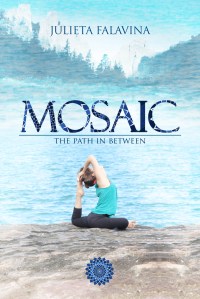
MOSAIC, THE PATH IN BETWEEN

SYNOPSIS

“Mosaic” is the journey of a woman who always

felt lost, but who never feared the Other, and went after It. It is the journey of a woman coming of age while trying to understand boundaries as well as her roots

in search of a sense of home. It is a human journey through her body and with a soul open to

record the so many voices that helped her finally find her own. The voices of Thais, Palestinians, Israelis, Tibetans, Europeans

and so many others, calling for a gentler world, a world in which all of us feel less alone.

The book does not follow a strict chronological order. Instead, it delves on an inner path. Mosaic starts with an old self of the author, still naïve but at the same time quite skeptical of faiths, dogmas and deep-rooted beliefs, leaving a precocious and short- lived marriage to do voluntary work in a school in Thailand. It is a seemingly harmless world, and her travels then also follow no plan or any specific curiosity, until she decides to focus her PhD in a research about how Israelis and Palestinians perceive and act upon the very idea of peace. Suddenly the individual stories and the humanity of the people she meets become much more interesting than any academic work. The PhD will eventually be dropped, but the trip will rage on up to the limits of physical endurance, as she is faced with odd health issues, the proximity of death and a reassessment of spirituality. She starts to realize that “home” transcends geography; it is made by people, by love, by managing to conciliate her roots with the antennae that connect her to the wider world.

The book also includes original illustrations done by artists Thomaz Bondioli (São Paulo/Amsterdam),Valérie Ciriadès (São Paulo/Belgium), Sandra Naxara(São Paulo) and Mounia Dadi (Marrakesh). Original graphic design made by Gustavo Soares (Rio de Janeiro).

“Mosaic, The Path in Between” can be purchased for kindle. You do not need to have a Kindle to read it.  If you do not have kindle you may download a kindle app for free on your phone, Ipads, or computers.

For Kindle here:

http://www.amazon.com/dp/B00CSAJHP4/ref=r_soa_w_d

Mosaic, The Path in Between

ABOUT THE AUTHOR

Julieta Falavina (1981) was born in São Paulo, Brazil, but attended French schools in order to follow a constant curriculum while following her parents’ errands. At the age of 19 she won a Fulbright scholarship and graduated in Music and Anthropology at Hofstra University (New York), later continuing her studies at University of Amsterdam (Social Sciences & Conflict Resolution) and finally settling at the London School of Economics, where she completed her Masters in Cognitive Anthropology

and started the PhD program. She was also teaching assistant at Birkbeck College and University of East London in Political Approaches to Social Conflict (2011).

Julieta’s nomadic life started at a tender age, having lived in Buenos Aires and in South Australia still in her teens. While pursuing her academic career in Europe, she traveled extensively in South America, Southeast Asia, India, North Africa and the Middle East. In 2009, while volunteering in Thailand, she began to narrate her stories via e-mail to about 20 friends. The characters in her stories started to become readers, too, firstly to know what was being told about them, but then to also follow the world through the eyes of someone they knew so well. Soon the mailing list had more than 500 names, many of them replicating the stories to their own friends. In parallel, Julieta kept two blogs, one in English and another in Portuguese (with different contents), where newcomers could read what she had written before. As a prolific songwriter, Julieta has also dozens of songs composed in several languages, and many of them can be seen in her own YouTube channel. She is fluent in Portuguese, Spanish, English, Italian and French.

Links:

http://www.translatingthoughts.wordpress.com (blog English)http://descolonizandoamente.wordpress.com/ (blog Portuguese)http://www.youtube.com/user/julietafalavina/videos?view=0 (YouTube Channel)

“Mosaic, The Path in Between” can be purchased for kindle. You do not need to have a Kindle to read it.  If you do not have kindle you may download a kindle app for free on your phone, Ipads, or computers.

For Kindle here:

http://www.amazon.com/dp/B00CSAJHP4/ref=r_soa_w_d
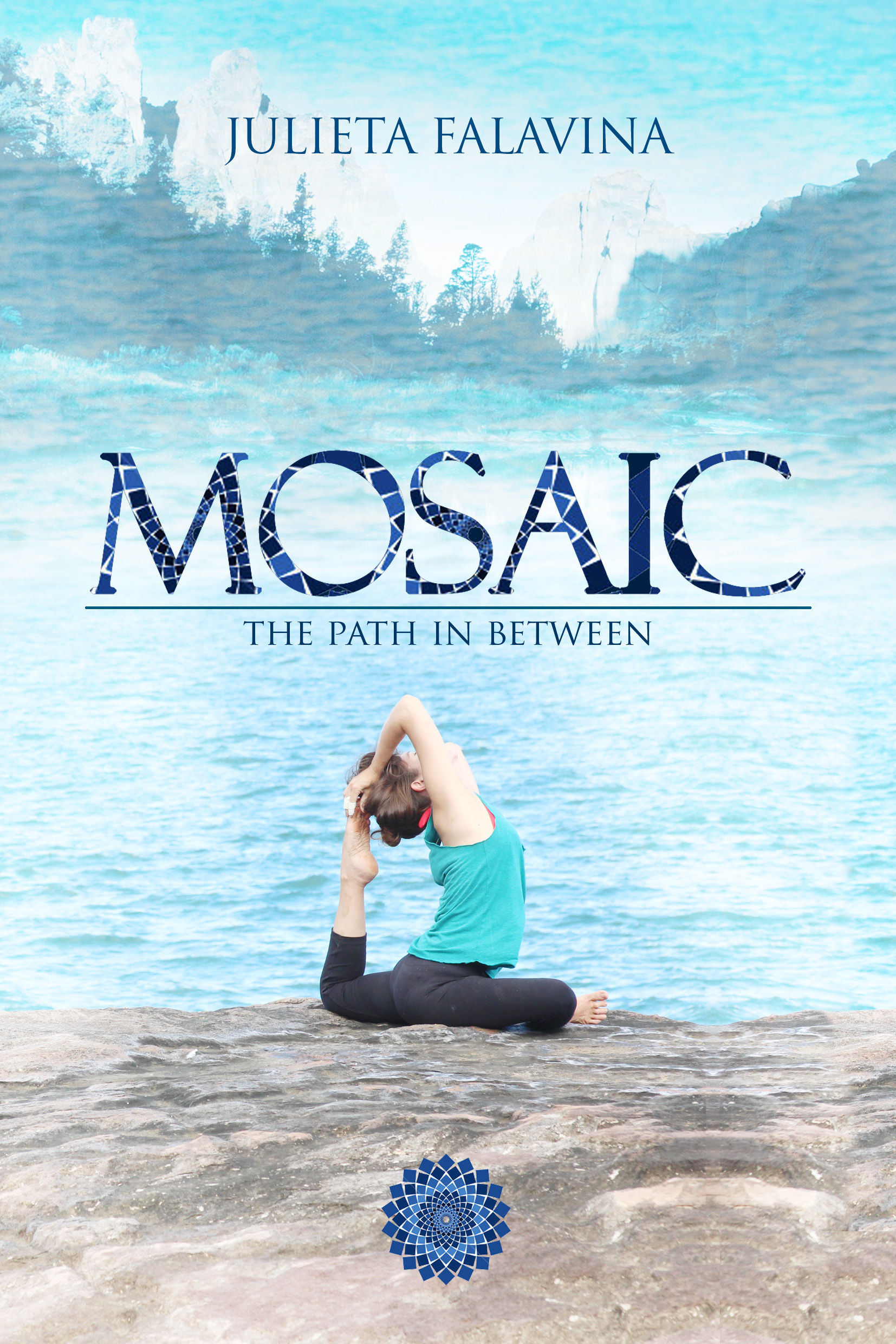
Mosaic, The Path in Between

Posted on May 4, 2013

Image

Dear friends as I keep getting questions about people who cant get my book. And I def want that all of you who want to are able to read it.. Here it goes:

1. It is only available online now…
2. You can buy it in any amazon in any country you are!!!!.
The link i put was the one local to the UK but you can find it in any amazon inthe world 🙂
3. You do not need to have a kindle to read it.
You can download the application of kindle for ipads, smart phones, computers for free
Here for downloading kindke app
The book is called
Mosaic the Path in Between
You can get it in any amazon!
This is the link to the UK one,
 if uou are not in the UK go to the site of amazon in your country and search for the book with the title
Mosaic, the path in betweev
If you have any problem let me kbow!  🙂 and if you are reading .. Please let ne know about it!!
Love Jules in Rome in ny way back to Asia 🙂

“ It is not because I do not know my way. It is because I love you. And when we part we should know that. we should make it as a ritual. So that I know that  a piece of me is going. And i kneed to know that.”


Dear friends,


I know I owe an email to you. I started this email on the plane. And I will finish today as I am about to fly tomorrow to London.

Bear with me, I still make the same mistakes as usual.


So it starts…

Here I am again, on a plane. The first 4 hours I slept non stop. I was exhausted. For those of you who do not know I am flying to Switzerland to show my book in a sort of literary Salon.


Yes, that’s the news… I finally published a book!

Last year I started to write for a Magazine called Varal do Brasil, and while I was in Colombia they sent me an email inviting to join them in this literature salon in Geneva (May 1st-5th 2013)


I thought it was cool although I did not have any book to show. Once I came home I told my father and he said it was preposterous… especially because it was already the end of January, there was simply no time to write, edit and publish anything. “Think about next year”, he said.


My friend Claudia Alcantara, however, took the initiative and enrolled me in the Salon.


Claudia used to have a very normal job, and she disliked the curls in her hair, which is something very common in Brazil, some old traces of racism hard to die. She also disliked the way hairdressers worked the issue. So she decided to find out how the process was done. She ended up writing a manual to straighten hair and it started selling all over Brazil.


Hairdressers were impressed and started to ask her whether she also had some related products to sell? She didn’t. After a few emails with the same request, she decided to say yes.


She went around, studied some chemistry and invented a product based in the stuff that already existed, and she mixed chocolate into it.


Nowadays Claudia is the owner of a cosmetics brand called Cadiveu, and she sells her products for over 50 countries. Cadiveu has a brilliant website and you can read more about it here http://cadiveu.com/.


Claudia is someone who always believed in good ideas. She sold a product before it existed because she believed it could exist. She enrolled me in a literary salon to show a book in Geneva before I had a book.


And now I am in a plane with two suitcases filled with books.


It is called “Mosaic, the Path in Between”.


Mosaic, is the art of what is possible. Nowadays I even think of it as the art of the impossible.


This book is a call for a more human world. It contains many of the emails I wrote throughout these last years…. It contains 4 mains ideas… Al Naqbah ( the great disaster when Palestinians lost their homes, but here I expand it to the huge disaster that most of us do not know where wer come from), borders ( what are they for?), Inbetweeners ( the feeling of always being trapped between worlds), and a search for home.


It contains the voices that many that I encountered Thais, Moroccans,  Israelis, Palestinians, Tibetans, Colombians, Braizlians and soo many others… to eventually reach the voices of my own family.


It is a treaty of love,…. that could not have been made in 2 months if people all over the world had not helped it take shape/


I owe special thanks to Andrey my Russian friend in Sweden for reading it, commenting it, and even helping edit it when we were all running out of time. Haiko Ballieux, my ex husband, my great friend from Holland who edited from the UK and the US,  Eduardo Simantob who is Arabic and Jewish and Brazilian and who edited from Switzerland in all of his spare time, Andrew Tope, who is British who edited on a plane between the US and UK. Then I have to thank the people of the Design Gustavo Soares, who I know since my Uni time, who designed this book in Rio while we still edited. He did the design in his spare time, while worki full time  and taking care of his 1 year old daughter,  Thomaz Bondioli  who is Brazlian/Portuguese and lives in Holland for making all maps and Illustrations. And Victor Mendes  in Sao Paulo for making the files online so that we could be doing this all over the world.


The Maps are hand made. They represent my experience.  Middle East map was particularly difficult for us to make. But once I was approved by a Palestinian and an Israeli I cried.


Then I must say that, the time was running so short that we had to ask  other people from other fields to help us.  Sabrina Rabelllo, brilliant  composer, and  who did  Phd in physics  at Kings College and Post Doc in Harward!, Henrique Sa Earp who did PhD mathematics in Imperial College and now is teacher at the univrersity of Campinas in Brasil. Marcello Sorrentino who did his Phd  in anthropology at the LSE where I left mine :)   Marcelo Fortaleza Flores who is an anthropologist and filmaker who lived in the AMazon for 6 years and had studied with Krishna Murti, taught me in the US, then at the Sorboonne. And Elizabeth Ings who is British  and is a writer and whom I met meditating in Vipassana. Finally Marisa Silveira who is in the US, and is from RIo and did her Phd in Linguistics at UCL also edited parts of this book.


Then came the art…. Thomaz decided to make some amazing illustration to represent the tougher chapter. He asked me to tell him. I sent him a song I had composed  and he made the illustrations of the chapter called Amit.Image

Then came Sandra….


Ok, Sandra came before. Sandra makes amazing Mosaic. And I asked her why she made Mosaic. And she told me she did them because she like doing art but was clumsy. She broke things. So she made a Mosaic. I told her that day, in the beach… that is beautiful. Mosaic is the art of what is possible. A celebration of that has been shattered but we make something beautiful with. That is how may book went from being in Betweeners to Mosaic…… Because it was a celebration of these in between things… the art of what is possible.


And so  I asked Sandra whether she could send me a picture of a Mosaic. She did. We had one day. The resolution was wrong. And she told me she collected the pieces to that mosaic by the thames… pieces she imagined that had floated…. had a journey. We managed to get the resolution by Sunday ok. We had to delivered by Monday morning.

Image


Actually I managed to convince Jacqueline the lady responsible for Varal to Brazil and for me being there now to allow me to bring the books with me so that we could get 2 extra days. Now we needed till monday morning.


Then my childhood friend whom I had not seen in decades came to visit and now as the very famous fashion designer Valerie Ciriades came for a visit. I asked her. Can you do me one drawing. She told me she no longer drew. She only did clothes. For when Jules? Tomorrow… And so I told her. Seat when you have time and read the part of the book mosaic of voices…about my family… which she knows well…. and if it comes you send it to me. It came… and to me it is how she sees me. It makes me happy because it is how I like to see myself today.. feminine, delicate and like music.

Image

And  then Monday we were all ready to send… and Gustavo had a doctors appointment….. and  then Mounia wrote me to Congratulate me….Mounia Dadi in Morocco. The brilliant painter, and my dear friend


It was in her house that I first had my  first ever epileptic attack. It was after seeing her art. Her whole following collection she  later told me was inspired on what had happened to me. So as I was about to print the book on monday… It felt now.. it is ready it has  to have Mounia’s painting


I asked her and she immediately said yes. and sent what she felt it represented me searching others. I sent an sms to Gustavo… Gu Don’t kill me… we need to put one more image. Can we please….??

Image

Resolutions wrong, electricity down… all working magically for her painting finishing my book.


I knew it was then right!


It was over.


We sent at 4 monday to Fabio my Grpahic Producer, and also a great friend of my father…. and he told me He was uncertain we could have them before monday.. when I flew.

I suddenly wanted Sunday because I wanted to release my book, our book in Brasil… and it was all ready at 9 am saturday.

We released at the casa do Nucleo with Benjamim Taubking palying piano ( though he had to travel soon), and me telling the story ot the book.  I won’t tell the story now. I am tired, I think I have said it all now.

I am on plane. I fly to finally deliver the book to Geneva. Just like Claudia believed one day it would happen.


The release was beautiful we made a mosaic…. a mosaic that features pieces put by my 88 year old grandmother and my 5 year old cousins of second degree. My dear dear dear friends were there. And now I fly. They all hugged me very strongly telling me staying 6 months away was too much.


It is true…. as I fly here..  I agree… I ll miss them too much. That is thought when you have finally made home inside. Then you can realise all the homes you had all over. All the love you have to all and you feel this uncontrollable desire to go there… and give one more hug, an now, our book…. which all of them feature,


So that I wrote on the plane. Here I met Edu my main editor. Who told me, we need to edit proper now, and then we would release online on amazon. I cried. I felt my book was not good. I still went to the fair. edu explain to me over and over the book was good. But it had to be edited by one person thoroughly. He read my my whole book. And we are doing that.

He drove to fair. And I met amazing people. There was so much. So many people I felt so tired. ALl the tlack of sleep suddenly appeared. And I made a new friend. Nairubia and indigenous gril from a tribe called Iny in the island of Bananal. She put her hands in my lip. Closed them. She touched my face. She was there as the artist of the illustrations of the book. She was so special that I walk out.


She look into my eyes. Adns she said. He knew of your pain, dont ever let the light go away. Darkeness is just absence of light. She touched my face. Caressed my temples. She sang. And she said


“ I have nothing to teach you. You know. but one thing. dont get out of the litght anymore”


And then she gave me a profound gift. She told me people like me make her want to live. It imediatelly came to me the conversation I had with an anthropologist who told me the indigenous were different. I looked into her eyes. And I knew what I preached in my whole book was truly real. That day I felt… I don’t know indigenous people. As Nairubia touched my faced. Released the tension from my eyes. I knew compassion exactly the same anywhere is always [present. I cried.


I asked her whether she wanted me to take her back to the place where authors were and she said yes.


“ It is not because I do not know my way. It because I love you. And when we part we should know that. we should make it as a ritual. as if a piece of me is going. And i kneed to know that.”

Image

I knew fully what she meant. I walked with her. we toasted with juice. We hugged. and I felt in place.


Image

Then I cam home. The house of the travelling family you will read about. I met them on the road. Seing them again was like a part of me was being made put back. They cooked for me, they hugged me. We remembered all that once was. I am happy.Image

Image

Edu took care of me for all the time he could. They take care of me now, and tomorrow I fly to London.

Image


It is all good in this side of the world. And it will always be good wherever I am because I am in place.

Image

Love,

from Switzerland

Love is Subversive- Written for Varal do Brasil

“ Love is subversive”


It was what I thought  when I finished reading Gabriel Garcia Marquez “Love in the Time of Cholera”. Florentino lived stories where he was never present, waiting his whole life for a childhood love. In Colombia of the book, it was only possible when the flag separates them from it all, the flag of the Cholera. Because Cholera is contagious, and love could only exist in this way contained in a boat in a river because in society it corrupts everything. It corrupts all the visions.

This thought came to my mind a thousand times. Every single time that I have been to violent places. Every single time when I have been to very developed places. Why is it that love is so difficult?

In my whole life I have searched to give love to so many people in so many places. There was however always a point that I left. It was because the love that I searched to rescue me from myself, could not do it. Love made me vulnerable. It was because love was missing inside of me.

Love collapses something from which we are not prepared for Ideas versus the body. We feel love or some form of it in our body and we think about it in some other way.

I feel that love is compassion. Compassion is to understand what Asians philosophers; religious men, sociologists and many others have touched the idea that we are all of the time individuals in a plural world. Love collapses separation from the other. Love is human.

And as has Victtorio Arrigoni, the Italian activist killed in Gaza, said, we must stay human.

When I crossed the wall of separation in Israel, to get to the West Bank, (against the will of my friends) I, for the first time, met Palestinians. At the time I already used to write the stories of the people I met around the world. From Palestine I wrote about my daily life.

One day an Israeli philosopher with whom I was supposed to meet and kept postponing because I kept staying everyday one more day in the West Bank, sent me a text message saying he wished he could see what I was seeing.

I offered to send him the emails I had sent to my friends and within hours he sent me a text message saying,

“I cannot see you anymore”.

I asked him whether it was because of what I had written in my emails and he agreed. I was intrigued since I had not written anything about the occupation or the politics. I called him and he explained to me he did not know why it was so difficult. I insisted, after all he was a philosopher that was his job to make something familiar, strange.

“It is too human”.

It was difficult for him to say this. I was thankful. He followed by saying: “had you written about the occupation or the politics, I would have understood. I could have agreed or disagreed, I am prepared for that. But when you write about yoga or love or how they take care of you like we do here, it is too human”.

That day I went to Jerusalem to talk to him. I have never seen him again. But that has remained in my mind forever. When I write about the Human, I collapsed all separations, all of them.

And there is nothing more human than love, collapsing the mind versus the body dichotomy. It is very difficult to deal with all the confusion that comes from the enormous vulnerability of love, of being human of not being separate from the other, the others.

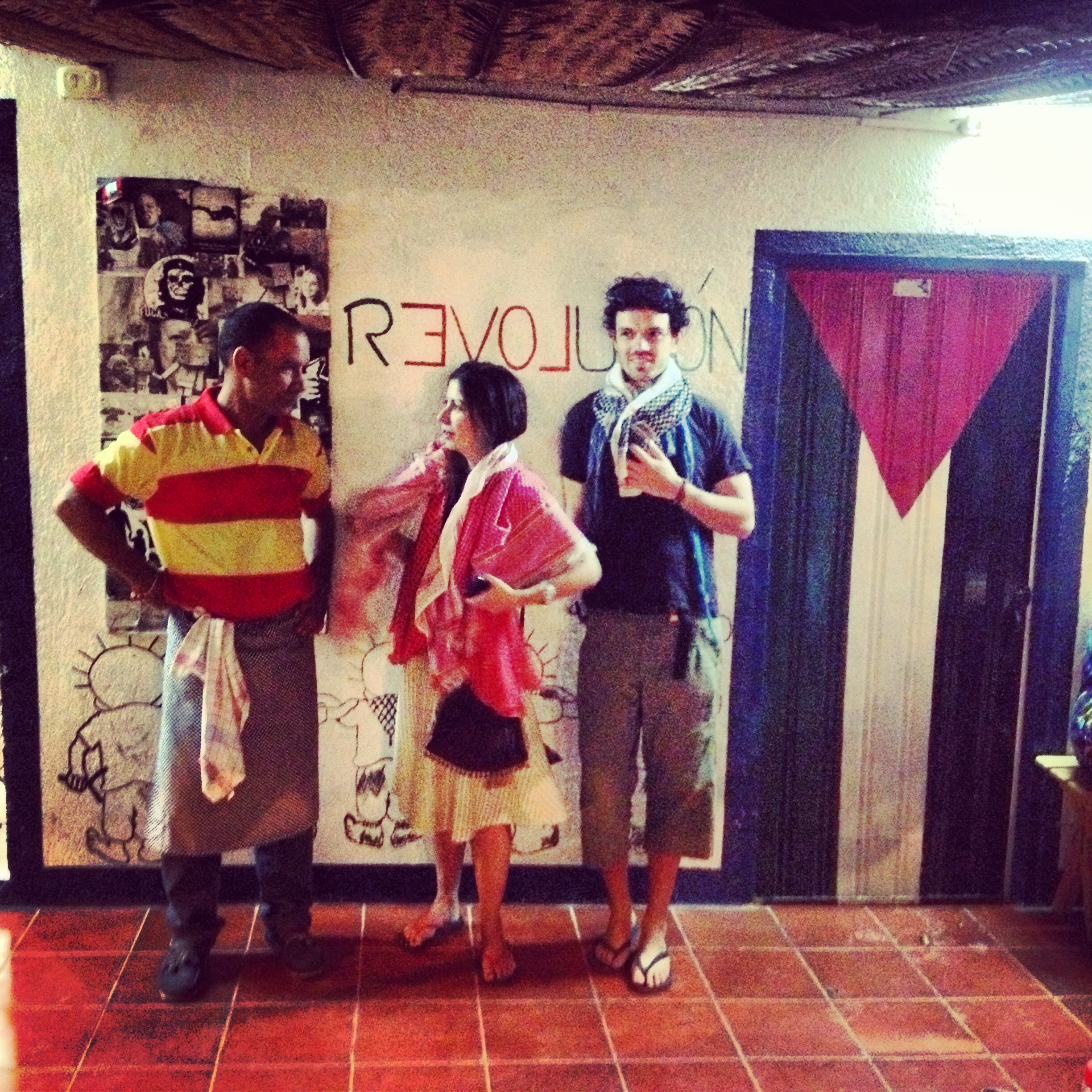
In Colombia, not along ago, I met a man from Gaza. He has a bar/restaurant in Taganga, (a fishermen village by the Tayrona Park). It was his way for fighting for Palestine: serving food.

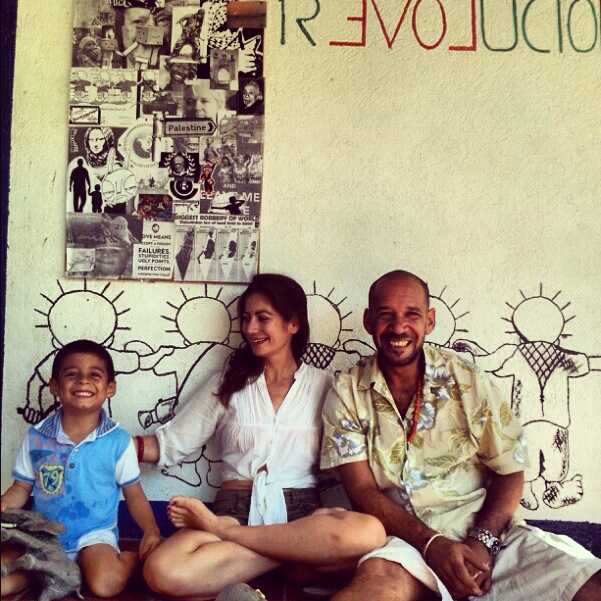
In front of his cafe/restaurant, there were drawing of Handalas and “revolucion” written on the wall.

photo

Handalas is a cartoon. He is the most famous character by the Palestinian cartoonist Naji Al Ali. Handala is depicted as a ten year-old boy, the figure has turned his back to the viewer, and has clasped hands behind his back.

He has always his back turned to the viewer and hands clasped because Naji Al Ali was critical of both Israeli and Arab leaderships. He rejected all peace solutions that came from outside.

It is different in Colombia. When I arrived in Taganga, I first saw the Palestinian flag, and then the Revolucion written in the wall and then the Handalas. I introduced myself to Yassert, the owner of the cafe/restaurant as someone who loves the Middle-East and who has friends in both sides of the wall.

I went back to Yassert’s cafe every single day. I went back to hear his story, to drink his coffee, and to see his son, he had become a friend.

Right on the first day I had been there, I went back to my hostel and decided to research more about the character Handala. I read why he had clasped hands. He refused help of the outside world.

I immediately remembered that there in Colombia the Handalas painted in the restaurant of a man who had fought in the Intifada, who had been released by the Red Cross, held hands in a massive hug. I remembered that one carried a key, the other a weapon; one had a sling shot downwards. All carried by their shoulders.

I disliked seeing a weapon. I however, when I read that Naji al Ali had made them in clasped hands and separated, with their back to the viewer, felt relief. There in Colombia they held each other. There is one who carries a weapon in his shoulder, but his arms and hands supports the other. The neighbour.

I looked back on my mind, to remember that the WORD Revolucion was written differently as well. There was the word LOVE in the middle backwards. It was in bright red letters. There where love was so subversive that was kept in a boat, a man who had fought in an Intifada, serves food. He fights for his cause with his restaurant, feeding people, bringing those who are willing to talk to talk.

photo(7)

And in his wall Handalas hug and the biggest word is LOVE.

Love, is subversive, but has not been contained by the boat of Florentino. Love is human. With all it perfect imperfection. And Vittorio Arrigoni, italian activist who was killed in Gaza, knew that.

I have been sometimes disturbed by activists who seem to all fight their own ghosts in other places. The same thing I have done myself in so many places in the world.

That day, someone I love, showed me for the first time Vittorio’s blog. His main message was “Stay Human!”

To love is to remain human. With the weapons, the cameras, and the fears. Love is subversive because it forces us to stay. It collapses all divisions.

So from Colombia, from Taganga, I thanked the universe, humans, god…. that cholera had been contained, but not love. Love exists in every part we allow it to be. That might be the path: to allow it to be in its full humanity, in all its perfect imperfection.

The Bracelet and The Key

I have found my bracelet. Mysteriously like everything else that happens here in Colombia. In this mixture of  Africa, Europe and indigenous culture we can expect anything to happen. I however, never expected   for the first email that I got as a response to my last to come from Palestine, from my first Palestinian friend I had met the first day when I crossed the separation wall. That day it was the birthday of his best friend, and so Lorenzo (who is now here with me) was also there. It was in Ahmad s house that I met Lorenzo for the first time. This only came to mind as I read Ahmads email saying he thought it was a beautiful story and that he wished I found my misplaced bracelet, and that he wished he could be here with us.

I was  exasperated first to find out Ahmad read me. I somehow never thought he did. Then I was touched he  understood it was important for me a lost  bracelet, as I did understand in life sometimes we put emotions in things. And I had mine  ( feelings of belonging) there. And somehow in reading his words, I remembered the keys Palestinians kept since Al Naqbah ( the great disaster when Palestinians lost their houses..). Palestinians kept
the key to the front door of their houses, when they had to leave them in 48, hoping one day to return.The key is full of symbolic meaning. And I till  very recently used to feel we should all just let things go and move on. Now thought I still carry this belief in me, I understand, we must do it, but not before profoundly understanding where it came from. And yesterday I understood that well.

We went out dancing, Cartagena is the land of dancing. I love dancing. I have friends from my hostel, but also locals now. And as usual I put people together. And I danced, and danced. And yet…. there was this loneliness in me last night so I walked away from my friends…and I wandered off. I was taken by a looking like middle eastern guy to dance. He was a brilliant dancer. And I was silent. I danced without saying anything particular of me. And I felt so happy. And suddenly just as he came from nowhere… he disappeared.

I, for my own shortcomings, felt abandoned, and even sadder… And I kept wandering in that place. I had a desire to cry. In fact, I just could not contain my tears… so I cried feeling like a boat that is wandering aimlessly and does not want to be seen by any fellow sails men. I remembered Ishmael in Moby Dick.

And as I made my way around and was taken to dance by other Colombians. I decided to just not care about anything anymore yet I was sad and did not want to loose connection to what i felt.. It took me so much to get here. I could not trace where it came from this saddness. Or maybe, I could the beginnings of it… but not deeply it…. I had no courage to follow the thread of my feeling of loss. And suddenly, I bumped into the guy again. And I decided to talk to him.

It was a great thing to do. Because now he has a story. My abandonment was just mine. And it had no relationship to the world.

This middle eastern looking like, came from San Diego. He was born out of a father that came form Colombia, and a mother from Mexico. Though he looked in his 30s he was 19. He had just started a trip through South America to find out where he came from. His own father left Colombia when he was 11 to become American . Chris, the boy, had never been here. He was also a climber and had saved money to come to a trip to south america. It would pass through Brazil as in California he joined some Brazilian church.

So we stood out and talked. He told me about being raised by a grandmother who usually had described the house she was from. It was hand made by the family. It was there that his father was born. Now he had been to Bogota and had visited this house. I had tears in my eyes listening to him trace back the journey of his life. Discovering all that he came from, and yet knew not. We spent hours speaking and I understood why I needed to make internal home.

I understood the keys from Palestine. I understood the need we all have to go back and understand things. This boy is wondering south america learning a new language and meeting people. He is deeply religious… and yet all I could see of his trip was how human it was.

By the time he finishes he expects to be able to speak better Spanish. He expects to talk more to his family. I expect him to find out, what is south american of him. I understood last night so much of this existential quest. I understood though I did not carry a key like that of Al Naqbah ( the great disaster) I also did wish I could go back to my home. Yet for all of us it might be unreachable. We do not need the key, nor the house, but somehow we need to understand where do we come from.

Being here makes me understand so much of me as a traveler. It also makes me understand Al Naqbah much more deeply. So I wish one day my Palestinian friends will, (like I hope I do) understand we dont need to carry a key, or a bracelet. We need to carry a bigger space inside. One that allows us to create what we are. I do understand though today that we all must take this journey to an nonexistent past by carrying some special things.

So as I mysteriously reencounter my bracelet, jut as I loose my key to my lock. I am taken by joy the bracelet is still containing me, while happiness the lock can be broke. I ask for someone to break it. I get my passport back, my money and I feel both contained by those I love, and yet free to find out where I ll go.

Joy the last form of Resistance?

I arrived in the airport in Sao Paulo before 5 am. The airport was empty and I walked pratically alone to the imigration. As I delivered my Brazilian passport to a Brazilian lady who was working there that morning I said ” Good morning”. She looked at me and smiled and told me “good morning and welcome back.’

I pointed out that it was amazing for her to be in such a good mood that early. She explained she had been awake since last night, that her shift was about to be over.

“Oh, so you will be able to go to sleep soon :)”

But she was leaving in one hour straight to the university and eventually in the afternoon she would sleep for a couple hours before she would wake up to prepare dinner for her husband who would come home. She said all of that smiling and laughing.

The experience of leaving an Israeli airport where you have to get everything out of your bag, get asked several times the same question, that you are asked whether you are carrying a bomb, and why you have been to Muslim countries like Malaysia or Indonesia to arriving in Brasil where a lady sleep deprived who lives in a crappy neihbourhood where people probably get more killed in a weekend than years of Israeli conflict and still smiles (when she still has hours to go) is a shocking one.

Most of the time when I return to Brazil and I see the loudness and happiness of Brazilians I want to shout ” Why are you people so happy? Why is it that we laugh so much when it is all chaos?”

Not this time. This time I smiled inwardly and I felt an enormous joy to see that in spite of all Brazil´s problems people are happy.

As I am pondering about that my friend Jaafar writes me. He tells me he had just celebrated Eid ( the end of Ramadan) in Tel Aviv. I am puzzled. And I asked him how did it go. He tells me he was with friends and that they had swam in the beach. They made Israeli friends.

I ask him to tell me about it. And he tells me they were in a Restaurant  and that there were two girls that sat next to them. They asked whether they could join them. They asked in English. The girls were 18. They said yes. They did not know they were Palestinians. Once they found out they replied ” we are peace and love”

He tells me they did not know where Nablus was. I ask whether they knew where Schem is ( the Hebrew name for Nablus). They didn´t. In fact, Jaafar tells me he showed them the picture of it in the map on his phone.

They were surprised ” But that is Israel”. Jaafar tells me this laughing. He finds it funny they did not know where the West Bank was.

I wish I could have been there and seen all of this. I am not even sure what to think.

Jaafar is working with an Israeli IT girl in developing a new app. He asks me an opinion. I am not  an expert on it but I give it. And as this conversations happens through the internet I cannot help but think how small the world has become because of it. All the people I met because of Instagram, couchsurfing, and all the opinions I can now ask from far away on skype, email, Facebook etc. The fact that he can take his Iphone out and show where he comes from in a map to people who have long heard about Palestinians being their neighbours but who do not know the Israel they see is a huge part Occupied Palestinian Territories.

“How did you feel in Tel Aviv?” I ask him

” We had lots of fun. We laughed a lot!”

Strange. I had always felt Tel Aviv was a bubble for Tel Avivians. It was the first time I realised it could be a bubble to anyone.

Laughter seems to be always the refuge of the naive. Irony is said to be the only possibility when all is too painful. I ponder about that and realise only an intelectual could have come up with that. So caught up in ideas about ideas. Seriousness is always solemn and is seen as inteligence. In the world of the mind to laugh seems always frivolous, naive, out of touch with reality. But I am starting to think that those that laugh are the most in contact with reality there is. The most aware of the reality they can´t change. They laugh.

It comes to me the Tibetans. Always smilling. The Thai. Brazilians. Are these people so in contact with reality that they just refuse nowadays to let the harshness of it enter their bodies? Their minds? Is laughter after all the last possibility of resistance?

I am not sure. But it does definetely feel better to be next to those who laugh… I take my passport back and I wish the lady she will have a happy day. She smiles and says “It is already.”

A Small World

The world it is a small place. Very small indeed.

Last year I was in the West Bank and I became friends with Manoel Ramos a Mexican who was studying in Bethelehem. I met Manoel when Jaafar my Palestinian friend drove me to Bethelehem from Nablus.

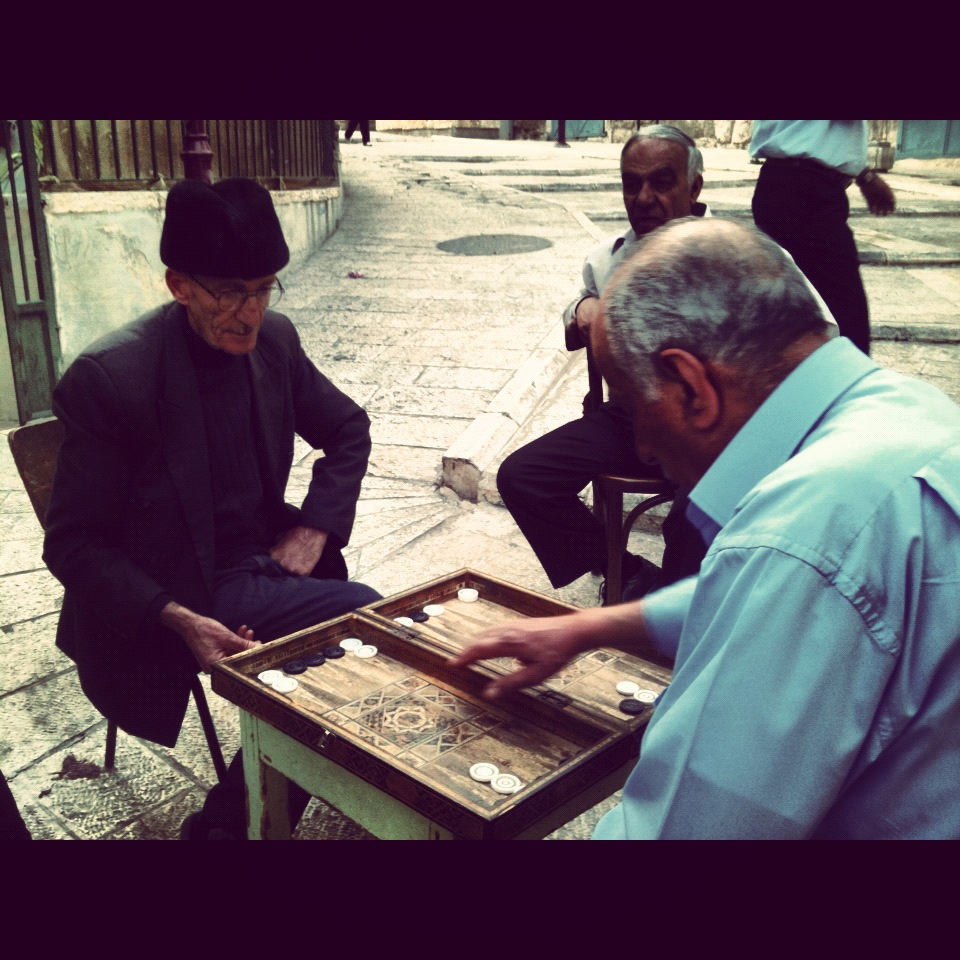
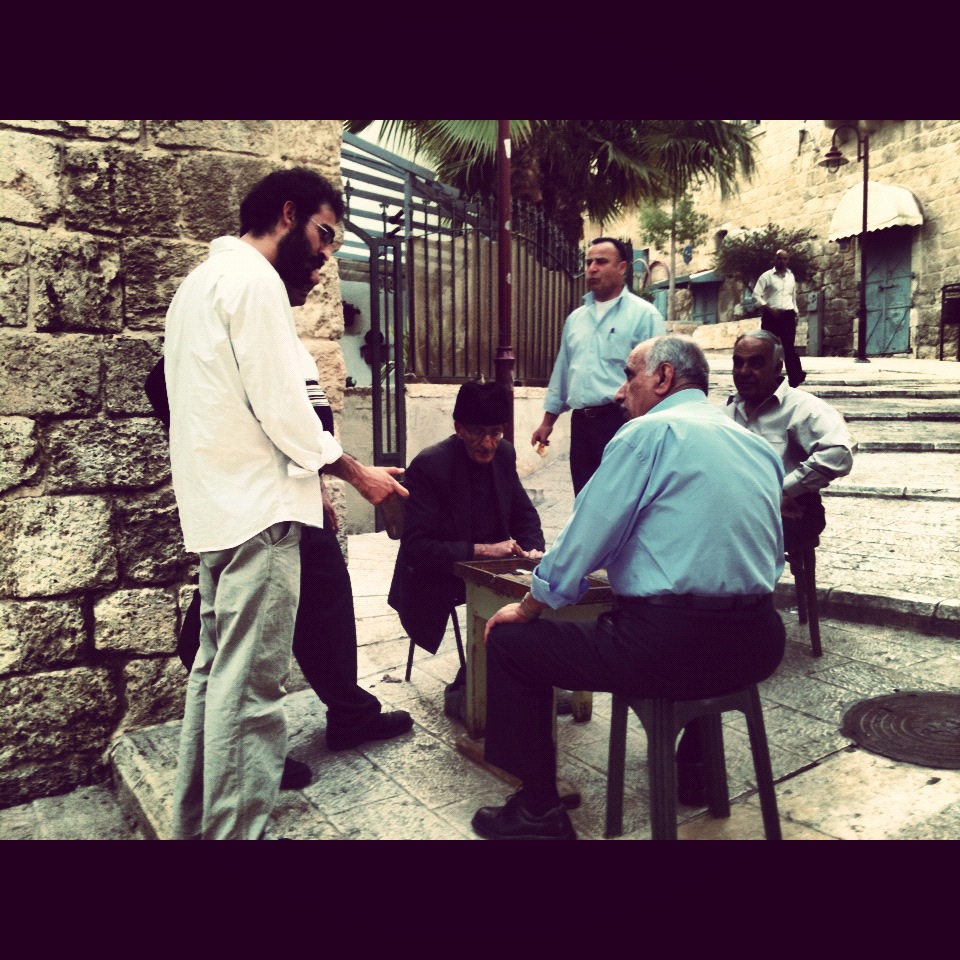
Manoel knew everybody. In his broken arabic he work almost like an informal counsel to taxi drivers, vendors, people on the street…  he gave family advice etc… I felt that Manoel could say anything he wanted because he was always smiling. Manuel once took me to see a couple of old men playing back gamon. In fact, we were just going to go buy something to eat but with Manoel it meant stopping everywhere to talk to everybody. So we stopped by these two older men who played back gammon every afternoon.

It was a beautiful image. Beit Sahour. The old old old Roman looking like buildings and men seating around this back gammon set. I took a picture of it. Some months ago I uploaded it on my Instagram.

Instagram for those who do not know is an phone app. It allows you to take pictures, put filters modifying them and to upload them online. Your friends can follow you and see what you are posting. You have also the option to see pictures of people you do not know. It all works by following how pictures are indexed.

For instance I took a picture in France and when I uploaded I wrote #France.  This picture will be indexed with everybody else who once wrote #France in their picture. You can index several times the same picture using several different categories. Ex: #France #Provence #Sunset #bicycle etc

When I take a picture and index it #Palestine and I click on the ‘#Palestine’ itself I can see all other pictures that were indexed this way. Depending on what you write there could be millions of pictures. If you write #cats there will be millions if you write a name of a small village there will be probably few. Depending on your patience and your interest you can browse as many pictures you want.

Sometimes I look into other pictures and if I really like  it I click on the name  of the person who took it ( a person who is unknown to me) and I am able to see what they have uploaded.

Anyway, I uploaded the picture of the two older men playing backgamon months ago. And I tagged it saying #beitshahour #palestine #backgamon. And one of these days while I was traveling France I received a message on the picture in Instagram saying “My grandfather!”

I was shocked.

“Did you mean he looks like your grandfather? Or is this your grandfather?”

“It is my grandfather!”

This girl’s ( who was unknown to me) had seen by chance a picture of her grandfather on my Instagram. I was amazed.

Then some weeks went by and I was already in the middle east posting pictures of Jerusalem and the West Bank when a girl I did not know started liking my pictures. She started to follow my pictures and one day she wrote me an email on facebook. It was a lovely email she told me she was Palestinian descendant but she lived in the US and that she was now in Jordan. I wrote her back and through Facebook we suddenly realised that we had a friend in common. Not only a friend it was Jaafar who took me to meet Manoel. Jaafar who I wrote about a couple emails backs, and who is not only her friend but it is her cousin.

I was amazed again. The world is so small!

Today as I land in Brasil I checked my emails and I got a message from Fernanda who I met because of Gabriel who i knew because he had once written about the middle east. I became her friend because she was going to Asia and I offered to give her tips. We met once. We exchanged several emails and today she had written me to tell me she was happy I was coming to Brasil.

She concluded in the email that the world was small. She had just met in Cambodia a Mexican that had met me in Palestine. I could not believe it. She had met Manoel.

Going Home

Everybody who knows me, knows I am an impulsive person. Everybody who has spent some time with me knows I do things in the spur of the moment. For better or worse.

When I was in Brasil I arrived there against my will. I had broken my foot then.  I wanted to run away from inside. I wanted to go back to being a traveler in Asia. Listening and watching the stories of others. I could not see a place for me in Brazil.  My friends and family had the Brazilian inexhaustible joy and patience to put up with me always having existential crisis. They heard me buy and cancel numerous tickets back to Asia. And somehow I just could not ever go.

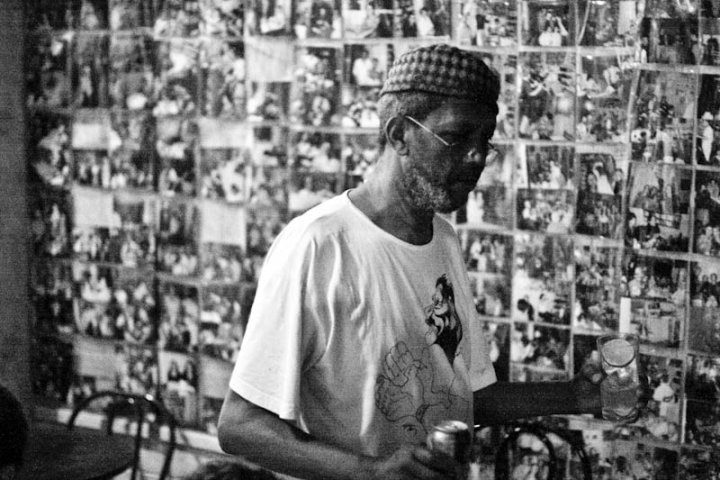
While I was in Brasil I went every week to the simple bar of Cidao. Cidao was something like a legend.  A tall black man that owned a small super simple bar that had great music every single day. I went numerous times to Cidao. I took dozens of different people there. I sat in uncountable tables with strangers. I knew his wife, his child, the musicians, and the people who went there as much as I did. I would often, stop there alone.  I was always certain it would be great music and there was always Cidao.

Cidao was nothing short of a legend. People had many different stories about him. He was a simply guy. An ex truck driver. He was never too customer friendly like people learn in Marketing classes. He was just Cidao and I guess that is why people like me went there.

As I flew to Israel almost a month ago I got dozens of messages via mail, text, whastapp, facebook of different people telling me that Cidao had just died. I was alone in an airport.  I knew no one. And I was quiet, still in total silence. I had competing emotions. Sometimes I felt really happy I had gone there so many times in this few months.

I also felt sad I did not go more.  I felt sad when I thought of his wife, and his now orphaned child. I wondered about the musicians, the bar.. And I tried several times to remember how was my last goodbye to Cidao.I could never remember it precisely.  It was probably a hug. And  I was sad it was not a longer one. I remembered that as I was leaving early, he said ” Ja vai?” “So soon going?” I explained I was about to go to travelling to France and that this was my last time there.

He replied that it was the last time on this trip to Brasil.

During these weeks so many times Cidao has come to my mind. I always pushed it away. I always tried to focus in where I am. Where I should go next. But yesterday morning it flooded me. And I decided to stop and think about it. And I realized that Cidao meant somehow a feeling of home for me. And that I keep going thinking that home will always be there. Cidao’s death represents for me the impermanence of life.

I noticed I would never be able to be there again. It is such an obvious statements but somehow I felt a cold shiver through my spine. And I suddenly missed not knowing about all the wrinkles I am missing the story of. All the children that were born in my family whom I will not mean anything to.

It came to me the image of me and my cousin seating with my grandmother one  month ago in Arles in  the South of France. We were happy. My grandmother described that state of  life like a dream. ” I can’t believe I am 88 and I can still travel to such a beautiful place with my two young granddaughters.”

We were all happy.We all found what we needed in that trip.

When they left to go to Brasil and I was left alone in the airport I felt devastated. Airports are the most familiar places to me and yet I felt they could not be anymore. I still took another flight and this time I came to visit those I already knew. I planned to go back to Asia to see the places I had not. But I just could no do it Not without first having a home.

Everyday I wanted to go home. And today  I impulsively bought my ticket. Was it an impulse. Yes and no. It was, in the way I bought it for tomorrow. But everything inside of me is looking to be home. And for the first time in a long time I know exactly where that is.

I have finally reconciled myself with the place I come from. As the great musician Benjamin Taubkin had once told me. It is a place where there is always space for creating something new. I am ready finally, for a new life!

Tel Aviv- Being a Bridge

Tel Aviv. I meet Jaafar. I haven’t seen him since last year when I was in the West Bank.

I had met Jaafar in Nablus, because of Yahyah who is Sam’s brother. I had become their friend learning this way about all the intricacies of the thoughts of these young boys from Nablus.

They had driven me to Bethelem telling me they were already going there anyway. Which I realized quite soon it was not true, they were just being kind to me. I have written here before, about how difficult it was that time for me and my three Palestinian friends to be taken by my Italian friend to see the separation wall. I wrote extensively about how unhappy I was by his poor choice of making us walk inside of the metal bar corridors that lead us to the checkpoint. I wrote about how much I silently cried feeling like we were animals. How sad I  was to realize that my friends here could not meet my friends there. How much I hated that wall. I wrote about taking refuge in an icecream with them.

Now Jaafar is here in Tel Aviv. He works with computers in Ramallah and had been invited by Microsoft in Herzelya to go visit them. Microsoft had applied for the permissions for Jaafar and 2 other Palestinians to come to Israel. It is not the first time that he comes to Microsoft. This time however, he could not make it. They were held too many hours in the checkpoint.

I know nothing of this when I go meeting him. All I know is that at 8pm he would be free for not very long as it was a one-day permit and they have to return soon from Tel Aviv to Ramallah.

I walk the streets towards the place we are supposed to meet in but Jaafar sees me first. He is inside of a natural shop with his friends. I go in. I am puzzled by what they are buying. “Protein” they explain. “It is for the gym”. I laugh and walk around the shop. Being intrigued by the amount of health food they hold. They speak to the older Jewish Israeli owner in English. He is curious and wants to know where they are from.

They say they are from “Schem” the Hebrew name of Nablus. The old man says he had been there as a child. That it was a wonderful place. He wished he could visit. They tell him he should come. I am intrigued by how friendly the conversation is.

We walk out. And Jaafar and I go for a walk. Michal, my Israeli Jewish friend, is coming to meet us. I feel some joy about it.

We meet her, and walk while we talk about all that has happened since I last saw him. Who got married, changing of jobs, ramadan, etc….

I see in Jaafar’s face how happy he is to see me. I am happy to see him too.

I tell him about my settler friend. I ask him whether it disturbs him I had been out with a settler. He asks me what kind of a settlement it is from. I explain it was a neighborhood mainly consisting of Palestinian people. That I was told that there were Jewish people who had always lived  there. I ask him what he thinks about it

“I think it is ok.”

“Do you think they should be made to move back to Israel?”

“I think the new settlements yes. But people who have always been there no. Palestinians and Jews mostly lived in peace for years. The can stay.. but the new ones should go.”

I ask him what he feels about Palestinians Citizens of Israel (Arab Israelis). Should they move to Palestine once (if) there is a state? He does not think so. They live here. They are used to their lives here. They have always lived here so they should not have to move.

We are now seating in Habima beautiful square. Right in front of the Theater and right on the garden. We seat on a corner. Jaafar is to on the middle.

Michal asks him things as well. We talk about Nablus which Michal did not know it was the same place as Schem. We look for the etymology of the name. I tell him she wanted to come but is afraid.  He tells her she is more than welcome to come. She explains she does not have a different passport. She is Israeli and according to the law Israelis can’t go to the West Bankn ( unless they are settlers, or IDF soldiers). He tells her she could ask for a Permit like he had done it. She explains she feels it might be dangerous for an Israeli to go there. She says it politely, careful, as she cares about what he thinks, and because she also wants to know more, and is afraid. He suggests she does not go around screaming she is an Israeli and that she speaks English. But he does not believe she would have a problem.

She explains she is certain that most people would be nice but she is afraid of terrorists. Her mother, she explains, would be terrified if she went to the WB. She is curious but at the same time she is afraid of going. She does not want to have to conceal her Israeli identity. He understands her fear thought he still thinks it would be fine.

I love Michal. And I understand her. I really do.

She is so young and so different than most people I know. She always is honest and says whatever she thinks. I met her in India and through having an accident in a bus we became more connected than ever. We traveled India together till I flew away. We sat for hours sometimes by the Rishikesh  bridge in India just looking at the people. The saris. Saying yes to every man, boy, girl, woman, parents who wanted to take pictures with us. We must feature in hundreds of pictures. We found it funny. And because we always took pictures of people we thought it would be nothing but balanced to let people take pictures of us.

We once traveled to Rajasthan in a fully packed bus. We were 5 westerners in the bus. The other 3 did not want to have any contact with Indians. We gave one of our beds out so that 5 guys could go spend a whole night there rather than in the floor. Because of this they took cared of us.

And then when I broke my foot in Thailand she took 18 hours of a bus ride to see me.

And now I am here with her in Tel Aviv. She seats next to my Palestinian friend and I know she feels as sad as I do when she hears he missed the appointment because of the check point. Though we don’t talk about it I know it is hard for her to see him. It is nothing about him or her. But these meetings they are too human. I was once told by a philosopher I met in Jerusalem he could not deal with reading me. I pressed him to tell me more about it.

” It is  too human Jules. If you talked politics I could fully agree or disagree with you. But when you tell me of the lives of people then I noticed something that is unbearably painful that as much as I am against the occupation it still functions in my mind in a certain way because we draw lines of separation”

I was thankful to him for saying that out loud to himself and to me. I knew it was incredibly hard to get it out of him.  But when two human beings meet as humans. Not as a category of a specific group, all ideologies seem to fall. You cant possibly sustain an occupation of normal human beings. So we play with people’s minds. Some are convinced that all of those on the other side of the wall are dangerous. Others think is just a portion. And even  the nicest feel that the existence of one terrorist is enough to occupy a whole country…

It work both sides as well… and in many places of the world.

It is hard to be a bridge.

I ask Jaafar to text me once he is back to the West  Bank so that I know it went all fine.

A few hours later I get his message “Back to reality”

It hurts to be a bridge.. It hurts that the possibilities of encounter seem yet for all like a distant dream. It is hard to cross frontiers and internal borders. No matter who you are. Yet, I still think we must always do it. We must all embrace the pain. With it comes a silent more complex understanding. An everlasting faith that  eventually, all walls fall down…

Love,

me

Jerusalem, different perspectives

“What did you do when you were in the army?”

Elick smiles and says Amit was an Engineer. Amit is terrified.

“I worked as an engineer because there is no theoretical part to the army! Everything is applied.. but I was NEVER an engineer. I worked temporarily as one”

He says it with disgust. I laugh. I am in Jerusalem. I stay with Elick who I traveled Kashmir and Mc Leod in India with. Elick, for those who remember, had been raised in a Yeshiva in a very religious family. He had quit religion through literature to study physics, and in physics he discovered math.

I stay with Elick and his girlfriend Tali now. Tali has her last exams while I am there. She who also comes from a family of mathematicians. She however, grew up in the  secular world in Haifa a city where Palestinians and Jews live together.

Amit is apparently a mathematics genius. Someone who does not sleep, and thinks the whole time of geometry. He loves mathematics to the point that anything else seems to not exist for him. He finds physicists are liars as they are always making approximation about everything. He makes jokes about physicists. So calling him an engineer was nothing short of an offense.

He despises applied use of mathematics, he cares about the abstractions.

I laugh. Listening to this highly educated men talking about abstractions of abstractions. I left the West Bank and all my partial fasting ( I drank water) to cross Jerusalem in a festival day. Mahane yehuda, the main market is packed with artists … and I went from hearing the love stories and practical reality of the occupied territories to now listen to music and have very philosophical conversations which I can barely grasps about religion and math.

How can I do it? Sometimes I wonder. What kind of cognitive dissonance do I need to be able to cross the wall and have everything change so much in minutes?. How is it that now I go out with Elicks ex-religious friends to the Muslim quarter when the fasting has been broken to see it. They ask me about the west bank, How is it that I ended up knowing more about human lives there in few months then they have in all of their lives? I am surrounded by the ex-religious friends of Elick. Some are mathematicians, others doctors, and one, in special was a settler.

I never met a settler before. And now I went out with one. A settler who lived in a Palestinian neighborhood in the Westbank. He takes me there to see it. He speaks fluently Arabic. He is a beautiful man. He has never believed. He can’t explain me very well how is it that he quit the Yeshiva. He seems to have no politicalopinions though he is a journalist and studies the middle east.

He has Palestinian friends, though when he explains to me about these relationships he can see the details that my left wing friends in Israel can’t. He explains me the intricacies of the languages. I am confused. I never thought I d be in the Occupied Territories with a settler… and now I swim in the springs among religious Jews, while I am accompained by an ex-religious who was raised in the occupied territories..not exactly a settlement, but a Palestinian neighbourhood where there are only 4 Jewish families living.

I dont know what to think about it. It is definitively a first.

I ask him about it. And I am not sure I can reproduce what he told me. He lived in an area where Jews had always lived. during the 48 war jews had no water and were saved by these Palestinians who brought water for them to survive. He says he grew up knowing that. That he was taught they had to respect the Palestinians because they had saved them. I listen without knowing what to think. I don’t even know very well what the word “respect” here means. He talks of a Palestinian  girl he would marry if it would not mean to loose both all of his family and for her to loose all of hers. We listen to the Lebanese band Mashrou Leila. A highly politicized Lebanese band and he can sing all the lyrics in Arabic while it plays. He learned about them through the Palestinian friend. I, as well, heard them for the first time,  when I first arrived in the west bank a bit more than one year ago.

“Jules, you dont understand. These hollywood stories cannot happen here!”

I hear. I  pay attention to his linguistic explanations. I am confused. I ask him about how did his very religious family react to him quitting the Yeshiva. They never talk about it. It is not the first time I am with the ex-religious and I am always intrigued by them.

I am in fact always so intrigued about the people who quit their lives, all that was familiar. Elik though nonreligious finds his friends who went to the Yeshiva more inteligent than his mathematician secular friends. My secular friends who do not know the ex-religious have despise to  the yeshiva people. It all goes back to an economical ( and ideological?) situation. And again I cant do justice to explain this properly here. It suffixes to say that through the years the right and the left have conceded more and more rights to the religious to get their political support.

They are now in a situation where the religious population grows exponentially. They pay less taxes, are paid by the state once they have more than 4 children ( which most of them do). Their Yeshivas is  fully financed. They usually ( but not all) are very right wing and were exempted from going to the army. Now, as the law has expired there is lots of discussion on the matter. Whether it is fair or not for the religious to not go to the army. What modifications would the IDF ( Israeli defense Force) have to do to accommodate for young religious  boys who already are married with lots of children and are not supposed to have contact with women. And of course, this whole discourse on “fairness” also rises the question whether Palestinian Citizens of Israel ( also know as as Arab Israelis- who are the Palestinians who are citizens in Israel and  not leaving in the occupied territories) should not be required as well. This is a moot discussion of course. They do not want the the Palestinians Citizens of Israel in the IDF but those are the kinds of debates that are happening here right now.

I dont know what to think. As the improbable bridge that I have become I learn from all sides…challenging always my certainties. I end up as the bridge of a  Facebook conversation between my friend from Nablus Ihab and my Jewish Israeli friend Michal in Tel Aviv. She is curious to know what they think, She wished she could also visit Nablus and meet them. He thinks she can. According to the law she can’t. He understands her fear to come as an Israeli. Though he wished she could just come speaking English. It is sad to be that bridge.

I also meet an UN manager here. He is cool. He came from South Sudan. He loves the life in Jerusalem. He also lived before in Togo. He is from Belgium and thought he seems to be a problem solver I feel he does not really understand anything about the middle east. He is kind. He wants to help the project. But the coldness and the mechanic way he looks at things both shock me and surprise me.

Who knows…maybe it is what they need in the middle east.. to be more practical… more clear….but at the same time, this idea alone, seems soooooooo foreign here…